

How to Plan an Angkor Wat Tour? The Ultimate Guide in 2026/2027

Srey Pov
Cambodia is my home, not simply another stop on an itinerary.
I was born in Phnom Penh, studied Hotel and Tourism Management, and have worked in tourism for 15 years. I’ve also traveled extensively through Vietnam, Laos, Thailand, and Myanmar.
My work has included private journeys as well as a multi-country trip for a group of more than 50 travelers, which received a five-star review.
When I write about Cambodia and the wider region, I bring the view of someone who lives here and has spent years planning trips on the ground—not just repeating what appears in standard destination guides.

 Email me about your travel idea
Angkor Wat is Cambodia’s premier tourist attraction and one of the most iconic sites in Southeast Asia. The entire Angkor Archaeological Park covers over 400 km2 and includes famous temples like Bayon and Ta Prohm, and gems like Banteay Prei hidden in the jungle.
Planning a trip to this massive wonder doesn’t have to be overwhelming. With practical tips on when and how to go, and insider advice about the best tour experience, you can plan an amazing trip. We cover all the basics here in this ultimate guide to an Angkor Wat Tour in 2026/2027.
 The Essentials: Tickets & Best Time to Visit Angkor Wat
How Many Days Do You Really Need for an Angkor Wat Tour?
The 3 Classic Angkor Wat Tour Routes
How to Get to Angkor Wat Temple?
What to Wear and Bring for Angkor Wat Visiting
Should I Visit Angkor Wat Solo or Hire a Tour Guide?
Insider Advice for the Best Angkor Wat Tour Experiences
The Essentials: Tickets & Best Time to Visit Angkor Wat
Key information for any Angkor Wat tour is when to go and how to get tickets. If Angkor Wat is part of a wider Cambodia tour, it is best to plan the temple tickets and visiting season first.
Booking Angkor Wat Tickets Online, in Advance
Getting tickets is the first essential item to take care of for your Angkor Wat tour. It’s helpful to book tickets in advance, particularly if you’re trying to catch the famous sunrise over the temples.
The best way to book the tickets is online. Visit the official Angkor Enterprise Website, or download the Angkor Pass app to conveniently book anytime. 1-day, 3-day, and 7-day passes are available. Payment can be made by credit card, and you’ll receive a QR-code ticket via email.
You can also buy tickets at the gate before entering. The Angkor Enterprise Ticket Office is open from 5 AM to 5:30 PM. You’ll need to bring your passport, and payment can be made by cash or credit card.
Travel During the Dry Season for the Best Weather
Cambodia’s dry season lasts from November to March. These months are considered the best time to visit Angkor Wat. Temperatures are warm to hot without reaching scorching levels, and there is little rain for ideal outdoor conditions.
June to October is the rainy season, and a quieter time to visit. Fewer tourists visit Angkor Wat during these months, making it easier to take great photographs. The surrounding jungle is lush and green, and the reflection ponds are at their highest level.
 The dry season usually brings clearer skies and easier temple walking conditions.
How Many Days Do You Really Need for an Angkor Wat Tour?
The ideal length of an Angkor Wat tour depends on your travel style, interests, and pace, so it is helpful to understand how many days for Angkor Wat before choosing your temple pass. It’s possible to see the essentials in a single day, but most visitors find that two or three days provide a much more rewarding experience.
|
Tour Length |
Best For |
Travel Pace |
|
1 Day |
First-time visitors with limited time |
Fast but classic |
|
2–3 Days |
Travelers who want deeper temple time |
More relaxed |
|
5 Days or More |
History lovers and slow travelers |
In-depth and flexible |
1-Day Angkor Wat Impression Tour
One day at Angkor Wat is enough to explore some of the main sites of the complex. You should try to arrive before sunrise for the classic experience of the sun rising over the main temple and the reflection pond.
Following the Small Circuit, you can visit all the main temples, including Angkor Wat, Angkor Thom, Bayon Temple, and Ta Prohm. The route is perfect for day tours in Siem Reap Cambodia, and you’ll leave with a strong impression of Angkor Wat.
 The Small Circuit is the best route for seeing Angkor Wat’s main highlights in one day.
2-3 Day Angkor Wat Deep Dive
With an extra day or two beyond a simple Cambodia in 2 days plan, you can explore Angkor Wat at your leisure.
The 3-day pass makes it easy to visit over a couple of days, and you can venture beyond the most popular temples to see sites scattered around the jungle.
Visit unique sites like Preah Khan, shrouded by trees, and less-visited places like Koh Ker outside the main Angkor area. You’ll have a deeper experience and better understand the enduring fascination of the temple complex.


The 3 Classic Angkor Wat Tour Routes
The classic Angkor Wat tour routes give you options for exploring the different sites of the temple complex.
An Angkor Wat map can make it easier to compare the Small Circuit, Grand Circuit, and Outer Circuit before choosing your route.
|
Route |
Main Temples |
Best For |
|
Small Circuit |
Angkor Wat, Bayon, Ta Prohm |
First-time visitors |
|
Grand Circuit |
Preah Khan, Neak Pean, Pre Rup |
MA deeper second day |
|
Outer Circuit |
Banteay Srei, Beng Mealea, Roluos Group |
Quiet ruins and countryside |
The Small Circuit Perfect for a 1-Day Tour
The small circuit is a classic route that gives you a strong 1-day itinerary. It includes some of the most impressive temples on a full-day experience.
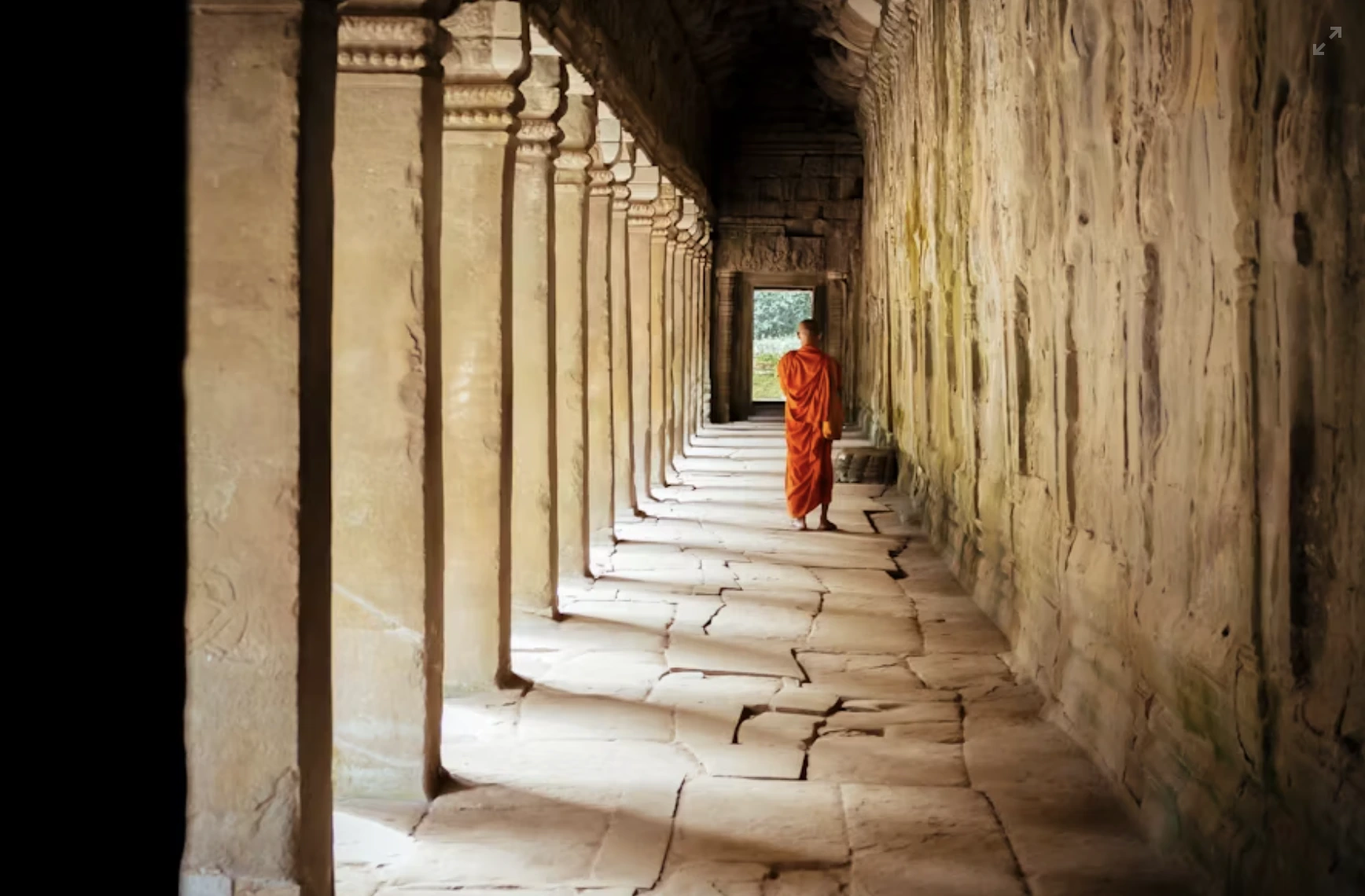
Arrive before dawn to witness the awe-inspiring sunrise over the main temple and reflection pond. In the early morning light, you can explore the main temple of Angkor Wat and Angkor Thom, the ancient capital city. Then, visit the stunning stone faces of Bayon Temple near the South Gate.
After lunch, explore another iconic temple, Ta Prohm. You’ll recognize the famous image of massive tree roots intertwined with the stone ruins. Finish the day at Pre Rup or Phnom Bakhen to watch the sunset over the temples.
 Bayon Temple is one of the most memorable stops on the Angkor Small Circuit.
The Grand Circuit: A Deep Angkor Wat Experience
The Grand Circuit goes beyond the inner temples to go off the beaten track to lesser-known temples. It can be done on a 1-day tour, but it is better as a second-day, deeper exploration of the complex.
Preah Kahn is an impressive site left unrestored. It was one of the largest temples built during the Khmer Empire, but it stands today being slowly reclaimed by the jungle.
Other temples include unique sites like Neak Pean, a tranquil temple built in a pond. Prasat Kravan contains stunning carvings of the Hindu God Vishnu, and the beautiful reddish temple of Pre Rup is the perfect sunset site to end the tour.
 The Grand Circuit is ideal for travelers who want a quieter and deeper Angkor experience.
The Remote Jungle Temples of the Outer Circuit
Taking the extended route of the Outer Circuit will make you feel like a legendary explorer. The route goes into the rural countryside to find unrestored sites and forgotten ruins.
Go into the jungle to discover quieter temples in a natural setting. One of the most famous is Banteay Srei, which stands out with its intricate pink sandstone carvings.
Beng Mealea is a sprawling jungle temple. The partially collapsed site has a mysterious atmosphere. You can climb over the ruins to discover the stone galleries and feel like a real explorer.
To the southeast, you’ll find the Roluos Group, some of the oldest temples of the site. They predate Angkor Wat by a century, and represent the remains of Hariharalaya, the first major capital of the Khmer Empire.
For travelers who want to include both famous temples and quieter outer sites, a private Cambodia Angkor Wat tour can make the route smoother.
 The Outer Circuit shows a wilder and less crowded side of Angkor.
How to Get to Angkor Wat Temple?
Angkor Wat is only around 6km from the city center of Siem Reap, making it easy to reach the site from your hotel or anywhere in the city. Tuk-tuks, taxis, and private cars are all available, and you can even get to Angkor Wat by bicycle if you’re looking for an adventure.
A Siem Reap tour is the easiest base for visiting Angkor Wat, because the temples are close enough for early starts and flexible returns.
|
Transport |
Best For |
Travel Feeling |
|
Tuk-tuk |
Budget travelers and classic local style |
Open-air and simple |
|
Private car |
Comfort and hot afternoons |
Cool and convenient |
|
Bicycle |
Active travelers |
Flexible and adventurous |
Tuk-tuks, the Classic Experience
Tuk-tuks are one of the most popular ways to get to Angkor Wat from Siem Reap. They offer an affordable, open-air experience that takes around 10-15 minutes, depending on traffic.
You can hire a tuk-tuk for the day for around 20-25 USD. It’s a perfect option for exploring the Grand or Outer Circuits. Your driver will always be waiting to take you to the next temple.
Travel in Comfort in a Private Car
Equally as convenient, private cars are a more comfortable way to get to and around Angkor Wat. It costs around 50 USD to get a car for the day, and the air conditioning might be a welcome relief from the afternoon heat.
For more comfort and smoother timing, many travelers choose an Angkor Wat private tour with a private car and local guide.
Cycle to Angkor Wat for a Jungle Adventure
Riding a bike to and through the temple complex is a flexible and immersive experience. Bicycles can be rented in Siem Reap for around 6-15 USD per day. It’s a unique way to visit the site, and most travelers will have little trouble covering the Small or Grand Circuits.
Be cautious if you’re planning on arriving at Angkor Wat for sunrise. The roads will be dark in the early morning, so you will have to ride carefully.
 Cycling around Angkor Wat gives active travelers a more flexible temple experience.
What to Wear and Bring for Angkor Wat Visiting
It’s easy to get back and forth between Siem Reap and Angkor Wat, but you’ll still want to arrive with everything you need to avoid wasting time. Dressing properly and being prepared will help ensure a better experience.
Dress Modestly and for the Climate
Angkor Wat is an active spiritual site that requires visitors to dress modestly. Clothing that covers the shoulders and knees is required when entering major temples. Lightweight, breathable fabrics are best suited for Cambodia’s tropical climate.
Comfortable shoes are also essential. A lot of temple exploration is over uneven ground, so you’ll want sturdy footwear with a good tread. Sandals are not recommended.
Before packing, check the Angkor Wat dress code so your clothes are comfortable, respectful, and suitable for the temple areas.
 Light and modest clothing keeps you comfortable and respectful at Angkor Wat.
Protect Yourself Against the Sun and Jungle
The tropical sun in Cambodia can be intense. Bring a hat, sunglasses, and maybe a UV umbrella. A high SPF sunscreen is needed whenever you are outside, and don’t forget bottled water to stay hydrated in the heat.
Insect repellent will help keep the mosquitoes away. The insects are common in the jungle, particularly in the rainy season. Choose a repellent with DEET for the best protection.
For a fuller checklist, this guide to packing for a Cambodia tour can help you prepare for temple visits, sun exposure, and long walking days.
Personal Electronic for Sunrise and Photography Tours
You will need a phone flashlight or small torch to navigate the stone paths of Angkor Wat before dawn. Bring extra batteries and memory cards for your digital camera. There are endless photography opportunities.
Should I Visit Angkor Wat Solo or Hire a Tour Guide?
Angkor Wat is unforgettable whether you travel solo or with a guide. Decide based on the kind of experience you’re looking for.
Solo Exploration of Angkor Wat for Flexibility
Independent travel gives you complete freedom to explore when and where you want. You can move at your own pace and wander at your leisure. Navigation apps and guidebooks can provide good advice on where to go and how to get there, and with the strong tourist infrastructure, logistics of the tour pose few challenges.
Understand the History and Culture of Angkor Wat on a Guided Tour.
Guided tours give you the background knowledge to deeply enrich the experience of Angkor Wat. It’s more than just a collection of ruins. Our professional guides will help you understand the symbolic carvings, religious stories, and architectural achievements of the sites.
A guided tour also simplifies your trip. We will handle all the logistics from booking a ticket to transportation so you can focus on enjoying the tour.
An Angkor Wat tour guide is especially helpful if you want to understand the temple stories, avoid confusing routes, and use your time better.
 A local guide helps turn temple ruins into stories you can understand and remember.
Insider Advice for the Best Angkor Wat Tour Experiences
Angkor Wat is a massive site with endless wonders to explore. Some insider knowledge from a wider Cambodia travel guide will help you get the most out of the trip.
Arrive Early for the Best Experience
Angkor Wat Sunrise Tours will let you witness the iconic site of the temples at dawn under a multi-colored sky. The morning hours also have cooler weather and smaller crowds for a more comfortable exploration of the main temples.
 Arriving early gives you a better chance to enjoy the classic Angkor Wat sunrise view.
Sunrise Times Vary Throughout the Year
Sunrise at Angkor Wat occurs between 5:30 and 6:30 AM. Check in advance before planning a sunrise tour. In 2026, the earliest sunrises occur in June at 5:37 AM. By December, the time will have gotten later, with the sun rising at 6:12 AM.
Return to Siem Reap for Lunch
There are restaurants at Angkor Wat, but the prices are higher than in the city. Siem Reap is close enough that there’s time to return to the city for lunch. You’ll have a wider selection of food to choose from, with better value for money.
Buy Your Angkor Pass Online
Tickets are sold in person at the gate from 5 AM to 5:30 PM, but it’s more convenient to book online in advance. Visit the Angkor Enterprise website or download the Angkor Pass app.
Don’t Focus Only on the Famous Temples
The main temples are all worth visiting, but sometimes the most memorable experiences happen at quieter spots. Temples like Preah Khan or Ta Som have a more peaceful atmosphere and authentic feeling.
Phnom Bakheng is one of the most popular sunset spots, but consider alternatives like Pre Rup. Lesser-known temples will be less crowded for a more tranquil experience, and they also remind you that the best places to visit in Cambodia go far beyond the most famous temples.
 Quieter temples near Angkor can make the whole tour feel more personal and peaceful.
Top FAQs about Visiting Angkor Wat
How much does it cost to visit Angkor Wat?
Entrance tickets are sold as one-day, three-day, and 7-day passes. Seven-day passes are the most cost-effective for longer tours at 72 USD. Three-day passes are sold for 62 USD, and single-day passes are 37 USD.
Is a visa needed for visiting Angkor Wat?
Many travelers are eligible for a Cambodian visa on arrival available at Siem Reap Airport. However, it’s recommended to apply for an e-visa in advance to skip the long lines at airport immigration.
What is the best spot to see the sunrise at Angkor Wat?
The reflection ponds are the classic spot for the iconic Angkor Wat Sunrise. The left pond is considered to have the best view, but the right pond is a quieter, less crowded experience.
Can Angkor Wat be visited in the rainy season?
The rainy season from July to October is a less popular time to visit. Heavy rains can be disruptive, and humidity can be very high. The advantages are that crowds are much smaller, and the jungle is at its lushest and greenest.
For wider weather planning, the best time to visit Cambodia can help you compare the dry season, rainy season, and shoulder months.
Is Angkor Wat suitable for families with children?
There are no age restrictions for visiting Angkor Wat, but be aware that visiting involves a lot of walking. Plan accordingly and ensure your children are supervised at all times.
Is Angkor Wat suitable for the elderly or people with disabilities?
Some areas of Angkor Wat have uneven terrain and steep stairs. Check with tour operators in advance to get advice about specific needs.


Conclusion
Planning an Angkor Wat tour is straightforward with some simple advice. Whether you’re there for one day or a longer exploration, the different routes through the site have something for everyone.
A guided tour is the best way to have a deeper understanding of the culture and history behind the famous temples, and we’ll ensure a hassle-free trip to let you focus on the experience.
Contact our professional travel consultants anytime to start planning your trip. With insider local knowledge, we’ll work with you to put together a personalized itinerary for the more unforgettable Angkor Wat tour.
Srey Pov
Cambodia is my home, not simply another stop on an itinerary.
I was born in Phnom Penh, studied Hotel and Tourism Management, and have worked in tourism for 15 years. I’ve also traveled extensively through Vietnam, Laos, Thailand, and Myanmar.
My work has included private journeys as well as a multi-country trip for a group of more than 50 travelers, which received a five-star review.
When I write about Cambodia and the wider region, I bring the view of someone who lives here and has spent years planning trips on the ground—not just repeating what appears in standard destination guides.
Email me about your travel idea


.jpg "Life on the Water: 5 Facts about the Floating Villages in Cambodia")