

When Is the Best & Worst Time to Visit Vietnam in 2026?

Srey Pov
Cambodia is my home, not simply another stop on an itinerary.
I was born in Phnom Penh, studied Hotel and Tourism Management, and have worked in tourism for 15 years. I’ve also traveled extensively through Vietnam, Laos, Thailand, and Myanmar.
My work has included private journeys as well as a multi-country trip for a group of more than 50 travelers, which received a five-star review.
When I write about Cambodia and the wider region, I bring the view of someone who lives here and has spent years planning trips on the ground—not just repeating what appears in standard destination guides.

 Email me about your travel idea
Choosing when to visit Vietnam affects comfort, cost, and how smoothly a trip runs. The country stretches more than 1,000 miles from north to south, crossing multiple climate zones with distinct rainfall patterns, temperatures, and storm risks.
This guide explains how seasonal conditions shape travel in 2026, with a focus on regional weather patterns and practical factors such as cruise operations, trekking access, and transport reliability. Instead of pointing to a single “perfect month,” it identifies best months, workable alternatives, and higher-risk periods, so travelers can plan with flexibility.
It is especially useful for first-time visitors planning a multi-region route, travelers choosing between price and weather stability, and anyone visiting Vietnam in 2026 who needs to factor in seasonal rain, festivals, or typhoon risk.
 Best, Cheapest, and Months to Avoid (Quick Answer)
Big Weather Differences: North vs Central vs South (Core Explanation)
Best Time to Visit All Regions: October–April
Cheapest Time to Visit Vietnam: Rainy Season (By region)
Best Time for Festivals in Vietnam
Typhoon Season: Worst Time (Or Plan Carefully)
Vietnam Weather by Month (January–December)
More Tips About Planning a Vietnam Tour at the Right Time
Prepare Essential Items for Your Vietnam Tour (Packing List)
Best, Cheapest, and Months to Avoid (Quick Answer)
Vietnam can be visited throughout the year, but some months work better for most travelers. The differences come down to weather stability, pricing, and how much flexibility you want during the trip.
This section gives a fast overview before the deeper regional breakdown later in the guide.
Best Time to Visit Vietnam Overall
For most travelers, October through April offers the most balanced conditions across Vietnam. During these months, temperatures are generally comfortable, rainfall is lower in most regions, and weather disruptions are less frequent. This window works well for travelers visiting multiple areas on one trip, especially those comparing different Vietnam tours.
Flights, Halong Bay cruises, Mekong cruises, and beach resorts operate reliably during this period. Popular services and accommodations tend to fill faster, especially from December to February, so earlier booking helps secure better options.
 From October to April, travel plans usually run smoother with more stable weather across many regions.
Cheapest Time to Visit Vietnam
Vietnam's rainy season often brings lower travel costs. Fewer visitors during these months lead to reduced hotel rates and more competitive airfares. This period suits travelers who are flexible with daily plans and focus on cities, food experiences, and short excursions rather than fixed outdoor schedules—especially if you understand how the Vietnam rainy season typically behaves by region.
Rain usually falls in short bursts rather than all-day storms, especially outside peak typhoon periods. Starting activities earlier in the day and keeping indoor alternatives allows travelers to manage weather changes without losing entire days.
 In the rainy season, showers are often brief, so you can still explore—just start earlier and keep a backup plan.
Months to Avoid or Plan Carefully
Certain months require extra planning rather than full avoidance. Central Vietnam faces heavier rain and storm risks from September to December, which can affect beaches and old towns—this is why many travelers check Central Vietnam conditions before locking in coastal days.
National holidays such as Tet, Christmas, and summer school vacations bring larger crowds and higher prices.
Travel during these periods can still work with adjusted routes, flexible schedules, and careful hotel choices. Shifting activities inland, choosing cities over beaches, or staying longer in one region helps reduce disruption.
 From September to December, Central Vietnam can be wetter and less predictable, so flexible planning matters more.
Big Weather Differences: North vs Central vs South (Core Explanation)
Vietnam stretches long from north to South, and that length drives sharp weather shifts. Mountains, coastlines, and seasonal winds affect each region differently. Understanding what shapes this contrast makes the regional differences clearer.
What Shapes Vietnam's Weather
The weather in Vietnam is shaped by Southeast Asia monsoons, latitude, topography, typhoons, and the rain shadow effect. All these factors create noticeable contrasts between regions.
During the northeast monsoon in winter, cool and dry air moves southward. This brings lower temperatures and reduced rainfall, especially in the north. During the southwest monsoon in summer, warm and moist air from the Indian Ocean and the South China Sea raises temperatures and humidity across much of the country.
Mountains block rainfall in some areas while concentrating it in others. Coastal exposure increases storm impact in central Vietnam, while southern regions remain outside the main typhoon path. If your route includes mountain roads and cruises, it also helps to review the best time to visit North Vietnam so you can avoid the worst visibility and storm windows.
Vietnam Climate Zones (North / Central / South)
Vietnam can be divided into three regions based on climate: the North, Central, and South.
North Vietnam sits at a higher latitude and experiences four seasons. Winters stay cooler and drier, while summers bring heat and rain.
Central Vietnam combines mountains and coastal plains. Rainfall concentrates later in the year, and coastal cities face higher storm risk during the autumn months.
South Vietnam lies close to the equator. Temperatures remain high year-round, with rainfall driven mainly by seasonal tropical showers rather than cold fronts.
 Vietnam’s long shape creates clear weather differences between the north, central coast, and the south.
Region Summary Table (Best vs Worst + Things to Do/Avoid)
The table below brings the regional differences together in one place. It shows when each area is most enjoyable, what activities fit those months, and which periods cause the most trouble. Use it as a quick check before locking in routes or booking tours.
|
Area |
Season |
Best time with things to do |
Worst time with things avoid |
|
North Vietnam |
Winter & Summer season Winter (November to April) Summer (May to October) |
October – April Things to do: Halong Bay Cruise Motorbike tour in Ha Giang Ba Be National Park Exploration Hanoi city tour Rice field Adventure (Sapa trekking, Ninh Binh Boat Tour)
|
May – September Things avoid: Avoid Halong Bay Cruise for dangerous typhoons. Avoid motorbiking, hiking and trekking Avoid visiting Red River Delta (Mai Chau, Hai Phong, Nam Dinh…) for flood. |
|
Central Vietnam |
Two seasons Dry season (Mid-January to August) Wet season (September to January) |
February – June Things to do: Hoi An Ancient Town Discovery Historic imperial city tour of Hue Marble Mountains Exploration Day tour to My Son Beach relaxation |
September – December Things avoid: Avoid beach activities during the peak typhoon season. Avoid outdoor trekking for heavy rains. Avoid flood-prone areas (Hoi An, Danang…) |
|
South Vietnam |
Two seasons Dry season (December to April) Rainy season (May to November) |
November – April Things to do: Saigon city tour Mekong River Cruise Cu Chi Tunnels Exploration Visit to Cai Rang Floating Market Phu Quoc |
May – October Relatively worst time. Just avoid heavy rainfall. |
Weather Impact Summary
|
Region |
Biggest weather factor |
What it affects most |
Best planning move |
|
North Vietnam |
Temperature and visibility |
Cruises, mountain roads, trekking |
Choose cooler months and allow buffer days |
|
Central Vietnam |
Rain and storm risk |
Beaches, heritage towns, transport |
Shift routes inland or south during wet months |
|
South Vietnam |
Showers and humidity |
Outdoor pacing and day tours |
Start early and keep indoor options nearby |
Best Time to Visit All Regions: October–April
October through April offers the most reliable window for traveling across Vietnam, with fewer weather-related disruptions.
This period works well for travelers who want to cover multiple regions in one trip. Flights, cruises, and overland transfers experience fewer seasonal disruptions, helping keep itineraries on track.
Why October–April Works So Well
October through April solves the biggest challenge of planning a Vietnam trip: coordinating weather across three different climate zones. A clear Vietnam tour plan also becomes easier to build in this window because the route can stay stable from north to south.
The coordination matters for practical reasons. Most visitors want to see Hanoi, Halong Bay, Hoi An, and Ho Chi Minh City in one trip. That requires moving through all three climate zones. October to April gives you the widest margin for error. If one region has an off day, you're unlikely to run into problems across all three simultaneously.
Temperature comfort varies within this window. November through February brings cool mornings in Hanoi (you'll want a light jacket). March and April heat up significantly, especially in central and southern Vietnam. October falls between, with pleasant temperatures but occasional lingering rain in central areas. Choose based on your heat tolerance.
 From November to February, Hanoi mornings can feel cool, so a light jacket makes the day more comfortable.
Best Experiences in This Window
From October through April, most of Vietnam’s major travel experiences operate with fewer weather-related disruptions. Flights between regions run reliably, cruise schedules face fewer cancellations, and overland transport is less affected by flooding.
This period supports multi-region itineraries that include the north, central coast, and south in one trip. Weather alignment across regions reduces the risk of needing major route changes mid-journey.
Conditions vary within the window. Northern mornings are cooler from December to February, while central and southern regions warm significantly from March onward. Travelers should choose specific months based on comfort with temperature rather than overall feasibility.
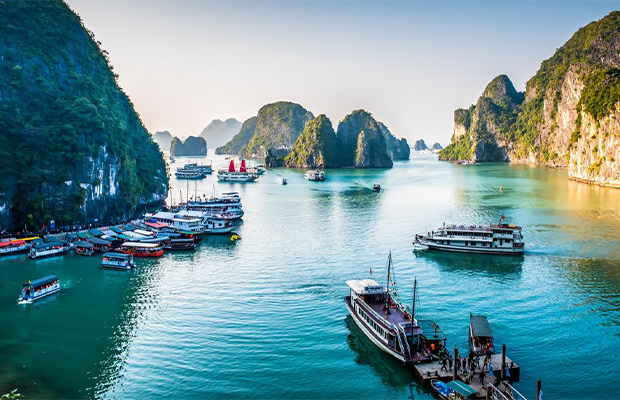
Halong Bay is one place where timing matters more than people expect, so the best time to visit Halong Bay often becomes the key detail that keeps a multi-stop route running smoothly.
 In calmer months, Halong Bay cruises run more smoothly with fewer weather-related changes.


Cheapest Time to Visit Vietnam: Rainy Season (By region)
Traveling during the rainy season offers the best value in Vietnam. Prices drop because of heat, humidity, and rain risk, not because travel becomes impossible. Many days still allow sightseeing with light adjustments.
Rain patterns vary by region, which makes route planning important. Short showers are common in some areas, while others experience heavier, longer rainfall. Understanding these differences helps travelers benefit from lower prices without constant disruption.
ainy Season = Shoulder Season (Deals + Fewer Crowds)
The rainy season functions as Vietnam's shoulder season rather than a full low season. Rain often arrives in brief bursts, especially in the north and South, with clearer skies returning soon after.
The trade-off comes in flexibility. Outdoor plans may need small changes, but cities, food tours, museums, and cultural sites remain accessible. Hotels and airlines lower prices to attract travelers, which often makes it easier to travel Vietnam on a budget without cutting too many experiences.
 Rainy season travel can still be enjoyable, with small timing changes and flexible plans.
Rainy Season by Region (North/Central/South)
In North Vietnam, the rainy season is from May to September. The rainfall is often in the form of frequent rain showers, actually unpredictable downpours. In Central Vietnam, the rainy season is from September to December.
Heavy downpours and continuous showers are common, and typhoons and tropical storms may occur. In South Vietnam, the rainy season is from May to October. The rainfall is in the form of frequent showers and occasional thunderstorms.
These shifts are closely tied to the Vietnam monsoon season, which is why the same month can feel very different between the north, central coast, and the south. During the monsoon season, the number of tourists visiting Vietnam is pretty small. So you can enjoy a leisurely, comfortable Vietnam Tour at low prices.
The prices of Vietnam Airlines and Vietnamese accommodations are also the best for your budget-saving choice. These prices during the rainy season are much lower than those in the high season. You can enjoy some luxury for way less money in Vietnam, and a Vietnam luxury tour can feel surprisingly good value in this period.
 Starting early helps you enjoy the day before afternoon showers become more likely.
Budget-Friendly Planning Tips
Starting activities early in the day helps avoid afternoon showers. Flexible day tours work better than fixed long-distance plans during this period. Indoor attractions provide a quick backup when the rain starts.
Adding one or two buffer days to the itinerary reduces pressure when the weather shifts. This approach keeps travel relaxed while still taking advantage of off-season pricing, especially when Vietnam is one part of a longer Southeast Asia tour with multi-country transfers.


Best Time for Festivals in Vietnam
Winter brings Vietnam's most important cultural celebrations. Cooler temperatures make travel more comfortable, and festival activity spreads across cities, towns, and religious sites.
Winter Festivals Overview
Winter in Vietnam includes New Year's Eve, Christmas, Lunar New Year, the Perfume Pagoda Festival, the Lim Festival, and the Yen Tu Festival. These events reflect religious traditions, family customs, and regional identity.
Festival periods create lively street scenes, special foods, and local ceremonies. Immerse yourself in the atmosphere of excellent Vietnamese festivals in winter in Vietnam if you are a festival lover.
 Winter is Vietnam’s liveliest festival season, with celebrations across cities and religious sites.
Booking Advice for Festival Season
Accommodation demand increases sharply during major festivals. Hotels in large cities and popular heritage towns fill quickly, and transport options become limited.
Booking earlier helps secure better locations and avoids last-minute compromises, particularly during Tet and Christmas periods.
Visiting Vietnam in December
Is December a good time to travel to Vietnam? Of course! The comfortable climate is ideal for activities in all three areas.
In North Vietnam, the temperature ranges from 15°C to 20°C, a little chilly in the evenings and early mornings. In Central Vietnam, it's from 18°C to 24°C. The pleasant weather is comfortable for outdoor activities. In South Vietnam, December features warm, humid conditions, with an average temperature of 23°C to 32°C.
December is the time for Christmas. In Vietnam, people are also celebrating the worldwide popular Christmas. It's on Wednesday, December 25, the same time in America.
Christmas has gained popularity in Vietnam, especially in urban areas. Have a city tour of Saigon's popular sites to explore the metropolis and enjoy a perfect Christmas experience.
You can get Vietnamese Christmas dining in many five-star hotels. It's a great time to tour the southern coast in December, soak up the sun on Phu Quoc Island, and view the wonders in Mui Ne.
 December is a fun time to see Christmas lights and holiday energy in Vietnam’s big cities.
Visiting Vietnam in January (Tet + Lantern Festival + Hue / Hai Van)
Weather Vietnam in January is different in different areas according to the monsoon influence.
In North Vietnam, temperatures range from 12°C to 20°C. In central Vietnam, temperatures are usually milder, ranging from 17°C to 24°C. In South Vietnam, temperatures range from 22°C to 31°C.
In January, there is a vital event throughout the year for Vietnam. Tet (Vietnamese Lunar New Year) is Vietnam's most important and widely celebrated festival. It marks the beginning of the lunar calendar.
The family reunion festival is celebrated in late January or early February. It begins on Tuesday, February 17, 2026.
Visitors can engage in various customs and traditions and witness cultural events and performances such as dragon and lion dances and traditional folk games. Visitors can also savor traditional Tet dishes such as banh chung (sticky rice cake), mut (preserved fruits), etc. But prices will be slightly higher during the festival.
The Lantern Full Moon Festival is also a very worthy place to visit. It's the best time to visit the ancient town of Hoi An. This month in Hoi An. You can fully embrace the festival - viewing the various hanging lanterns, making your own Vietnamese lantern, and releasing lanterns on the river to pray for your best wishes.
The nearby imperial city of Hue is still great this month. It's a suitable temperature to walk around the Citadel with fewer people.
Getting a motorbike tour from Hue to Da Nang through the Hai Van Pass is also a good option. Comfortable weather without rainfall to witness the kinds of scenery along the way.
 Tet is Vietnam’s biggest festival, with colorful street performances and a strong holiday mood.
Visiting Vietnam in February (Hanoi + Perfume Pagoda + Da Lat Flowers)
Vietnam Weather February also varies from area to area.
There's not much difference in the weather in January. It's the best time to visit Hanoi. The average temperature in Hanoi is about 17°C. It's perfect for a Hanoi city tour to dip into the delicious Vietnamese food, and visit museums, temples, and monuments. You can visit the Perfume Pagoda (near Hanoi) for a Buddhist pilgrimage.
The Perfume Pagoda Festival is a characteristic annual religious festival this month. Attending the festival, visitors can enjoy cultural performances, seek blessings, and make offerings. They can have a special cruise along the Yen Stream and a trek uphill to the pagoda nestled in a beautiful cave on seldom rainy days.
If you are a flower lover, February is also an excellent time for flowers in Da Lat. You can travel around the French-style town and get the best cherry blossoms in the dry season. Valley of Love and Da Lat Flower Park are good sites for roses, orchids, and more.
 A boat ride to Perfume Pagoda feels peaceful and scenic, especially in February.
Festival Calendar Table
|
Festival |
Usual timing |
Best places |
What to book early |
Travel tips |
|
Christmas |
Late December |
Ho Chi Minh City, Hanoi |
Hotels, holiday dining |
Expect higher dining demand |
|
Tet (Lunar New Year) |
Late Jan–Feb |
Nationwide |
Flights, hotels, guides |
Plan flexible city days |
|
Lantern Festival |
Monthly, peak in Jan |
Hoi An |
Central hotels |
Evening crowds increase |
|
Perfume Pagoda Festival |
Feb–Mar |
Near Hanoi |
Transport |
Visit on weekdays |
|
Lim Festival |
Feb |
Bac Ninh |
Local stays |
Arrive early |
|
Yen Tu Festival |
Jan–Mar |
Quang Ninh |
Transport |
Combine with Halong |
Best Time by Season
Vietnam's seasons shape travel experiences more than calendar months. Each season favors certain activities and regions, which makes seasonal planning useful for longer trips or repeat visits.
Spring (March–May): Halong Bay Cruise and Outdoor Adventures
Spring brings warmer temperatures and lower rainfall in much of northern Vietnam. March, April, and May work well for Halong Bay cruises, island visits, and light trekking.
Halong Bay stays relatively dry during this period, with daytime temperatures ranging from 20°C to 25°C in March and rising toward late spring. Evenings remain cooler, which adds comfort during overnight cruises.
Island exploration, cave visits, kayaking, and short hikes feel easier during spring. Visibility improves, and sea conditions support most cruise routes.
 Spring is ideal for kayaking and island exploration in Halong Bay, with clearer views and calmer conditions.
Visiting Vietnam in March
For Vietnam weather March it is warm, the daily temperature in Halong Bay ranges from 20°C to 25°C. And it may drop slightly to around 15°C to 20°C at night.
It's the best time for island adventures and cave exploration on the Halong Bay Cruise. You can admire the gorgeous limestone to explore the unique geomorphic landscape with a Vietnam cave tour in Sung Sot Cave (Surprise Cave) or Dau Go Cave (Wooden Stakes Cave).
Try kayaking and diving to admire the variety of halobios. And you can have a breathtaking view and sunset beauty along the Vietnam cruise with the enjoyment of a beautiful sandy beach.
The month is brilliant for Moc Chau and Da Lat. Trai Ham Da Lat Tea and Tea Sea offer the beautiful scenery of the tea garden. You can trace back to the origin of tea and enjoy a fresh taste.
Visiting Vietnam in April
April is generally the dry season all over Vietnam. Maybe a little bit hot in South Vietnam, but it provides a good chance to explore the Mekong Delta with less rainfall.
Have a Mekong River Cruise to explore the small villages, and visit orchards and fruit gardens for abundant fresh tropical fruits. You can arrive in Saigon to check in at the celebrity location-42 Nguyen Hue Street. It's also worth visiting Cai Rang Floating Market in Can Tho.
However, an average temperature of 35°C requires you to prepare for sun protection and stay hydrated. For exciting Halong Bay in April, the temperature may increase, the average temperature is about 27°C.
April is the best time for water sports and relaxing activities in Halong Bay. Some popular water sports like surfing and arm pulling can give you a fantastic Vietnam adventure tour. And you can enjoy a sunbath on the beach and feel the breeze of the sea. And the abundant ecosystem and natural landscape can also be a good choice.
Visiting Vietnam in May
May is the best time for spring with the most beautiful scenery in North Vietnam. You can enjoy the magnificent natural scenery and the charming beauty of mountains and rivers.
In the spring of May, Halong Bay's temperature is likely to rise further, reaching above 30°C during the day, and ranging from 25°C to 30°C at night.
May is the best time for fishing- one of the best things to do in Halong Bay. You can visit the Cua Van Floating Village to see the local floating life and see the fishers catching fish. You can try fishing by using traditional nets and bamboo traps and visiting the local cultural museum.
You can also attend cooking classes and taste the local delicacies. Get up early to Halong Bay, and you can observe the wonderful, magnificent sea view and sunrise. This month, the Water Lantern Festival is a charming Vietnamese cultural experience in Halong Bay.
Summer (June–August): Vietnam Beaches
With its magnificent coastline, Vietnam offers several stunning beach destinations. In June, July, and August, Vietnam is the perfect time for brilliant sunshine, giving the best enjoyment for Vietnam beach.
 Summer is great for Vietnam’s beaches, with strong sunshine and long days by the sea.
Visiting Vietnam in June
In June, Vietnam starts to get into the summer season. In general, it's hot and wet. The temperature is about 28°C to 35°C. You may experience some brief thunderstorms.
June is the start of the tourist season, and the number of tourists may be relatively low. So it's the best time to visit beautiful Vietnam beaches with less crowds in hot beaches with great beach resorts in Vietnam.
Nha Trang Beach is the best choice for June. You can view the Long stretches of golden sand and crystal clear waters. Explore the water sports like swimming, surfing, sunbathing, boating, etc. Never miss the diving activity to observe the abundant marine life and coral reefs in the sea and cruise to the nearby Vietnam islands.
And June is also the time for Tet Doan Ngo. The next celebration is on June 19, 2026. During this festival, you can engage in various activities such as eating sticky rice dumplings (banh chung), racing dragon boats, wearing medicinal herb pouches, and hanging mugwort leaves.
Visiting Vietnam in July
In July, the temperature usually ranges from 30°C to 36°C. The humidity is high with occasional short showers or thunderstorms.
July is the "summer vacation" period, so it may be more crowded. You can visit the beach in Danang. My Khe Beach, one of the most famous beaches in Danang, is named one of the most beautiful beaches in the world. It is renowned for its fine white sand and clear, transparent water. The sandy beach is wide and flat, suitable for walking, sunbathing, and beach activities.
As one of the best places for surfing in Vietnam, you can rent surfboards and enjoy a thrilling surfing experience. You can also travel to nearby attractions like Ba Na Hill to experience the world's longest tree-lined cable car system.
Visiting Vietnam in August
Vietnam in August is simply the same as July- similar climate, still in summer vacation, and suffering from high humidity and short showers.
August is the ideal time for beach and water sports inPhu Quoc Island. The brilliant beach here, like Long Beach and Starfish Beach, offers clean and delicate sand, and are crystal clear. Try diving, snorkeling, boating, windsurfing, and fishing.
You can also get a trekking exploration in the Phu Quoc National Park and Da Ban Forest near the beaches. Amazing natural landscapes and rich biodiversity can make your beach tour more special. Oh, don't forget the abundant fresh seafood to satisfy your stomach!
Autumn (September–November): Rice Fields and Trekking
Autumn brings visual contrast to northern Vietnam. September through November highlight the rice harvest season and trekking routes.
 Autumn is the best season for rice terraces in the north, with golden fields and great trekking views.
Visiting Vietnam in September
In September, the average temperature in most parts of Vietnam varies from 24°C to 31°C with occasional showers and thunderstorms. In the mountainous area, the temperature gradually decreases. The daily temperature ranges from 20°C to 25°C and about 15°C at night.
Vietnam in September is the rainy season. But the short drizzle can bring out a more verdant hue in the terraced rice fields.
Sapa is the best site to witness the most excellent terraces and rice fields in green. After a Hanoi tour to explore the city, you can go on a Sapa trekking to view the lush and green rice paddy. And also, join the local market and experience the local life with the culture of Vietnam.
Visiting Vietnam in October
In October, the temperature is suitable for tourism. It ranges from 25°C to 30°C during the day and about 20°C at night.
The rice fields in October will change from emerald green to yellow-green. In late October, Sapa or Ninh Binh will present you with a golden or bronzed beauty. Have a Vietnam boat tour to closely view the rice fields. Amazing trekking and boating experience!
October is also celebrating the Mid-Autumn Festival. The festival will be held on September 25, 2026. It is a family reunion festival that is usually celebrated with dinner parties, moon viewing, moon cakes, and various activities. Immerse yourself in the special atmosphere and taste the moon cake.
Visiting Vietnam in November
Early November catches the best golden sight of rice fields. The golden rice paddies contrast with the surrounding green mountains and blue sky, creating a magnificent and pleasant landscape. It's best to visit Mai Chau. The average temperature ranges from 16°C to 23°C.
You can admire the golden rice fields and the hillsides covered in red leaves when visiting Vietnam in November. And Mai Chau is a perfect place to learn the minority culture. You can visit the local market. You can select one homestay for Vietnamese countryside life with fancy activities of harvesting rice fields to experience the farming culture.

Typhoon Season: Worst Time (Or Plan Carefully)
Vietnam's typhoon season can disrupt travel, especially along the northern and central coasts. Understanding its impact helps plan safer itineraries and reduce the risk of canceled cruises, flooded streets, or interrupted outdoor activities.
Typhoon Season in Plain Language (What It Really Impacts)
Typhoon season affects Vietnam unevenly. Northern and central coastal areas face the highest risk from July through September, with occasional extension into October. These storms can lead to cruise cancellations, temporary flooding, and transport delays.
Typhoon season affects Vietnam unevenly. Northern and central coastal areas face the highest risk from July through September, with occasional extension into October. These storms can lead to cruise cancellations, temporary flooding, and transport delays, and a pre-booked Halong Bay cruise is often the first plan that gets reshuffled.
Travel during this period is not impossible, but it requires flexibility. Weather windows may be short. Outdoor plans may change with little notice. Coastal stays carry higher uncertainty than inland routes. Southern Vietnam remains largely outside the main typhoon track. When storms affect the central coast, shifting time to southern cities or the Mekong Delta reduces risk and keeps trips on track. The key planning principle is margin. Build buffer days. Choose refundable bookings. Avoid stacking fixed outdoor activities back-to-back during peak storm months.
 During typhoon months, coastal weather can change fast, so plans need more flexibility.
Action Plan Template
When planning travel during typhoon season, think through what could go wrong and have alternatives ready. This table shows common problems and practical solutions.
|
Risk |
Impact |
Fix |
Alternative |
|
Halong Bay cruise cancelled |
Your main north Vietnam highlight disappears |
Rebook for next available day if schedule allows |
Visit Ninh Binh (limestone karsts by land), spend extra time in Hanoi (museums, food tours, day trips to nearby areas) |
|
Central coast flooding (Hoi An, Da Nang) |
Ancient town becomes difficult to walk, beaches unusable |
Wait one day for water to recede (flooding usually clears quickly) |
Shift to Hue (imperial city less flood-prone), visit My Son ruins (inland), take cooking class (indoor activity) |
|
Beach resort plans disrupted |
Paid for beach time but weather won't cooperate |
Use hotel facilities (spa, pool if covered, restaurants) |
Switch to cultural touring (visit nearby towns, temples, markets), accept the loss and move to different region early |
|
Flight cancelled or delayed |
Can't reach next destination on schedule |
Rebook next available flight, consider night train if available |
Stay extra night in current location, skip less important stops to catch up on schedule, accept compressed itinerary |
|
Heavy rain disrupts outdoor trekking |
Sapa or other mountain treks become muddy and miserable |
Postpone trek by one day if possible, shorten route |
Visit local markets and villages by car instead of trekking, focus on indoor cultural experiences, move to next destination early |
|
Multi-day tour faces weather |
Paid for package but conditions are poor |
Communicate with tour operator about modifications |
Request partial refund for missed activities, accept indoor alternatives offered, reschedule if operator allows |
The key principle: flexibility. Don't lock yourself into rigid plans during typhoon season. Keep some schedule slack. Choose refundable bookings where possible. Accept that you might need to adjust on short notice.
 If cruises get canceled, Ninh Binh is a great land-based alternative with similar limestone scenery.
Safer Route Swaps (North vs South)
If the coast of central Vietnam is unstable, shift the focus to the South. Ho Chi Minh City, the Mekong Delta, and Phu Quoc remain largely unaffected by typhoons. Visiting southern beaches, floating markets, and islands provides a safer alternative without major disruption.
Vietnam Weather by Month (January–December)
|
Month |
North (feel + key risk) |
Central (feel + key risk) |
South (feel + key risk) |
Best for |
Watch-outs |
Quick tip |
|
January |
Cool, dry, 12–20°C; Tet preparations |
Mild, 17–24°C; low rain |
Warm, 22–31°C |
Hanoi, Hoi An, Ho Chi Minh City |
Tet festival crowds |
Book hotels early |
|
February |
Cool, dry, 13–21°C |
Mild, 18–25°C |
Warm, 22–32°C |
Perfume Pagoda, Hoi An Lantern Festival |
Some showers |
Plan around festivals |
|
March |
Warmer, 18–25°C |
Dry, 20–28°C |
Hot, 25–32°C |
Halong Bay, Da Lat |
Occasional rain |
Start outdoor tours early |
|
April |
Mildly hot, 20–28°C |
Hot, dry, 25–32°C |
Hot, 26–34°C |
Mekong Delta, beaches |
Sun exposure |
Carry water & sunscreen |
|
May |
Hot, 23–30°C |
Very hot, 28–35°C |
Warm, 26–33°C |
Northern treks, Halong Bay |
Rain starting in north |
Schedule morning excursions |
|
June |
Hot & humid, 25–33°C |
Very hot, 30–40°C |
Hot, 27–35°C |
Beaches, water sports |
Short thunderstorms |
Check weather before cruises |
|
July |
Hot & humid, 26–34°C |
Very hot, 32–40°C |
Hot, 28–36°C |
Coastal beach resorts |
High humidity |
Plan indoor backup activities |
|
August |
Hot & humid, 26–35°C |
Very hot, 32–39°C |
Hot, 28–36°C |
Phu Quoc beaches, Da Nang |
Heat & rain |
Early morning beach visits recommended |
|
September |
Warm, 24–31°C; rain |
Warm, 27–35°C; storms |
Warm, 26–33°C |
Rice terraces, trekking |
Typhoons in central coast |
Monitor forecasts daily |
|
October |
Cool, 23–30°C |
Warm, 25–32°C |
Warm, 25–32°C |
Harvest season, Halong Bay |
Some showers in north |
Ideal for multi-region travel |
|
November |
Cool, 20–28°C |
Warm, 24–30°C |
Warm, 25–32°C |
Rice fields, minority culture |
Early central rains |
Combine trekking with city tours |
|
December |
Cool, 15–25°C |
Mild, 18–24°C |
Warm, 23–32°C |
Christmas in cities, beaches |
Occasional light showers |
Book festive hotels early |
This table reflects typical patterns, but weather varies year to year. Travelers should treat it as a planning baseline rather than a guarantee.
Monthly Picks
- January: Tet celebrations, Hanoi tours, Hoi An lanterns.
- February: Perfume Pagoda visits, Da Lat flowers, mild climate.
- March: Halong Bay cruises, Moc Chau tea plantations.
- April: Mekong Delta explorations, sunny southern beaches.
- May: Northern trekking, early Halong Bay fishing trips.
- June: Nha Trang and coastal beaches, Tet Doan Ngo festivities.
- July: Da Nang beaches, Ba Na Hills cable car, summer activities.
- August: Phu Quoc Island snorkeling, trekking in coastal forests.
- September: Sapa rice terraces, early autumn harvest, trekking.
- October: Golden rice fields, Mid-Autumn Festival, Halong Bay cruises.
- November: Mai Chau golden paddies, minority villages, rural homestays.
- December: Christmas urban tours, southern beach sunbathing, festival atmosphere.
Travelers should note:
- Central Vietnam experiences the highest storm risk from September to November.
- South Vietnam's rainy season runs May to October, with frequent short showers.
- North Vietnam has a cooler winter from December to February.
- These are typical patterns; exact conditions can vary each year.
 When the central coast is unstable, the Mekong Delta is a steady and rewarding southern alternative.
More Tips About Planning a Vietnam Tour at the Right Time
When planning your Vietnam trip, aligning your visit with the weather, crowds, and seasonal highlights ensures a smoother experience. First-timers who visit Vietnam in peak periods usually feel the biggest differences in prices, queues, and booking availability.
Choose Weather That Fits Your Style
Vietnam offers varied climates. The dry season from December to April provides warm, sunny days suitable for beach trips, cruises, and trekking. Cooler months from November to February bring comfortable temperatures and lower humidity, ideal for cultural tours and northern mountain explorations.
Selecting months that suit your preferred activities helps avoid discomfort from heat, rain, or humidity.
High Season vs Shoulder Season
High season delivers abundant attractions and active tourism. Popular sites may be crowded, and accommodation prices rise.
Shoulder season, often overlapping with the rainy months, offers lower costs and fewer tourists. Although some outdoor activities may be interrupted by weather, flexibility allows travelers to enjoy a more relaxed pace, and a compact route like plan 7 days in Vietnam often handles season changes better than a tightly packed multi-stop loop.
Peak Crowd Periods
Vietnam sees peak crowds during July and August (summer vacation) and from December 20 to January 10 (Christmas and New Year). These peaks match the real rhythm of Vietnam tourism—more flights, fuller hotels, and heavier traffic around major holiday windows.
Some five-star hotels may require compulsory Christmas dinners on December 24 and 30. Knowing these periods helps travelers manage expectations, avoid long queues, and secure bookings in advance.
Plan Ahead (Booking Reality)
Popular attractions, cruises, and cultural events often require advance reservations. Booking weeks or months ahead ensures access, particularly during festivals, long holidays, or weekends. Planning early prevents disappointment and allows for better route selection and accommodation choices.
For many travelers, a package trip in Vietnam simply reduces the number of moving parts during busy weeks, especially when flights, cruise cabins, and central hotels sell out early. And for route building, the classic Vietnam tourist place list is usually the base layer people start from before adjusting for season and pace.

Prepare Essential Items for Your Vietnam Tour (Packing List)
Packing the right items makes a Vietnam trip comfortable, safe, and enjoyable. Consider the climate, season, and activities when deciding what to bring.
|
Category |
What to Pack |
Notes |
|
Travel Documents |
Valid passport, visa, travel insurance |
Check visa requirements for your nationality |
|
Money & Payment |
Vietnamese Dong, international credit/debit cards |
Carry small bills for markets and transport |
|
Electronics |
Power adapter (220V, Type A/C), portable charger, phone, camera |
Keep devices charged for photos and navigation |
|
Health & Safety |
Medications, first-aid kit, insect repellent |
Essential for outdoor activities and rural areas |
|
Hydration & Snacks |
Reusable water bottle, light snacks |
Stay hydrated, especially in hot or humid months |
|
Toiletries |
Travel-sized toiletries, sunscreen, sunglasses |
Sunscreen is crucial during dry season and beach trips |
|
Clothing |
Comfortable walking shoes, light clothing, layers for cooler regions |
Include a jacket for northern winter, raincoat for rainy season |
|
Rain Gear |
Umbrella or raincoat |
Essential during the rainy months (May–October) |
|
Seasonal Accessories |
Hat, scarf, gloves for cooler months; swimwear for beaches |
Helps adjust to temperature variations across regions |
|
Guides & Maps |
Travel guidebook or digital maps |
Handy for navigation and cultural reference |
This table ensures that travelers are well-prepared for different climates and activities in Vietnam, whether trekking in the north, exploring cities, or relaxing on southern beaches.
A few small habits from practical Vietnam travel tips—cash, crossings, day timing, and rain backups—usually make the biggest difference in daily comfort.
For most routes and tourist areas, Vietnam is safe to visit with normal precautions, and that baseline confidence helps people plan more calmly across regions.
 Packing the right basics—rain gear, sun protection, and simple medicine—makes Vietnam travel much easier.
Conclusion
Vietnam offers diverse experiences across its north, central, and southern regions. Planning your Vietnam trip according to seasonal weather, festivals, and crowds can make your journey smoother and more enjoyable.
The best time to visit generally falls between October and April, offering comfortable weather across all regions. Travelers seeking lower prices can consider the rainy season, though they should remain flexible with outdoor plans. Typhoon months and peak festival periods require extra planning to avoid disruptions.
By combining weather awareness, festival timing, and thoughtful planning, contact us to tailor a Vietnam trip that suits your preferences, whether you want adventure, culture, or relaxation.
Srey Pov
Cambodia is my home, not simply another stop on an itinerary.
I was born in Phnom Penh, studied Hotel and Tourism Management, and have worked in tourism for 15 years. I’ve also traveled extensively through Vietnam, Laos, Thailand, and Myanmar.
My work has included private journeys as well as a multi-country trip for a group of more than 50 travelers, which received a five-star review.
When I write about Cambodia and the wider region, I bring the view of someone who lives here and has spent years planning trips on the ground—not just repeating what appears in standard destination guides.
Email me about your travel idea