

Perfect Laos Itinerary (7–21 Days): Easy Routes, Costs, and Travel Tips

Srey Pov
Cambodia is my home, not simply another stop on an itinerary.
I was born in Phnom Penh, studied Hotel and Tourism Management, and have worked in tourism for 15 years. I’ve also traveled extensively through Vietnam, Laos, Thailand, and Myanmar.
My work has included private journeys as well as a multi-country trip for a group of more than 50 travelers, which received a five-star review.
When I write about Cambodia and the wider region, I bring the view of someone who lives here and has spent years planning trips on the ground—not just repeating what appears in standard destination guides.

 Email me about your travel idea
Planning a Laos itinerary requires a different mindset than most Southeast Asia trips. Laos is long and narrow, with mountains covering most of the land, so a 300 km journey can take much longer than you think. Here, you’ll see how the country is divided into northern, central, and southern regions, and why planning your stops in the right order makes your trip feel calm instead of rushed.
In the pages below, you’ll find ready-made Laos itineraries that link key places like Luang Prabang, Vang Vieng, Vientiane, Pakse, the Bolaven Plateau, and the 4000 Islands. You’ll learn why 10 days is the ideal Laos itinerary length for most first-time visitors, and how to adapt it to 7, 14, or 21 days depending on your time and travel style.
Whether you’re a backpacker, a couple, or a slow traveler, this guide helps you choose fewer, better stops so you can enjoy Laos’s rivers, waterfalls, and villages at an easy, natural pace.
 Laos at a Glance: Why Your Laos Itinerary Matters
Best Laos Itinerary for First-Time Visitors (Quick Answer)
Quick Laos Itinerary Planner (By Days and Travel Style)
Key Planning Basics for a Laos Itinerary
Laos Itineraries by Trip Length (7–21 Days)
Main Places to Include in Your Laos Itinerary
Transport for Your Laos Itinerary
Short FAQs for Your Laos Itinerary
Laos at a Glance: Why Your Laos Itinerary Matters
Laos moves at its own pace, and that rhythm shapes every trip. Days feel quieter, people are open and warm, and nature often feels close even in town centers. Laos stretches from Chinese tea plantations in the north to the Cambodian border in the south, and these contrasts are what make a first-time Laos tour so memorable.
The country measures roughly 1,000 kilometers top to bottom but only 150 kilometers at its narrowest point. Mountains cover 80% of the landscape, which explains why getting around takes longer than you'd think by looking at a map. Here are the main regions you'll explore in a Laos itinerary and what makes each unique.
 This simple map shows how Laos stretches from the far north down to the southern Mekong.
Northern Laos: Mountains, Rivers, and Quiet Towns
Northern Laos centers on Luang Prabang, a historic town shaped by rivers and temples. The Mekong and Nam Khan meet here, framing old streets, markets, and shaded cafés. This region suits travelers who enjoy slow days, culture, and time near water.
Beyond Luang Prabang, Nong Khiaw sits between steep limestone cliffs and a quiet river. Village walks, viewpoints, and long mornings define the rhythm here. Travel takes longer than expected, so fewer stops usually lead to a calmer and more rewarding route.
 Northern Laos is all about quiet rivers, green mountains, and slow village life.
Central Laos: Adventure and Scenic Connections
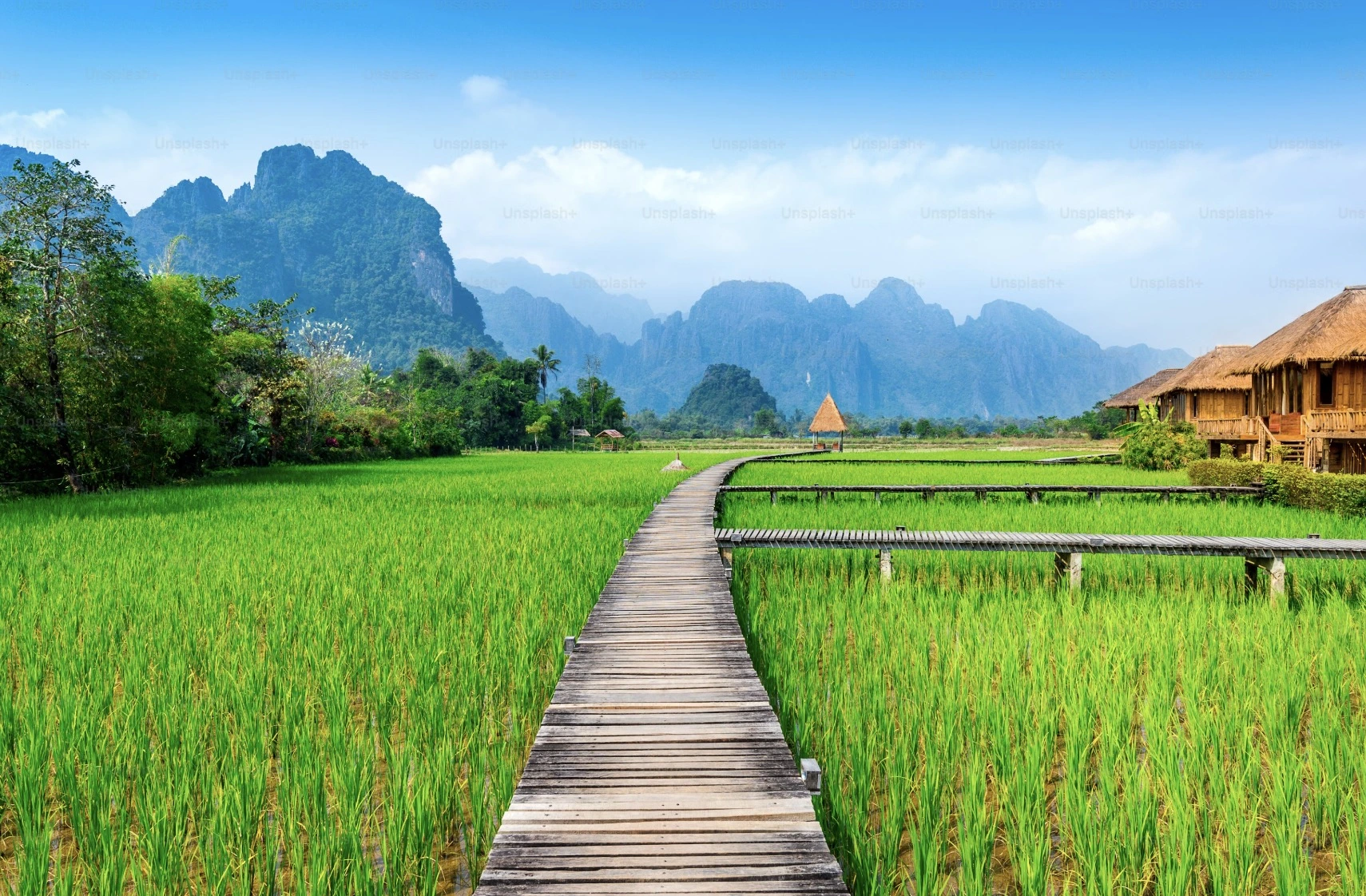
Central Laos has a more energetic feel, starting with Vang Vieng and its wide karst valley. Lagoons, short hikes, and river activities fit well into compact itineraries. This region suits travelers who want nature, light adventure, and easy connections.
Vientiane stretches along the Mekong with cafés, temples, and evening walks. One or two nights cover the highlights without rush. Farther south, the Thakhek Loop adds caves and rural scenery, linking the north and south without backtracking.
 Central Laos offers soft adventure in Vang Vieng, with river activities under tall limestone cliffs.
Southern Laos: Waterfalls, Coffee, and River Life
Southern Laos is even slower-paced. Pakse is the main gateway, leading to the Bolaven Plateau, where coffee plantations stretch down volcanic slopes, and waterfalls cascade into lush valleys. This region suits travelers who want easy days immersed in nature.
Further south, the 4000 Islands scatter across the Mekong near the Cambodian border. Life here revolves around the river, with hammocks, fishing villages, and the rare Irrawaddy dolphins adding quiet magic to afternoons. Travel between stops can be slow, so planning fewer locations usually works best.
 Southern Laos is perfect for slow days by waterfalls, coffee farms, and the quiet Mekong islands.
Why Planning Matters in Laos
Distances in Laos are longer than they appear. A 300-kilometer journey might take eight hours by bus, as roads twist through mountains and speeds rarely exceed 50 kilometers per hour outside main routes. The new railway connecting Vientiane to Luang Prabang helps one route, but most travel still happens on winding mountain roads.
A clear Laos itinerary balances travel days with rest, reduces one-night stays, and keeps the route logical. Mapping north, central, and south regions makes it easier to visualize the journey and plan Laos tour that keeps your days focused on exploring, not just traveling.
Best Laos Itinerary for First-Time Visitors (Quick Answer)
For most first-time visitors, 10 days is the ideal Laos itinerary length.
The most balanced route runs north to south: Luang Prabang (3 nights) - Vang Vieng (2 nights) -Vientiane (1 night) - Pakse and the south (4 nights).
This structure keeps travel logical, limits packing days, and shows both mountain and river regions. It works well for solo travelers, couples, and first-time visitors who want variety without fatigue.
Jump to Section 6.2 for the complete day-by-day breakdown of this recommended 10-day Laos itinerary.
Quick Laos Itinerary Planner (By Days and Travel Style)
Laos Itinerary Overview (7–21 Days)
Planning your time in Laos depends on what you want to experience. A week gives you enough time to see the main temples and natural highlights in the north. Ten days opens up the classic route from Luang Prabang down to the Mekong islands in the south, especially if you plan a Luang Prabang tour as your base in the north.
Two weeks lets you add mountain villages, cave systems, and waterfall regions that most rushed visitors miss. The table below matches trip lengths to realistic routes for different types of travelers.
|
Trip Length |
Coverage |
Sample Route |
Suitable for |
|
5–7 Days |
North highlights only |
Luang Prabang (3 nights) - Vang Vieng (2 nights) - Vientiane (1 night) |
Backpackers, Couples, First-timers |
|
10 Days |
Classic north–south |
Luang Prabang (3 nights) - Vang Vieng (2 nights) - Vientiane (1 night) - Pakse (1 night) - 4000 Islands (2 nights) |
Couples, Families, First-timers |
|
14 Days |
North + central + south |
Luang Prabang (2 nights) - Nong Khiaw (2 nights) - Vang Vieng (2 nights) - Thakhek Loop (2 nights) - Pakse (1 night) - Bolaven Plateau (2 nights) - 4000 Islands (2 nights) |
Nature lovers, Active travelers, Backpackers |
|
21 Days |
Full Laos or multi-country |
All major regions with 3+ rest days, village experiences, and option to add Cambodia (Siem Reap, Phnom Penh) or Vietnam (Hanoi, Halong Bay). This length is also ideal for Southeast Asia tours that combine Laos with its neighbors. |
Long-term travelers, Couples, Digital nomads, Families |
.jpg "Laos itinerary route map from north to south") This simple map shows the classic Laos route from Luang Prabang in the north down to the 4000 Islands in the south.
This simple map shows the classic Laos route from Luang Prabang in the north down to the 4000 Islands in the south.Laos Itineraries by Travel Style
Backpacker Laos Itinerary
Budget travelers get the most from Laos by mixing buses, motorbikes, and shared transport. The Thakhek Loop and Bolaven Plateau suit rented scooters, with easy stops at caves and waterfalls. Hostels cost around $5–10 per night and make it easy to meet other travelers.
Night buses cut accommodation costs while covering long distances. Slow boats and local minivans stay far cheaper than private transfers or flights. Street food keeps daily spending near $20–25, with room left for activities like kayaking or short treks.
Comfort / Couple Laos Itinerary
A comfort or couple Laos itinerary is for those who value calm travel and quality stays. Boutique hotels in Luang Prabang, riverside stays in Vang Vieng, and eco-lodges near 4000 Islands reward slower travel. A flight from Luang Prabang to Pakse also avoids long road days.
The Laos–China railway shortens the Vientiane to Luang Prabang journey to a few hours. Private drivers and small tours remove transport stress. Extra time allows markets, sunset cruises, and quiet mornings.
Family-Friendly Laos Itinerary
Families need a different southern Laos itinerary altogether. Such itineraries prioritize ease and safety. Towns with short transfers help avoid long travel days. Accommodation choices focus on space and simple comfort.
Family rooms are common in guesthouses and mid-range hotels. Food stays simple and mild, with rice and fresh fruit widely available. Skipping remote loops and tough treks keeps the trip relaxed and enjoyable.
 Luang Prabang makes a calm base in northern Laos, with temples, riverside walks, and soft sunset views.
Key Planning Basics for a Laos Itinerary
Seasons and Best Time for a Laos Itinerary
Laos has two main seasons that dramatically affect your Laos trip. The dry season runs from November through April, bringing clear skies and comfortable temperatures. This period represents peak tourism season, especially December and January, when Europeans escape winter. Book hotels ahead for the Christmas and New Year weeks.
The rainy season spans May through October. Despite its name, rain typically falls in afternoon thunderstorms, leaving mornings clear for activities. Rivers run full, waterfalls reach maximum power, and rice fields glow brilliant green. Prices drop significantly, and popular sites feel empty. Roads can wash out in remote areas, so check conditions before booking a motorbike loop.
November through February offers the best Laos itinerary conditions for most travelers. For many visitors, these months line up with the best time to visit Laos, when weather, scenery, and crowds feel well balanced. March and April turn brutally hot, with temperatures hitting 40°C in the lowlands. This suits travelers who tolerate heat well and prefer empty attractions.
 It shows how Laos looks in the dry seasons, as well as the best time to visit Laos.
Visas and Entry for Laos
Most nationalities can enter Laos through three Laos visa options. E-visas cost around $50 and take three business days to process online. You'll need this before arrival at most international airports.
Visa on arrival works at major land borders and Wattay International Airport in Vientiane, costing $30–42 depending on nationality. Embassy visas are useful for longer stays or complicated passport situations.
Standard tourist visas allow 30 days in Laos and can be extended once for an additional 30 days at immigration offices in Vientiane or Luang Prabang. Many travelers enter overland from Thailand, Vietnam, or Cambodia, with popular crossings including the Thai Friendship Bridges and the Vietnamese border near Phonsavan or Dien Bien Phu.
 It’s easy to get Laotian E-visa for your Laos tours.
Money, ATMs, and Daily Budget in Laos
Laos uses the Lao Kip, though Thai baht and US dollars circulate widely in tourist areas. ATMs in cities dispense up to 2 million kip per withdrawal, roughly $100. You'll find reliable ATMs in Luang Prabang, Vang Vieng, Vientiane, and Pakse. Smaller towns like Nong Khiaw or Si Phan Don have limited ATMs that sometimes run out of cash.
Budget backpackers can survive on $25-35 daily. This covers dorm beds, street food meals, local transport, and occasional beer. Mid-range travelers spend $50-80 per day on private rooms, restaurant meals, organized tours, and nicer transport options. Comfort travelers should budget $100-150 daily for boutique hotels, private transfers, spa treatments, and wine with dinner.
Your total costs depend heavily on accommodation choices and transportation, whether by bus, train, flights, or private car. A Laos 2-week Itinerary for a backpacker might cost $400-500 total. The same two weeks in comfort hotels with domestic flights could reach $2,000-2,500 per person.
 Laos uses kip, but many travelers also pay with dollars and baht.
SIM Cards, Internet, and Useful Apps
Buy a Lao Telecom or Unitel SIM card at the airport or any phone shop for $3-5. A 10GB data package costs $5-8 and lasts most week-long trips. Coverage reaches all major towns and main highways, but disappears in remote mountain areas. Guesthouses offer free WiFi, though speeds vary dramatically from fast in cities to barely usable in villages.
Download Maps.me before leaving home and save offline maps for all Laos regions. The app works perfectly for navigation without data. 12Go Asia helps book buses and trains. Grab operates in Vientiane for taxis. Google Translate's offline Lao package helps with basic communication.
Safety, Health, and Culture Tips
Laos is generally safe for travelers, with serious crime being rare. Walking at night feels comfortable in most towns, and many visitors find it safe to visit Laos as long as they follow basic precautions and stay aware of traffic.
Traffic poses the biggest risk, especially on mountain roads and when riding motorbikes. If you plan to rent or ride a motorbike, consider a comprehensive travel insurance plan that covers accidents and medical evacuation.
Respect for local culture is important. Dress modestly at temples, remove shoes before entering, and avoid touching monks. Stay healthy by drinking bottled water, using sun protection, and carrying mosquito repellent. Dengue fever is present in some areas, so apply repellent at dawn and dusk.
 Laos is generally safe to visit, and dressing modestly at temples shows respect for local culture.
Common Mistakes to Avoid in a Laos Itinerary
Many first-time visitors try to squeeze too much into a short Laos itinerary. One-night stays across several towns quickly turn the trip into a cycle of packing and bus rides. You end up seeing places only in passing rather than enjoying them. Reducing the number of stops allows you to experience each place more fully.
Travel time is another common issue that catches people off guard. Bus journeys often take longer than advertised due to road conditions and frequent stops. Seasonal timing also affects plans, with dry months reducing waterfall flow and rainy periods complicating loop routes. Checking conditions in advance helps avoid frustration on the road.
Laos Itineraries by Trip Length (7–21 Days)
Choose your trip length based on how much time you have and what kind of experience you want. A week covers the essential northern highlights, and even 5 days in Laos can work as a short introduction if you focus on just one or two key stops.
Ten days opens up the full north-to-south route. Two weeks add mountain villages and cave regions, and three weeks let you travel at the slow pace Laos deserves.
Each itinerary below is flexible and can be adjusted based on your interests, budget, and the season you travel.
7-Day Laos Highlights Itinerary
Who this itinerary is for: This compact itinerary works for first-time visitors with limited vacation days who want temples, nature, and a taste of Lao culture without rushing too much.
Day-by-Day Breakdown
Day 1: Arrive in Luang Prabang – Arrive and transfer to your hotel in the old town. Spend the afternoon walking along the Mekong, visiting the night market, and easing into the local rhythm.
Day 2: Visit Luang Prabang Temples and Alms Giving – Watch the early morning alms-giving ceremony, then explore Wat Xieng Thong and the Royal Palace. Climb Mount Phousi for sunset and enjoy a relaxed evening in town.
Day 3: Visit Kuang Si Falls and Bear Rescue Center – Visit Kuang Si Falls in the morning and stop at the nearby bear sanctuary. Swim in the pools, then return to town for a massage or cooking class.
Day 4: Travel to Vang Vieng – Travel to Vang Vieng by bus or private transfer. Explore the countryside by bike and visit a lagoon or viewpoint before sunset.
Day 5: Vang Vieng Adventure Day – Spend the day kayaking, tubing, or visiting caves around the valley. End the day at a riverside café with views of the limestone cliffs.
Day 6: Travel to Vientiane – Drive to Vientiane and visit Pha That Luang in the afternoon. Walk along the Mekong promenade and browse the night market.
Day 7: Vientiane and Departure – Visit Patuxai and the morning market if time allows. Transfer to the airport for your onward flight.
 Luang Prabang’s riverside old town is a calm base for a short Laos trip.
Suggested Accommodation and Optional Adjustments
This itinerary fits well with comfortable 3-star guesthouses and small boutique hotels that keep local character. For most visitors, three to four nights is an ideal Luang Prabang tour length before you continue south through Vang Vieng and Vientiane.
Luang Prabang offers charming stays in restored colonial buildings, Vang Vieng has riverside and mountain-view options, and Vientiane provides convenient hotels near the Mekong. Expect mid-range doubles to fall around $40–80 per night.
You can easily adjust the plan to suit your style. Add extra nights in Luang Prabang for village treks, switch buses for a private car between stops, or stay longer in Vang Vieng for outdoor activities. If cities do not appeal to you, skipping Vientiane and flying out of Luang Prabang is also a simple change.
10-Day Classic Laos Itinerary (North to South)
Who this itinerary is for: This balanced route takes you from the northern mountains to the southern Mekong islands, covering temples, waterfalls, caves, and river life in a comfortable pace.
Day-by-Day Breakdown
Days 1–7 – Same route and flow as the 7-day Laos Highlights Itinerary, covering Luang Prabang, Vang Vieng, and Vientiane.
Day 8: Vientiane to Pakse – Morning flight or overnight bus to Pakse. Arrival in southern Laos and hotel check-in.
Day 9: Pakse to 4000 Islands – Overland transfer to Don Det or Don Khon via bus and boat. Afternoon free by the Mekong.
Day 10: 4000 Islands and Departure – Island exploration in the morning, then onward travel to Cambodia or return to Pakse for departure.
Why This Itinerary Works for First-Timers
This 10-day north-to-south route covers Laos’s main regions without rushing. You spend enough time in Luang Prabang, enjoy nature in Vang Vieng, and slow down in the 4000 Islands. The route follows the country’s layout, and travel days feel manageable rather than tiring.
Comfortable 3-star guesthouses and boutique hotels work well throughout, with mid-range doubles around $40–80 per night. You can adjust the plan by adding nights, using private transfers, or flying between Vientiane and Pakse to save time. For most first-time visitors, this balance shows the real side of key Laos cities without burnout.
14-Day Deeper Laos Itinerary
This itinerary suits travelers who want depth, not speed. It changes the core route by adding Nong Khiaw and the Thakhek Loop instead of just stretching the 10-day plan, and it builds in time for gentle Laos trekking and quieter village stays.
Day-by-Day Breakdown
Day 1: Arrive in Luang Prabang – Same as the 7-day itinerary—arrival, old town walk, and night market orientation.
Day 2: Luang Prabang Temples and Culture – Alms ceremony, main temples, Royal Palace Museum, and Mount Phousi sunset.
Day 3: Nong Khiaw Take a morning minivan to Nong Khiaw (3.5 hours). Check into a riverside guesthouse and hike to the Pha Daeng viewpoint for sunset over the Nam Ou River valley.
Day 4: Nong Khiaw Trekking – Full-day trek to remote villages in the surrounding mountains or take a boat trip to Muang Ngoi and explore on foot. Return to Nong Khiaw for the night.
Day 5: Return to Luang Prabang – Drive back to Luang Prabang and visit Kuang Si Falls in the afternoon. Spend the evening at a riverside restaurant or spa.
Day 6: Vang Vieng – Transfer to Vang Vieng, stopping at scenic viewpoints along the way. Afternoon free for blue lagoons or sunset viewpoint.
Day 7: Vang Vieng Activities – Full day of kayaking, tubing, cave exploration, or rock climbing depending on your interests.
Day 8: Thakhek Loop Start – Drive or bus to Thakhek (5–6 hours). Pick up a rented motorbike and ride the first section of the loop to Kong Lor Cave.
Day 9: Kong Lor Cave and Loop Explore Kong Lor Cave by boat in the morning, then continue the loop through countryside and small villages. Overnight in a guesthouse along the route.
Day 10: Complete Thakhek Loop – Finish the loop back to Thakhek, visiting Tham Nong Paseum cave and other roadside stops. Return bikes and bus to Pakse.
Day 11: Pakse and Bolaven Plateau – Arrive in Pakse and spend the day touring Bolaven Plateau waterfalls and coffee plantations.
Day 12: 4000 Islands – Transfer to Don Det or Don Khon. Relax by the river and explore the island by bicycle.
Day 13: 4000 Islands Exploration – Visit Li Phi Falls, spot Irrawaddy dolphins, and cross to neighboring islands by boat.
Day 14: Departure from Pakse – Morning transfer back to Pakse for your flight home or onward connection.
 Gentle trekking around Nong Khiaw adds mountain views and quiet villages to a deeper Laos itinerary.
The 14-day route keeps all the main highlights and adds Nong Khiaw and the Thakhek Loop. These places introduce mountain scenery, caves, and quieter villages beyond the usual tourist stops. The trip feels deeper and less rushed.
Extra time allows for trekking, motorbike loops, and unplanned village breaks. You move at a steadier pace and spend more time outdoors. This option suits travelers who enjoy active days and exploring less-visited areas.
21-Day Slow Laos Itinerary
This relaxed journey gives you time to live in each place rather than just visit, with rest days, village homestays, and space to follow your interests.
Day-by-Day Breakdown
Days 1–4: Luang Prabang (4 nights) Arrive and spend four nights exploring temples, markets, and waterfalls at an easy pace. Take a cooking class, visit weaving villages, or book a two-day Mekong slow boat to Pakbeng and back.
Days 5–7: Nong Khiaw (3 nights) – Transfer to Nong Khiaw and spend three nights trekking, kayaking, and relaxing by the Nam Ou River. Take a boat to Muang Ngoi for a night in a village guesthouse if you want even more quiet.
Days 8–10: Vang Vieng (3 nights) – Drive to Vang Vieng and spend three nights mixing adventure with rest. One full activity day, one day for rock climbing or multi-day kayaking, and one lazy day reading by the river.
Days 11–12: Vientiane (2 nights) – Continue to Vientiane for two nights. Visit temples, museums, and the night market. Enjoy French bakeries, riverside cafes, and the slower capital city vibe.
Days 13–15: Thakhek Loop (3 nights) – Take the bus to Thakhek and spend three days riding the full loop with time to explore caves, swim in rivers, and stop in small towns. This pace removes the rush that two days creates.
Days 16–17: Pakse and Bolaven Plateau (2 nights) – Arrive in Pakse and spend two days on the Bolaven Plateau, visiting multiple waterfalls, coffee farms, and Alak and Katu villages. Stay overnight on the plateau to experience the cooler mountain air.
Days 18–21: 4000 Islands (4 nights) – End your trip with four nights in the 4000 Islands. Rent a bicycle, watch dolphins, visit waterfalls, and spend afternoons in hammocks watching the Mekong flow past. This is the perfect place to decompress before flying home.
 A riverside bungalow in the 4000 Islands is perfect for slow, relaxed days at the end of a Laos trip.
Rest Days, Village Time, and Regional Extensions
This itinerary allows time to slow down, with rest days in Luang Prabang, Vang Vieng, and the 4000 Islands. Village stays in places like Nong Khiaw or the Bolaven Plateau add a more local feel. With three weeks, you can adjust plans easily, stay longer where you feel comfortable, and travel without pressure. This slow pace also works very well for Laos luxury tours that use boutique hotels, private transfers, and custom activities.
If you have extra time, Laos connects smoothly with Cambodia or Vietnam. Southern Laos links directly to Cambodia, while other routes flow well through Vietnam. Many travelers keep Laos as the core of the trip and add neighboring countries based on interest.
Main Places to Include in Your Laos Itinerary
These are some of the key attractions in Laos that most travelers include in their first trip, from temple towns to riverside islands.
Luang Prabang
Luang Prabang sits between the Mekong and Nam Khan rivers and feels calm from the moment you arrive. Temples, morning alms, old French buildings, and nearby weaving villages in Luang Prabang shape daily life and give the town its gentle rhythm.
Three to four nights work well for walking the old town, visiting Kuang Si Falls, and slowing down at riverside cafés. Guesthouses start around $15, with higher prices for boutique riverfront stays.
 Luang Prabang’s riverside temples and old streets make it an easy place to slow down for a few days.
Vang Vieng
Vang Vieng lies in a wide valley surrounded by limestone cliffs and the Nam Song River. The focus here is nature, not nightlife. Two nights cover kayaking, lagoons, caves, and viewpoints like Pha Ngern. Accommodation ranges from budget dorms to riverside bungalows, with views improving as prices rise.
 Vang Vieng’s karst mountains and rivers are ideal for light adventure like kayaking and cave visits.
Vientiane
Vientiane stretches along the Mekong and feels relaxed for a capital. One or two nights are enough to see Pha That Luang, Patuxai, and nearby temples. Evenings are best spent by the river, watching locals gather and the sun set. Hotels usually cost between $20 and $150, with riverside areas being most convenient.
 Vientiane’s Mekong riverside is relaxed and quiet, especially at sunset when locals come out to walk.
Nong Khiaw and the Northern Mountains
Nong Khiaw sits beside the Nam Ou River, backed by steep limestone peaks. Life here moves slowly, with misty mornings and quiet village routines. Two or three nights allow for sunrise hikes, river trips, and nearby caves. Cash is important, and guesthouses range from simple huts to comfortable rooms.
 Nong Khiaw is a small river village surrounded by steep mountains, perfect for slow mornings and short hikes.
Thakhek Loop and Kong Lor
The Thakhek Loop is built for confident motorbike riders who enjoy open roads and rural scenery. Three to four days give enough time to explore caves, villages, and the famous Kong Lor Cave. Roads vary, rain can complicate rides, and guesthouses stay basic and affordable. Bring cash and plan fuel stops ahead.
 The Thakhek Loop offers open rural roads, caves and small villages that are ideal for a motorbike adventure.
Pakse, Bolaven Plateau, and the 4000 Islands
Southern Laos offers waterfalls, coffee farms, and the slow pace of river islands. Pakse works as a base for the Bolaven Plateau, while the 4000 Islands suit rest at the end of a trip. Days pass quietly in hammocks by the Mekong. Rooms stay affordable, and many travelers find it hard to leave, especially when these spots are part of a longer Laos tour across the country.
 The 4000 Islands are perfect for slow days in a hammock, watching the Mekong glow at sunset.
Transport for Your Laos Itinerary
Getting around Laos takes patience and realistic timing. Mountain roads and river routes make journeys longer than maps suggest. The Laos–China railway now cuts Vientiane to Luang Prabang down to about two hours. Flights help on long routes like Luang Prabang to Pakse, though they cost more.
Here are the main routes and transport options:
|
From |
To |
Transport Options |
Time |
Notes |
|
Luang Prabang |
Vang Vieng |
Bus, minivan, private car |
4–5 hours |
Scenic mountain road, book VIP bus for comfort |
|
Vang Vieng |
Vientiane |
Bus, minivan, private car |
3–4 hours |
Smooth road, frequent departures |
|
Vientiane |
Luang Prabang |
Train, bus, flight |
2 hours (train), 10 hours (bus), 40 min (flight) |
Train is best option, books out during holidays |
|
Luang Prabang |
Nong Khiaw |
Minivan |
3.5–4 hours |
Mountain roads, prone to delays in rainy season |
|
Vientiane |
Thakhek |
Bus, private car |
5–6 hours |
Long flat road, night buses available |
|
Thakhek |
Pakse |
Bus, private car |
5–6 hours |
Can break journey at Savannakhet |
|
Vientiane |
Pakse |
Flight, overnight bus |
1 hour (flight), 12 hours (bus) |
Flight saves full day of travel |
|
Luang Prabang |
Pakse |
Flight |
1.5 hours |
Only direct option, runs 3–4 times weekly |
|
Pakse |
4000 Islands |
Minivan, bus |
3–4 hours |
Final stretch by boat to islands |
Night buses save time and a hotel night, but comfort is basic. Keep valuables close and bring a light jacket for cold air-conditioning. During the rainy season, allow extra buffer time, as roads flood and delays are common. If you value comfort and time, mixing trains and flights with buses works best.
 Travelers find high-speed rail extremely convenient for visiting major tourist cities in Laos.
Budget for a Laos Itinerary
Laos is one of Southeast Asia’s most affordable travel destinations. Daily costs depend more on accommodation and transport choices than food or sightseeing, which remain inexpensive across the country. Below are realistic daily budgets and example trip totals to help you plan with confidence.
Laos is one of Southeast Asia’s most affordable travel destinations. Daily costs depend more on accommodation and transport choices than food or sightseeing, which remain inexpensive across the country. Whether you are planning a short break or a 6 days Laos trip, the ranges below make it easier to match your budget to your route.
Below are realistic daily budgets and example trip totals to help you plan with confidence. Understanding local prices and Laos currency also helps you avoid overpaying when you are on the ground.
Typical Daily Costs in Laos
Backpackers can manage on $30–45 per day by using buses, staying in guesthouses, and eating street food. Mid-range travelers usually spend $55–85 per day, which covers private rooms, regular restaurant meals, and occasional tours or flights. Comfort-focused travelers choosing better hotels and private transport often fall in the $120–180 range.
 Using local cash at street markets and small stalls helps you keep daily costs in Laos low.
Example Total Cost for a 10-Day Laos Itinerary
A mid-range traveler on a classic 10-day north-to-south route usually spends around $500–800. Accommodation averages $30–40 per night, with food costs near $15–25 a day. Buses and minivans between stops add roughly $80–120, while a domestic flight from Vientiane to Pakse raises the total by about $150.
Activities and entry fees often come to $100–150, which puts the trip near $600–870 before extras. Backpackers can do the same route for $300–400, while travelers choosing better hotels and private transport may reach $1,200–1,500. These estimates also work well if you are combining Laos with neighboring countries on a longer Vietnam and Laos tour across the region. Add visa fees, insurance, and souvenirs on top, and plan ATM withdrawals carefully to limit bank charges.
Packing List for Laos
Keep clothing light, breathable, and modest. A few T-shirts, one long-sleeve top, and two pairs of lightweight pants cover most situations. Add a skirt or sarong for temples and one comfortable pair of walking shoes for daily exploring.
Flip-flops are useful for guesthouses, showers, and short walks around town. A swimsuit is essential for waterfalls, lagoons, and river swims. Rain gear helps during the wet season, while quick-dry clothing makes laundry easier year-round.
Sun protection matters more than many expect. Bring high-SPF sunscreen, a hat, and sunglasses to avoid burns. Mosquito repellent and a basic first-aid kit help you stay comfortable, especially in rural areas.
A power adapter and power bank keep devices running during long travel days. Pack a small daypack for water, sunscreen, and valuables, and keep luggage compact. Seasonal extras depend on timing, with warmer layers for cool mountain mornings and waterproof items for the rainy months.
 A light, simple packing list with breathable clothes and good shoes makes travel in Laos much more comfortable.
Short FAQs for Your Laos Itinerary
Is Laos Safe for Solo and Female Travelers?
Yes, Laos is generally safe. Stick to well-known areas, avoid remote roads at night, and respect local customs.
Is 7 Days Enough for a First Laos Itinerary?
Seven days covers highlights like Luang Prabang and Vang Vieng, but it's a fast pace. Add more days for slower travel in southern Laos.
How Many Days Do You Need for a Laos Itinerary?
Ten days gives a balanced north-to-south route. Two weeks allow deeper exploration, and three weeks suit full Laos itineraries or adding neighboring countries.
Should I Start in Luang Prabang or Vientiane?
Starting in Luang Prabang works best for first-timers, especially if you want mountains, rivers, and cultural sites. Vientiane can work if you prefer the capital first.
How Early Should I Book Trains, Buses, and Flights?
Book at least a week in advance for buses or flights to Laos, and 2–3 weeks ahead for peak season or sleeper trains to secure seats.
Can I Use This Laos Itinerary Together with Cambodia or Vietnam in One Trip?
Yes, a combined Vietnam Cambodia and Laos tour route is possible. Plan border crossings carefully and allow extra days for travel between countries to avoid rushed transfers.
Why Plan Your Laos Itinerary with a Local Team
We are an Indochina-based travel team with long-term experience planning trips across Laos. Our routes are built from on-the-ground knowledge, not just map distances. We factor in real travel times, seasonal road conditions, and what actually works for first-time visitors.
Over the years, we have helped thousands of travelers explore Laos comfortably, from short cultural trips to slow multi-week journeys. That experience allows us to avoid common pitfalls like rushed routes, unrealistic transfer days, or poor seasonal timing.
If you share your travel dates, interests, and budget, we can suggest a free, customized Laos itinerary with practical hotel and transport advice—whether you’re traveling only in Laos or combining it with Cambodia or Vietnam.
 We are Indochina-based travel team to help you customize the perfect tour itineraries.
Conclusion
A successful Laos itinerary starts with realistic pacing. Choose your Laos trip length first, then reduce the number of stops until travel days feel manageable.
Seven days works for northern highlights. Ten days fits most first-time visitors. Two weeks or more allows you to change the route, not just slow it down.
Plan transport carefully, carry cash for smaller towns, and expect journeys to take longer than maps suggest. When in doubt, stay longer in fewer places. Laos rewards patience more than speed.
Use this guide as a framework, adjust it to your interests, and let the slower rhythm shape the trip rather than fighting it. Contact us to tailor-make your own Laos itinerary for free.
Srey Pov
Cambodia is my home, not simply another stop on an itinerary.
I was born in Phnom Penh, studied Hotel and Tourism Management, and have worked in tourism for 15 years. I’ve also traveled extensively through Vietnam, Laos, Thailand, and Myanmar.
My work has included private journeys as well as a multi-country trip for a group of more than 50 travelers, which received a five-star review.
When I write about Cambodia and the wider region, I bring the view of someone who lives here and has spent years planning trips on the ground—not just repeating what appears in standard destination guides.
Email me about your travel idea