

How to Plan a Thailand Itinerary (7–21 Days): Routes, Tips & Complete Guide

Srey Pov
Cambodia is my home, not simply another stop on an itinerary.
I was born in Phnom Penh, studied Hotel and Tourism Management, and have worked in tourism for 15 years. I’ve also traveled extensively through Vietnam, Laos, Thailand, and Myanmar.
My work has included private journeys as well as a multi-country trip for a group of more than 50 travelers, which received a five-star review.
When I write about Cambodia and the wider region, I bring the view of someone who lives here and has spent years planning trips on the ground—not just repeating what appears in standard destination guides.

 Email me about your travel idea
Thailand works best when your route matches your time. 7 days covers one major region plus Bangkok. 10-14 days allows a proper north–south balance. 21 days opens space for smaller towns and quieter islands.
But trying to compress too much into a short trip usually leads to long travel days and shallow experiences. So, your goal shouldn’t be to see everything. Your goal should be to see enough, at the right pace, and leave space for moments that were never on the plan.
This guide breaks down Thailand Itinerary planning by length. Start with your available vacation days, then match them to the right route. Each section includes specific destinations, realistic travel times, and what you can actually fit into each day.
 Quick Trip Matcher: Choose Your Thailand Itinerary by Trip Length
Key Planning Basics for a Thailand Itinerary
Best Thailand Itinerary for First-Time Travelers (7–14 Days)
Thailand Itineraries by Region & Famous Tourist Places
Thailand Itineraries by Travel Theme: Beaches, Culture, Adventure & Nature
Thailand Itineraries by Travel Style: Couples, Families & Solo
Thailand Itineraries by Season: Cool, Hot & Rainy
Multi-Country Thailand Itineraries with Cambodia, Laos, and Vietnam
Practical Planning Guide for Your Thailand Itinerary
Get a Tailor-Made Thailand Itinerary from a Local Travel Expert
Quick Trip Matcher: Choose Your Thailand Itinerary by Trip Length
Thailand looks simple on a map, but it feels big once you start moving. The easiest way to plan well is to start with your trip length. Your days decide how many places you can enjoy without rushing, and how often you need to pack, check out, and travel again.
This quick matcher helps you choose a route that fits real travel time, not wishful thinking. A one-week trip works best with Bangkok plus one contrasting place. Ten days gives you room for the classic culture-and-beach mix. Two weeks adds historical stops and flexibility. Three weeks lets you slow down and explore quieter towns and islands.
7 Days in Thailand: Best 1–2 Destination Highlights
Best for: Travelers with limited time who want one city and one contrasting region.
7 days means picking your priorities, and a focused 7 days in Thailand plan works best. You can do Bangkok plus one other destination comfortably. The most popular combinations are Bangkok with Chiang Mai (culture and mountains) or Bangkok with Phuket (city life plus beaches).
Skip the three-destination sprint unless you enjoy airports more than actual travel. You'll lose a full day every time you change locations. Two places give you time to eat street food without checking your watch, explore neighborhoods on foot, and take a cooking class if you want.
 Bangkok is a great starting point for a one-week Thailand trip.
10 Days in Thailand: Balanced Culture & Beach Routes
Best for: Travelers who want cultural depth in the north followed by relaxed beach time.
10 days is where Thailand really opens up. The classic 10 days Thailand tour route runs from Bangkok to Chiang Mai to a southern island, giving you temples, mountains, and beaches.
Another strong option hits Bangkok, northern Thailand (Chiang Rai and the Golden Triangle), and Koh Samui. You get cultural depth in the north and beach relaxation at the end. Each leg gets three to four days, which feels right.
 Chiang Mai adds a calm cultural feel before you head to the beach.
14 Days in Thailand: Classic North–South Thailand Routes
Best for: First-time visitors who want a complete north–south route without tight scheduling.
Two weeks is the sweet spot for first-time visitors who want to see Thailand properly. You can travel from Bangkok through the historical sites of central Thailand, spend real time in the north, then head south for island time without feeling rushed.
A solid 14-day route might look like this: Bangkok (3 days), Ayutthaya and Sukhothai (2 days), Chiang Mai (3 days), Pai or Chiang Rai (2 days), then finish with southern beaches (4 days). You have built-in flexibility for weather changes or places you want to linger.
 Ayutthaya is an easy history add-on from Bangkok.
21 Days in Thailand: All-Region & Hidden-Gem Thailand Itinerary Ideas
Best for: Travelers with extra time who want secondary towns, quieter islands, and slower travel days.
Three weeks lets you dig deeper. You can visit all the major regions, add smaller towns that most tourists skip, and travel at a relaxed human pace, not like someone racing through a checklist.
Consider routes that include Kanchanaburi for history and nature, Mae Hong Son for remote mountain scenery, or lesser-known islands like Koh Lanta and Koh Tao. You have time to take slow trains, rent a scooter for a few days, or spend a week volunteering at an elephant sanctuary.
 Quieter islands like Koh Lanta are ideal for slow travel days.
Key Planning Basics for a Thailand Itinerary
Route planning only works when the core details are clear. Trip length, seasonal conditions, daily budget, and transport options set the boundaries for what makes sense. Many travelers start by looking at real route styles in Thailand tours. This section breaks down those factors so you can build an itinerary that holds up in real conditions.
If you have one week, focus on one region plus Bangkok. Ten days allow you to combine north and south without pressure. Two weeks gives a full Thailand experience with flexibility. Three weeks of support for slower travel and secondary destinations.
Most first-time visitors feel satisfied with 10–14 days. That Thailand tour length is long enough for highlights, but short enough to avoid constant transit. Shorter trips feel compressed. Longer trips often work better when combined with a neighboring country as part of a Southeast Asia tour.
Best Time to Visit Thailand by Region (North, Central, South)
Thailand doesn't have one climate. Planning the best time to visit Thailand starts with the region, not the calendar. The north is coolest from November to February, hot from March to May, and rainy from June to October. Bangkok follows a similar pattern but never really gets cool.
Southern beaches have two different weather systems, depending on which coast you visit. The Andaman coast (Phuket, Krabi) is best from November to April. The Gulf coast (Koh Samui, Koh Phangan) flips that pattern, with good weather from January to September.
 December is one of the best times for Phuket and the Andaman coast.
The rainy season can still work well. The rain isn't constant—it comes in afternoon bursts, then clears up.
Average Trip Cost & Typical Daily Budget
Thailand fits most budgets, and the cost of Thailand travel mainly depends on hotel style, transport choices, and how many internal flights you take.
Backpackers can survive on $30-40 per day by staying in hostels, eating street food, and taking buses. Mid-range travelers spend $80-120 per day for comfortable hotels, restaurant meals, and private tours.
Luxury travelers can easily spend $250+ per day on five-star resorts and private experiences. Your biggest expense will be internal flights if you cover long distances. A flight from Bangkok to Phuket costs $50-100.
 Street food is tasty, local, and usually very affordable.
Overnight trains are cheaper but take 12-15 hours. Food is remarkably cheap even in nice restaurants. A full Thai meal at a local restaurant costs $3-8. Street food runs $1-3 per dish.
Where to Start and End Your Thailand Itinerary (Bangkok, Phuket, Chiang Mai)
Most international flights land in Bangkok. You can start there, explore the city for a few days, then head north or south. If you book a multi-city ticket, you might fly into Bangkok and out of Phuket (or vice versa), which saves backtracking.
Chiang Mai has international connections to several Asian cities. You could fly directly
there, explore the north, then work your way south to Bangkok. Phuket works as an entry point if you want beaches first and culture later. The order matters less than building a route that doesn't zigzag across the country.
Visa Requirements by Nationality
Visa rules for Thailand and neighboring countries vary by passport. Many nationalities receive visa-free entry for 30–45 days, while others must apply in advance.
Entry rules also differ for land and air borders. A simple Thailand visa checklist helps avoid common mistakes before booking flights.
 Check your visa and entry rules early to avoid last-minute stress.
Best Thailand Itinerary for First-Time Travelers (7–14 Days)
For most first trips, 7 to 14 days offers enough time to combine cities, culture, and beaches without overloading the schedule. These itineraries highlight efficient routes that keep travel days manageable while covering Thailand’s key experiences. A first trip to Thailand often feels easiest when the route is simple and the transfers are kept under control.
 The Grand Palace is a classic first stop in Bangkok, especially early in the morning.
7-Day Thailand Highlights Itinerary (Fast-Paced)
Tour route: Bangkok – Chiang Mai – Phuket
This itinerary is built for travelers with limited time who still want a clear contrast between city life, culture, and beaches. It relies on flights to move quickly between regions and keeps stops focused to avoid constant packing and transit. A tight week like this matches the rhythm of a 7 days classic Thailand tour.
The pace is busy, but it works if you stay disciplined with time. Here is a day-by-day breakdown of 7-Day Thailand Highlights Itinerary:
Day 1-3: Bangkok – Land in Bangkok and spend your first day adjusting to the time zone. Visit the Grand Palace and Wat Pho on day two. Day three is for street food tours, rooftop bars, and exploring neighborhoods like Chinatown or Thonglai. For planning the city days, the short list of things to do in Bangkok helps you lock in priorities fast.
Day 4-5: Chiang Mai – Fly north in the morning. Visit Doi Suthep temple in the afternoon. Spend day five at an ethical elephant sanctuary or exploring the Old City temples. Take a Thai cooking class in the evening.
Day 6-7: Phuket – Fly south for beach time. Day six is for recovering on Kata or Karon Beach. Day seven could include a boat trip to nearby islands or a massage marathon before your flight home.
 A quiet beach afternoon is the easiest way to reset after a fast-paced week.

10-Day Thailand Culture & Beach Itinerary
Tour route: Bangkok – Chiang Rai – Golden Triangle – Chiang Mai – Koh Samui
Ten days allows Thailand to feel more balanced. This route adds depth in the north before finishing at the coast, giving space for cultural sites without sacrificing beach time. Travel days are spread out, and each stop gets enough time to settle in rather than rush through. The route structure fits a classic family pace like this 10 days Thailand tour to Koh Samui.
Here is a day-by-day breakdown of 10-Day Thailand Highlights Itinerary:
Day 1-2: Bangkok – Start with the essential Bangkok experiences. Grand Palace, river boats, street food, and one night market.
Day 3-4: Chiang Rai & Golden Triangle – Fly to Chiang Rai. Visit the White Temple (Wat Rong Khun) and explore the Golden Triangle where Thailand meets Laos and Myanmar. Stay overnight in a riverside hotel. A focused Chiang Rai tour makes these two days smoother and avoids backtracking.
Day 5-7: Chiang Mai – Drive to Chiang Mai (3 hours). Visit temples, night markets, and spend a full day with elephants. Take time to wander the Old City on foot.
Day 8-10: Koh Samui – Fly to Koh Samui. Relax on Chaweng or Lamai Beach. Take a day trip to Ang Thong Marine Park. Spend your last evening at a beachfront restaurant. This beach ending works even better with a simple beach tour in Thailand plan, especially for island days and boat trips.
 A day trip to Ang Thong adds dramatic island views to your Koh Samui stay.
14-Day Thailand History, Nature & Beach Itinerary
Tour route: Bangkok – Ayutthaya – Sukhothai – Doi Inthanon – Chiang Mai – Pai – Chiang Rai – Golden Triangle – Hua Hin – Bangkok
Two weeks opens the door to Thailand’s historical heart and natural landscapes. This route moves gradually from central Thailand through the north, then loops back to the coast. The pacing allows for slower travel days, side trips, and recovery time between longer transfers. A history-forward version aligns well with this 14 days Thailand tour style.
Here is a day-by-day breakdown of 14-Day Thailand Highlights Itinerary:
Day 1-3: Bangkok – Visit the major temples, take a canal tour, and explore different neighborhoods. One evening works well for a Muay Thai match.
Day 4: Ayutthaya – Day trip or overnight to the ancient capital. Rent a bicycle to explore the temple ruins.
Day 5-6: Sukhothai – Travel north to Sukhothai Historical Park. Cycle through the ruins at sunrise. The temples here are older and less crowded than those in Ayutthaya.
Day 9: Pai – Drive the winding mountain road to this bohemian mountain town. Visit waterfalls and hot springs.
Day 10-11: Chiang Rai & Golden Triangle – Explore the White Temple, Black House, and the area where the three countries meet. The local checklist of things to see in Chiang Rai helps you plan these stops in the right order.
Day 12-14: Hua Hin – Travel south to this beach resort town. It's less touristy than Phuket but still has good beaches, night markets, and seafood.
 Doi Inthanon adds cool mountain air and scenic viewpoints near Chiang Mai.

Thailand Itineraries by Region & Famous Tourist Places
Looking at Thailand by region makes route planning easier. Distances, transport options, and travel times vary widely across the country. Organizing itineraries by region helps avoid unnecessary backtracking and highlights what each area does best. A practical way to plan Thailand tour routes is to lock the regions first, then choose the right number of nights for each.

Thailand feels easier to plan when you think in regions instead of single cities.
Northern Thailand Itineraries: Chiang Mai, Chiang Rai, Pai & the Golden Triangle
Northern Thailand is mountainous, cooler, and packed with cultural sites. Chiang Mai serves as your base with its Old City temples, cooking schools, and elephant sanctuaries. Spend at least three days here.
Chiang Rai sits further north. The White Temple is the main draw, but the town itself has a relaxed vibe and good coffee shops. The Golden Triangle area offers river views, opium museum visits, and boat rides on the Mekong.
Pai attracts hippie travelers and digital nomads. The drive from Chiang Mai has 762 curves, so take motion sickness pills. Once there, you can rent a scooter and explore waterfalls, canyons, and hot springs at your own pace.
Mae Hong Son makes a good loop from Chiang Mai if you have extra time. The drive takes you through pristine mountain scenery and hill tribe villages.
 Northern Thailand has cooler air, winding roads, and quiet mountain scenery.
Southern Thailand Island-Hopping: Phuket, Krabi, Koh Samui & Koh Phi Phi
Southern Thailand is all about beaches, islands, and easy island-hopping. Phuket is the biggest and most developed, with Patong Beach for nightlife and Kata or Karon for a quieter stay. The west coast offers spectacular sunsets and plenty of resorts.
Krabi province is famous for Railay Beach, reachable only by boat, plus Ao Nang town and the Four Islands. Activities here include rock climbing, kayaking, and hopping between islands. The scenery is dramatic, with limestone cliffs and turquoise waters.
Koh Phi Phi can get busy, but the views are incredible, especially after day-trippers leave. Maya Bay is protected now, so visits come with restrictions. Koh Samui in the Gulf of Thailand is a calmer alternative, with nearby Koh Phangan for parties and Koh Tao for diving just a short ferry ride away.
 Krabi’s limestone cliffs make the south feel dramatic and unforgettable.
Central Thailand Itineraries: Bangkok, Ayutthaya, Sukhothai, Kanchanaburi & Pattaya
Central Thailand is full of history and culture, and Bangkok is the perfect place to start. Don’t miss the Grand Palace, Wat Pho, and Wat Arun, and make sure to wander the street food stalls or take a boat along the canals for a real local vibe.
If you want to step back in time, head to Ayutthaya and Sukhothai. Rent a bike in Ayutthaya to explore the temple ruins, and enjoy the peaceful, wide-open grounds of Sukhothai. Go early or late in the day for cooler temperatures and better photos.
Kanchanaburi and Pattaya give you a mix of adventure and relaxation. In Kanchanaburi, check out the River Kwai Bridge, the Death Railway, and Erawan Waterfall. Pattaya is great for beaches, islands, and water sports, and there’s plenty for families too—just know the nightlife here is lively if that’s your scene.
 Kanchanaburi adds a meaningful history stop and calm riverside views.
Thailand Itineraries by Travel Theme: Beaches, Culture, Adventure & Nature
Not every trip follows a regional route. Some itineraries are built around specific interests. This section groups Thailand’s destinations by travel theme, helping you plug the right places into your route based on what matters most to you.
Best Beaches & Islands to Add to Your Thailand Itinerary
For white sand and crystal-clear water on Thailand beaches tours, the Similan Islands are hard to beat, though they’re only open from November to April. You can visit on a day trip or stay on a liveaboard boat to fully explore the protected area.
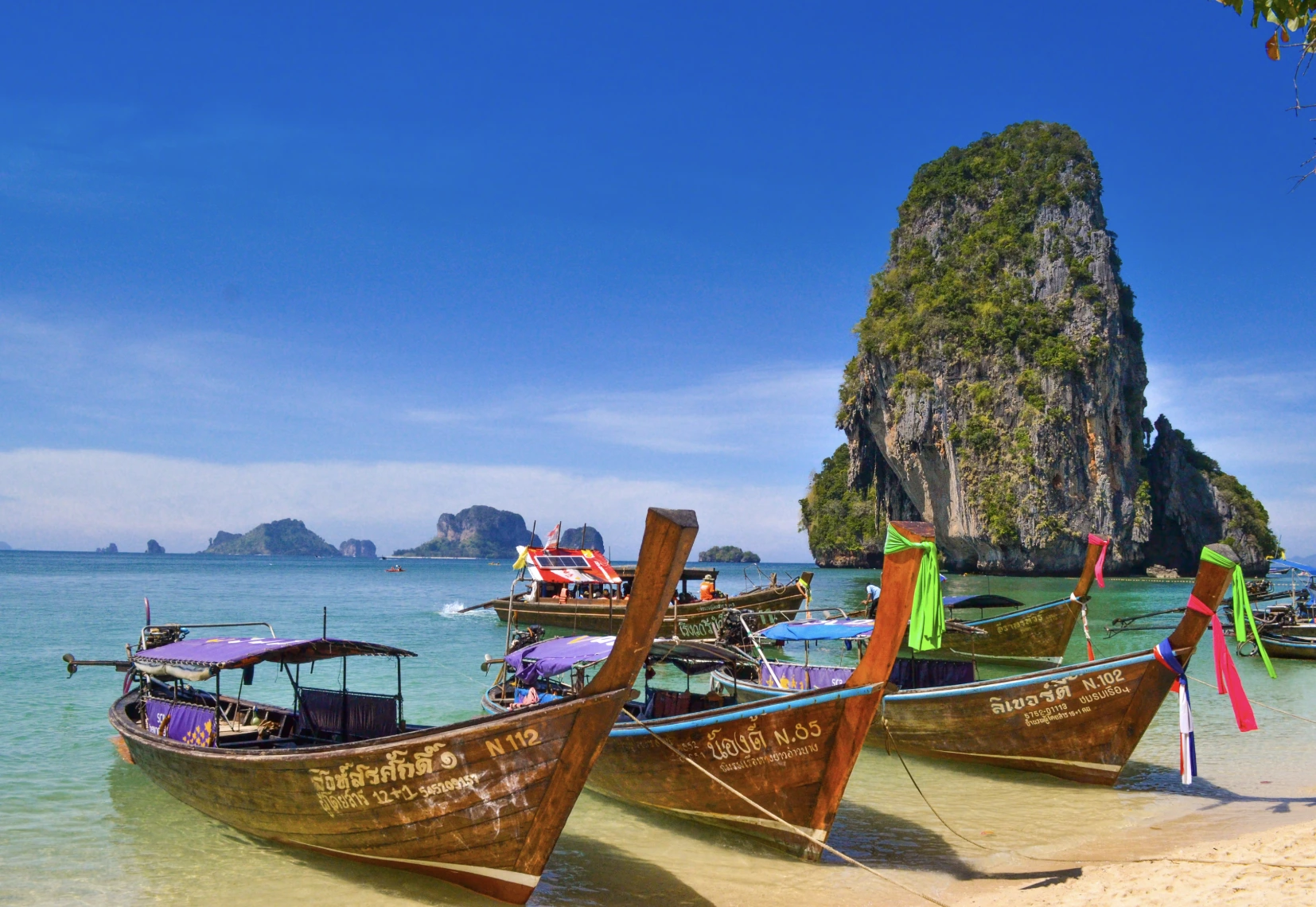
Railay Beach in Krabi is reachable only by longtail boat and is famous for rock climbing, though even non-climbers love the scenery and photo opportunities. Koh Lipe, near the Malaysian border, is small, car-free, and offers some of the best snorkeling in Thailand.
Koh Lanta has a relaxed, quiet vibe that’s perfect for families or anyone wanting a slower pace, while Koh Chang, near Cambodia, is Thailand’s second-largest island and still has undeveloped spots for a more authentic feel. Both islands offer beaches with amenities without the crowds of Phuket or Phi Phi.
 The Similan Islands are famous for clear water and great snorkeling.
Must-Visit Cultural & Historical Sites (Temples, Old Capitals & Local Life)
The Grand Palace in Bangkok is Thailand’s top attraction, so go early or late to dodge the crowds. Don’t miss Wat Pho next door, home to the giant reclining Buddha and a traditional Thai massage school.
Up north, Wat Phra That Doi Suthep sits above Chiang Mai on a mountain. The golden chedi is sacred to locals, and you can either hike up or take a songthaew for stunning views. Ayutthaya Historical Park offers dozens of temple ruins, including Wat Mahathat with its famous Buddha head entwined in tree roots.
Sukhothai Historical Park is quieter than Ayutthaya, showcasing the unique Sukhothai-style Buddha statues. The Golden Triangle area combines history and scenery with opium museums and Mekong River views, and the Hall of Opium museum is surprisingly well done.
 Wat Pho is a must-see for the famous Reclining Buddha and Thai massage tradition.
Adventure Ideas: Trekking, Ziplining, Diving & Ethical Elephant Experiences
Multi-day treks from Chiang Mai take you into hill tribe villages, where you stay in simple guesthouses and share meals with local families. Make sure to book through reputable agencies that respect the communities you visit.
For adrenaline, zipline courses like Flight of the Gibbon let you glide through jungle canopies, while rock climbing around Railay Beach in Krabi offers routes for all levels along towering limestone cliffs. Diving is also popular—Koh Tao is ideal for budget certifications, while the Similan Islands and Richelieu Rock are top spots for spotting whale sharks.
Thailand’s ethical elephant sanctuaries provide unforgettable experiences without exploitation. Elephants roam freely, bathe in rivers, and interact with visitors through feeding and observation rather than rides or tricks. These experiences combine adventure with a strong focus on animal welfare.
 Ethical sanctuaries focus on observing and caring for elephants, not riding them.
Nature & Scenic Landscapes: National Parks, Mountains & Waterfalls
Khao Sok National Park offers an ancient rainforest, limestone karsts, and Cheow Lan Lake. Staying in floating bungalows lets you wake up surrounded by misty cliffs and tranquil water.
Erawan National Park near Kanchanaburi is famous for its seven-tier waterfall, where you can swim in turquoise pools—visit midweek to avoid the crowds from Bangkok.
Doi Inthanon National Park is home to Thailand’s highest peak, often shrouded in clouds. The twin pagodas built for the King and Queen provide stunning views when the skies are clear.
Khao Yai National Park, a UNESCO World Heritage site, is close to Bangkok but feels remote, with wild elephants, gibbons, and hornbills. Night safaris let you spot nocturnal animals in action.
Phu Kradueng National Park in northeast Thailand challenges hikers with a steep climb to the plateau, but the reward is camping above the clouds and watching the sunrise over Laos. Each park offers unique landscapes and experiences, making Thailand’s nature a highlight for any itinerary.
 Khao Sok feels wild and peaceful, especially on Cheow Lan Lake in the early morning.
Thailand Itineraries by Travel Style: Couples, Families & Solo
The way you travel matters as much as where you go. Thailand offers very different experiences depending on pace, privacy, and comfort level. The following sections group itineraries by travel style, beginning with routes that work well for couples.
Thailand Itineraries for Couples & Honeymoons
Couples traveling in Thailand should focus on Krabi, Koh Samui, or northern mountain towns. Busy spots like Khao San Road and Patong Beach are best avoided unless you enjoy crowds.
A balanced romantic route could be Bangkok for two nights to enjoy food and rooftop bars, Chiang Mai for three nights in a boutique hotel, then Koh Samui or Krabi for five nights at a beach resort. This mix combines city energy, mountain culture, and beach relaxation. Many couples plan this as a Thailand honeymoon tour with more privacy and slower days.
Book private tours instead of joining groups, rent a longtail boat to explore islands, or take a couple’s Thai cooking class. For those who prefer mountains over beaches, Pai and Chiang Rai offer stunning scenery with accommodations ranging from simple bungalows to stylish design hotels.
 A private longtail boat day is one of the most romantic ways to enjoy Thailand’s coast.
Thailand Itineraries for Families with Kids
Thailand is very family-friendly, and beaches are usually the easiest option with kids. Koh Samui has calm waters and plenty of family resorts, while Phuket offers waterparks and other kid-friendly activities beyond the beach. Family-focused routing is easier with a clear guide to Thailand with kids.
Bangkok can feel hectic for young children, but older kids enjoy the energy. Take a longtail boat tour through the canals, visit the snake farm or aquarium, and eat at food courts where everyone can choose what they like. Chiang Mai is another good option—its Old City is compact and walkable, with short temple visits, cooking classes, and night markets that kids enjoy.
Elephant sanctuaries are a big hit for families, as kids can feed and bathe the elephants at ethical centers—avoid any place offering rides or performances. Skip long bus rides with children; fly between major destinations and build in downtime. Focus on experiences that everyone can enjoy without rushing.
 Water parks and resort pools are an easy win for families traveling with kids.
Thailand Itineraries for Solo Travelers (First-Time & Repeat Visitors)
Thailand is very easy for solo travel, with plenty of opportunities to meet other travelers in hostels and on tours. Tourist areas are well set up, and English is widely spoken, making it simple to get around and plan activities. A practical Thailand solo travel guide helps with routes, safety habits, and where solo travelers usually stay.
First-time solo travelers should stick to the classic route: Bangkok, Chiang Mai, and a southern island. Staying in social hostels or guesthouses and joining group activities like cooking classes, snorkeling, or trekking helps you meet people along the way.
Repeat solo travelers can explore less-visited regions like Kanchanaburi, Mae Hong Son, Koh Chang, or Trang province for a more authentic experience. Solo female travelers generally feel safe, but it’s smart to use common sense, avoid excessive drinking with strangers, and rely on licensed taxis or ride-sharing apps at night.
 Thailand is easy for solo travel, and planning days in cafés feels simple and safe.
Thailand Itineraries by Season: Cool, Hot & Rainy
Seasonal differences play a major role in itinerary planning. The sections below outline how travel changes throughout the year, beginning with Thailand’s cool season.
Thailand in the Cool Season (November–February): Dry Weather & Peak Travel
The cool season is Thailand’s peak travel time. Northern cities like Chiang Mai are comfortable at 15-25°C, while Bangkok stays warm but less sticky. Southern beaches enjoy sunny, perfect weather, making this the ideal time for sightseeing and beach hopping. The months from November to February are also the classic window for Thailand winter travel.
Expect crowds and higher prices, so book hotels and tours early. Festivals like Chiang Mai’s flower festival in February are highlights. For quieter beaches, skip the popular spots in December and January and check out islands like Koh Lanta or Koh Phayam. Those choices fit well when you’re comparing the best islands in Thailand for different travel styles.
 In peak season, Phuket often has calm seas and bright, sunny days.
Thailand in the Hot Season (March–June): Beach & Island-Focused Routes
The hot season brings high temperatures—35-40°C in Bangkok and the north—making sightseeing uncomfortable. The south is slightly better with ocean breezes, so it’s the best time to focus on islands and beaches.
Hotels and flights are cheaper, so you can score good deals on resorts. Plan outdoor activities for early mornings or late afternoons to avoid the worst heat. If you visit Chiang Mai in April, you’ll experience Songkran, the famous water festival, which is fun but can be chaotic.
 Songkran in April is fun and unforgettable, but it can feel busy and intense.
Thailand in the Rainy Season (July–October): Where to Go, What to Avoid & How to Plan Smart
The rainy season doesn’t mean nonstop rain. Showers usually appear in the afternoon and clear quickly. Bangkok and northern Thailand stay accessible, and the countryside turns lush and green. Temples and indoor attractions work well during brief storms. This pattern matches what most travelers notice during Thailand rainy season months.
 In the rainy season, Thailand can look greener and more vibrant than usual.
The Andaman coast can get rough, and some islands may close, but the Gulf coast stays relatively dry. Book refundable accommodation and have backup plans. The upside: far fewer tourists, big hotel discounts, and a vibrant, green landscape.
Some islands and national parks close seasonally, particularly on the Andaman coast, to protect marine ecosystems and ensure visitor safety. Ferry schedules may be reduced, and access to parks such as the Similan Islands can be restricted during the monsoon months. Check current operating dates before finalizing island plans.
Multi-Country Thailand Itineraries with Cambodia, Laos, and Vietnam
For travelers with extra time, Thailand can be paired with neighboring countries. This section outlines common cross-border itineraries and how they fit within a longer trip.
Thailand & Cambodia Itineraries (Bangkok – Angkor Wat – Beach Extensions)
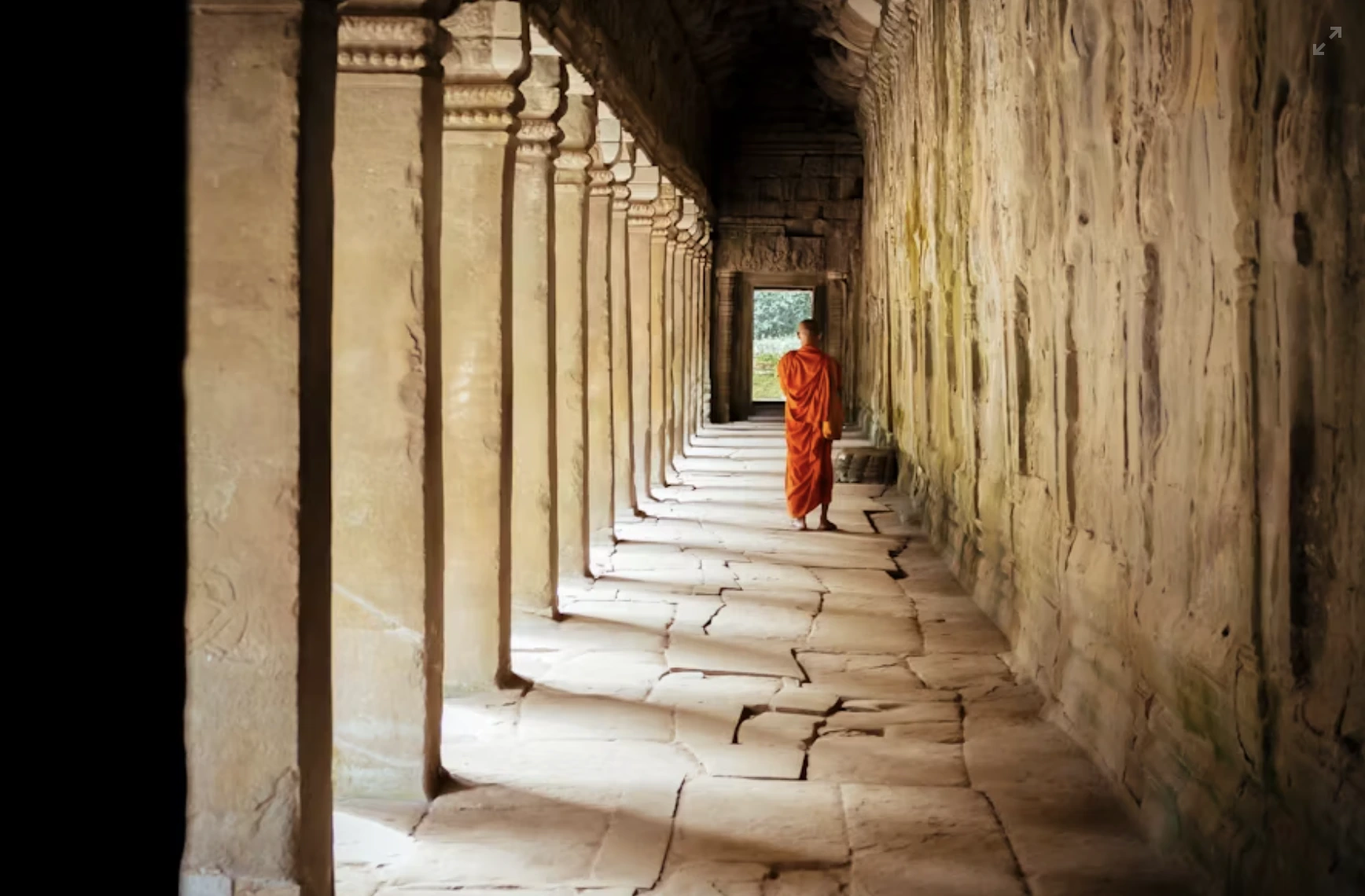
Two weeks is just enough to mix Bangkok, Cambodia’s Angkor Wat, and some Thai beach time. You can fly from Bangkok to Siem Reap and spend a few days exploring the incredible temples of Angkor. After that, head back to Bangkok and continue south to relax on the islands. This pacing is a common Thailand Cambodia tour style for first-time visitors.
 Angkor Wat is worth at least two to three full days to explore properly.
If you prefer overland travel, start in Bangkok and cross into Cambodia at Aranyaprathet. From there, explore Angkor Wat, then make your way to Sihanoukville for some beach time before returning to Bangkok by bus or flight. This route gives a mix of culture, history, and relaxation.
Don’t forget your Cambodia visa! You can get it on arrival at the border or sort an e-visa in advance. Plan for around $30-40 extra, and keep your passport handy to make the process smooth.
Thailand & Vietnam Itineraries (Bangkok – Hanoi – Halong Bay – Hoi An, etc.)
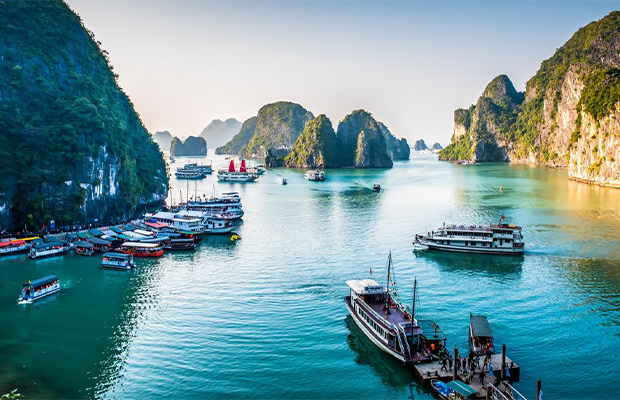
Three weeks gives you enough time to combine Thailand and Vietnam without rushing. Start in Bangkok for a few days, then fly to Hanoi to explore the Old Quarter. Take a two-day cruise through Halong Bay, soak in the scenery, and then fly to Hoi An for a few more days before returning to Thailand for Chiang Mai and some island or beach time.
You can also flip the route. Begin in southern Thailand, head to Ho Chi Minh City, and work your way north through Vietnam. Finish in northern Thailand if you want to experience mountains, temples, and a slower pace at the end of your trip.
Vietnam requires a bit more planning than Thailand. Book trains and flights in advance, and take your time enjoying the local cuisine and coffee. The street food is incredible, and the small towns along the route make the journey feel authentic and rewarding.
 Hanoi’s Old Quarter is lively and easy to explore on foot.
Thailand & Laos Itineraries (Chiang Rai – Luang Prabang Combinations)
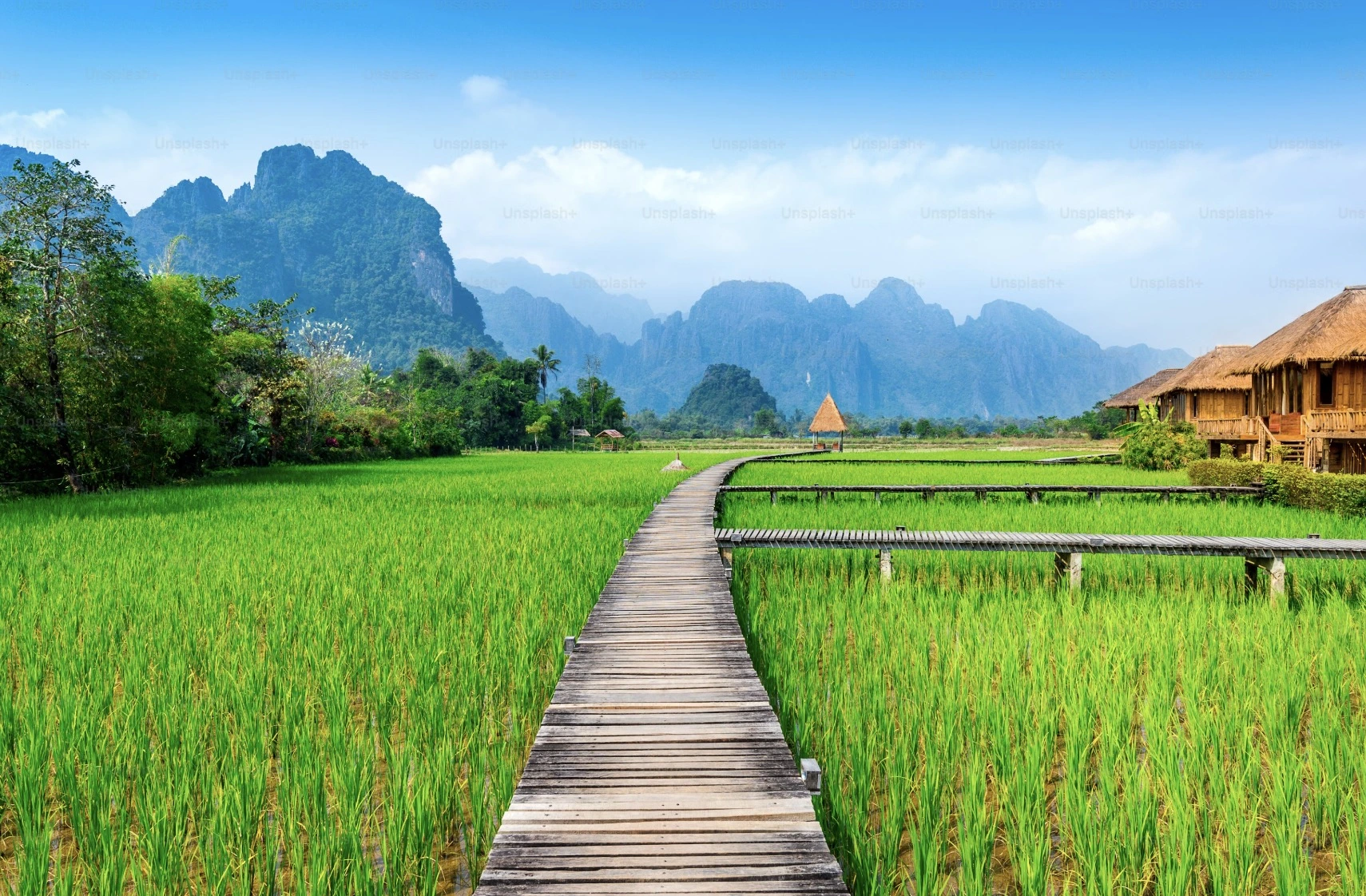
Northern Thailand makes it easy to add Laos to your trip. From Chiang Rai, you can cross at Chiang Khong into Huay Xai, then hop on a slow boat down the Mekong to Luang Prabang. The scenery along the river is stunning, and the journey gives you time to relax and take in the countryside. This route is a classic Thailand Laos tour extension.
The slow boat takes about two days with an overnight stop in Pakbeng. It’s simple and basic, but many travelers enjoy the laid-back pace. Others prefer to skip it if they want to move faster. If you’re short on time, flying from Chiang Mai to Luang Prabang is quick and convenient. Spend 3-4 days exploring temples, waterfalls, and the night market before heading to Vientiane or back to Thailand. Laos offers a slower, quieter vibe that balances out Thailand’s busier tourist spots.
 The slow boat is simple, but the river views can be stunning all day.
Thailand, Cambodia & Vietnam Indochina Itineraries
Three countries in one trip requires at least three weeks. A sample route: Bangkok (3 days) - Siem Reap (3 days) - Phnom Penh (2 days) - Ho Chi Minh City (2 days) - Hoi An (3 days) - Hanoi (2 days) - Halong Bay (2 days) - Chiang Mai (3 days) - Thai beaches (4 days). A longer loop like this is the typical Thailand Vietnam Cambodia tour structure.
This is ambitious. You'll spend significant time in transit. It works if you want an overview of Southeast Asia but don't mind fast-paced travel. Budget extra for flights. Overland border crossings between these countries are possible but time-consuming. Flying saves days. Get visas sorted before you leave. Vietnam and Cambodia both require visas for most nationalities. Check if you can get a "Visa-On-Arrival" or if you need to arrange in advance.
Practical Planning Guide for Your Thailand Itinerary
Daily costs depend on travel style. Budget travelers spend $30–40 per day on dorms, street food, and local transport. Mid-range budgets $80–120 for private rooms, restaurants, and occasional tours. Luxury travelers start at $250, including five-star hotels, private tours, and fine dining. Don’t forget visas, travel insurance, and internal flights. Travelers watching costs usually do best by following a simple travel to Thailand on a budget approach early on.
 Small daily choices—food, transport, and tours—make the biggest difference to your budget.
Where you stay matters. In Bangkok, Sukhumvit is convenient, Riverside is scenic. Chiang Mai’s Old City is walkable, Nimman is trendy. Phuket ranges from busy Patong to quiet Kata or Kamala. On islands, beachfront costs more but saves travel time; inland stays need scooters or taxis. Phuket planning feels easier when the calendar matches the best time to visit Phuket for your beach days.
Getting around is easy but varies. Flights are fast; budget airlines charge extra. Overnight trains save hotel nights, VIP buses suit short trips. Ferries link islands but may close in monsoon. In cities, use Grab or licensed taxis, agree on fares, and treat tuk-tuks as fun extras. A clear overview of how to get around Thailand helps you choose between flights, trains, buses, and ferries without guesswork.
 In Bangkok, BTS and Grab make getting around much easier than you expect.
Motorbikes are widely rented in Thailand, but accidents are one of the most common causes of travel injuries. Many travel insurance policies do not cover motorbike incidents unless you hold a valid license and wear a helmet. Check your coverage carefully before renting and avoid riding at night or on unfamiliar roads.
Avoid common mistakes. Don’t try to see everything; focus on regions. Book flights and first nights but stay flexible. Watch seasons, use trusted tour operators, and pack light. Thailand is generally safe, but keep valuables secure, carry cash, and get travel insurance. For first-timers, the checklist of things to do know before visiting Thailand keeps planning practical and realistic.
Thailand is generally safe, but keep valuables secure, carry cash, and get travel insurance. Safety questions usually come down to common sense and planning, and this guide on it is safe to visit Thailand covers the key points clearly.
Get a Tailor-Made Thailand Itinerary from a Local Travel Expert
Local agencies understand how routes work in real conditions. They know which transfers save time, which temples are worth early starts, and which beaches stay calm for families. That knowledge helps avoid wasted days and unnecessary backtracking. Many travelers compare options by looking at a trusted Thailand travel agency that knows the routes on the ground.
 A local team can fine-tune routes quickly when plans change.
When plans change due to weather, flight delays, or local events, a local team can adjust quickly. Support is usually available by phone or WhatsApp, which is far more practical than waiting for email replies from overseas booking platforms.
What You Get from a Tailor-Made Thailand Itinerary
A custom itinerary reflects how you actually travel. The pace, destinations, and daily flow match your interests and energy level rather than a generic template. If you want more beach time or fewer cities, the route adjusts accordingly.
You receive a clear day-by-day plan with realistic travel times, confirmed hotels, arranged transfers, and activity bookings. Backup options are included where needed. In many cases, pricing is competitive with booking independently, since agencies work directly with local hotels and operators.
Working with Local Thailand & Southeast Asia Specialists
At Indochina Tour, we design Thailand and Southeast Asia trips based on firsthand route knowledge. Our team regularly reviews hotels, transport options, and activities to make sure itineraries remain practical and up to date.
We create tailor-made routes for first-time visitors, couples, families, solo travelers, and those combining Thailand with Cambodia, Laos, or Vietnam. The focus stays on realistic timing, smooth logistics, and support during the trip.
If you’d like a custom Thailand itinerary, share your travel dates, interests, and budget. We’ll prepare a route, refine it with your feedback, and help you finalize the details when you’re ready.
FAQs About Planning a Thailand Itinerary
Is Thailand Safe to Travel for Solo and First-Time Visitors?
Yes, Thailand is generally safe for solo and first-time travelers. Petty theft can happen in busy tourist areas, so always keep an eye on your belongings. Avoid isolated streets at night, use licensed taxis or ride-sharing apps, and trust your instincts in unfamiliar situations.
How Many Days Do I Need for Bangkok, Chiang Mai, and the Islands on My First Trip?
A 10–14 day trip works best for first-time visitors. Spend 2–3 days in Bangkok for temples, markets, and nightlife, 3–4 days in Chiang Mai for mountains and culture, and 4–5 days on southern islands for beaches and relaxation. This gives a balanced mix without rushing. The transfers become easier once the route is clear, especially for Bangkok to Chiang Mai planning.
What Is the Best Month to Visit Thailand for Beaches and Good Weather?
The months from November to February are ideal. Rain is minimal, temperatures are pleasant, and beaches are at their best. Avoid the monsoon season (May–October) if you want sunny days and calm seas.
Do I Need Travel Insurance for a Trip to Thailand?
Yes, travel insurance is strongly recommended. It covers medical emergencies, theft, and trip cancellations. Some credit cards include coverage, but a dedicated plan ensures peace of mind, especially if you plan to do activities like diving, trekking, or motorbiking.
How Much Should I Budget per Day in Thailand (Excluding Flights)?
Daily costs vary by style: budget travelers spend $30–40, mid-range $80–120, and luxury $250+. Budget includes hostels and street food; mid-range covers private hotels, restaurants, and some tours; luxury includes five-star hotels, private tours, and fine dining.
Do I Need to Tip in Thailand? If Yes, How Much?
Tipping in Thailand isn’t mandatory but appreciated. For taxis, 20–40 baht is enough if they help with luggage. At restaurants, round up or leave 10% if no service charge is included. Massage therapists generally get 50–100 baht per session.
Can I Combine Thailand with Vietnam or Cambodia in One 2–3 Week Itinerary?
Yes, combining countries is possible. Plan your route carefully, allowing extra days for border crossings and travel. Popular options include Thailand to Cambodia (Angkor Wat) or Thailand to Vietnam, keeping Thailand as the main base while exploring neighboring highlights.
 Extra travel days matter a lot when you combine Thailand with other countries.
Conclusion: How to Choose Your Ideal Thailand Itinerary
The best Thailand itinerary starts with an honest look at your time and travel style. Seven days work if you stay focused, ten days give you balance, and two to three weeks let Thailand tour unfold naturally. Trying to rush only leads to airports, packing, and missed moments.
Build your route around regions, not checklists. Pair cities with nature, culture with beaches, and busy days with slower ones. Pay attention to seasons, plan transfers carefully, and leave space to adjust when you find a place you don’t want to leave yet.
Thailand is easy to travel, welcoming, and endlessly varied. Use this guide as a framework, not a rulebook. Adjust it to fit your pace, interests, and comfort level. Do that, and your Thailand itinerary will feel personal, memorable, and worth every day you spend there. Contact us to tailor-make your own Thailand travel itinerary.
Srey Pov
Cambodia is my home, not simply another stop on an itinerary.
I was born in Phnom Penh, studied Hotel and Tourism Management, and have worked in tourism for 15 years. I’ve also traveled extensively through Vietnam, Laos, Thailand, and Myanmar.
My work has included private journeys as well as a multi-country trip for a group of more than 50 travelers, which received a five-star review.
When I write about Cambodia and the wider region, I bring the view of someone who lives here and has spent years planning trips on the ground—not just repeating what appears in standard destination guides.
Email me about your travel idea