

How to Plan a Vietnam Itinerary (5–21 Days): Complete First-Timer's Guide

Srey Pov
Cambodia is my home, not simply another stop on an itinerary.
I was born in Phnom Penh, studied Hotel and Tourism Management, and have worked in tourism for 15 years. I’ve also traveled extensively through Vietnam, Laos, Thailand, and Myanmar.
My work has included private journeys as well as a multi-country trip for a group of more than 50 travelers, which received a five-star review.
When I write about Cambodia and the wider region, I bring the view of someone who lives here and has spent years planning trips on the ground—not just repeating what appears in standard destination guides.

 Email me about your travel idea
Planning a Vietnam trip can feel confusing at first, but it becomes simple when you match your time, budget, and interests to the right route. Vietnam stretches over 1,000 miles from north to south. The country offers everything from mountain peaks to tropical beaches. However, you don't need months to see the best of Vietnam.
Vietnam trips lasting 5 to 21 days give enough time to see key regions without constant travel pressure. Short trips focus on one area, while longer routes allow slower movement and deeper cultural exposure.
You’ll learn when to visit Vietnam for the best weather, how much you should expect to spend per day, and why the classic north–south route from Hanoi to Ho Chi Minh City works so well for first-time visitors.
From there, we break Vietnam down step by step. You’ll see sample itineraries by trip length, region, travel theme, and travel style. We also cover multi-country options with Cambodia, Laos, and Thailand, plus practical tips on visas, SIM cards, transport, and bookings. Use this guide as your roadmap to design a Vietnam itinerary that feels clear and easy to follow.
 Quick Trip Matcher: Find Your Ideal Vietnam Itinerary Fast
Key Planning Basics for a Vietnam Itinerary
Best Vietnam Itinerary for First-Time Travelers (7–14 Days)
Vietnam Itineraries by Trip Length (5–21 Days Overview)
Vietnam Itineraries by Region: North, Central & South
Vietnam Itineraries by Travel Theme: Beaches, Culture, Adventure & Nature
Vietnam Itineraries by Season: Spring, Summer, Autumn & Winter
Vietnam Itineraries by Travel Style: Family, Couples & Solo
Multi-Country Vietnam Itineraries with Cambodia, Laos, and Thailand
Practical Planning Guide for Your Vietnam Itinerary
Get a Tailor-Made Vietnam Itinerary from a Local Travel Expert
Quick Trip Matcher: Find Your Ideal Vietnam Itinerary Fast
The ideal Vietnam trip length depends on what you want to see. The following table helps you match your available time with the appropriate routes and budgets.
|
Days |
Route Type |
Best For |
Daily Budget |
|
5 |
1–2 regions only |
Fast-paced, focused |
$25-100 |
|
7 |
Hanoi - Halong Bay - Hoi An |
First-time visitors, one-week vacation |
$70-180 |
|
10 |
Hanoi - Halong Bay - Hoi An - HCMC |
Most popular first-timer route |
$80-200 |
|
14 |
Full north-south + Mekong |
Travelers wanting depth and variety |
$80-220 |
|
21 |
All regions + hidden gems |
Slow travelers, gap year trips |
$60-200 |
Key Planning Basics for a Vietnam Itinerary
The early planning stage shapes the entire trip. This section highlights the points you need to decide before you finalize your itinerary—whether you’re traveling independently or following a well-designed Vietnam tour.
 This simple map shows the main stops on a classic Vietnam itinerary.
Recommended Length for a Vietnam Trip
A 5-day Vietnam itinerary works for a short break. You stay in one region or pair nearby places. It gives you a quick look at local food, daily life, and key sights without using much vacation time. A 7 to 10-day trip suits first-time visitors who want a fuller route. This length covers major highlights from north to south and includes several core cities with a steady pace.
A 2-week Vietnam tour adds flexibility. You can include quieter areas such as rice terraces, caves, or coastal towns, with fewer rushed mornings. A 21-day trip allows slower movement across the country. You can use trains and boats, add small towns, and stay longer in places that feel right instead of following a fixed schedule.
 With more days, you can slow down and add quieter countryside stops.
Best Time of Year to Visit Vietnam
Vietnam’s weather changes by region. The north has clear seasonal shifts, the center faces heavier rain late in the year, and the south stays warm most of the time. If you want the most stable conditions across multiple regions, the best time to visit Vietnam is often February to April, with balanced temperatures and lower rainfall.
The north feels best from October to April, though winter months can turn cold in mountain areas. Central Vietnam sees its driest stretch from February to May, while late summer and autumn bring more rain. The south stays sunny and comfortable from November to April, with short afternoon storms during the rest of the year.
 From February to April, many parts of Vietnam feel dry, bright, and comfortable.
Average Trip Cost & Daily Budget Overview
Vietnam suits a wide range of budgets. Budget travelers spend about $25–40 per day, covering hostels, street food, and local transport. Mid-range travelers should plan for $60–100 per day, which includes private rooms, some domestic flights, and paid activities.
Luxury travel starts around $150–300+ per day, with boutique hotels, private guides, and upgraded transport. Costs vary by activity, since cruises, classes, and tours add extra fees, and accommodation ranges from simple dorms to high-end resorts.
 Vietnam is budget-friendly, and local food can be both tasty and affordable.
Classic North–South Route at a Glance
The classic north–south Vietnam itinerary follows a simple flow: Hanoi - Halong Bay - Hue - Hoi An - Ho Chi Minh City - Mekong Delta. Most first-time visitors choose this route because it links the country’s main highlights in a logical order. You can reverse the direction or remove stops based on time and interests.
If you prefer starting in the south and moving north, many tours from Ho Chi Minh City to Hanoi follow the same highlight structure in reverse, which can feel very smooth for first-timers.
Plan 2–3 days in Hanoi, then add 1–2 days in Ninh Binh or Halong Bay for limestone scenery. Continue to Hue for imperial sites, then spend 2–3 days in Hoi An for heritage streets and beaches. Finish in Ho Chi Minh City and the Mekong Delta. The full route fits well into 10–14 days, with short flights or overnight trains keeping travel time manageable.
 The north-to-south route is a classic way to connect Vietnam’s highlights in one trip.
Best Vietnam Itinerary for First-Time Travelers (7–14 Days)
A Vietnam itinerary for first-time travelers works best when the route stays balanced, giving enough time for cities, nature, and short breaks between transfers. Trips of 7, 10, or 14 days are practical, matching flight schedules and domestic connections—especially a classic Vietnam itinerary 10 days route.
Let's take a closer look at how each trip length can be managed with ease.
7-Day Vietnam Highlights Itinerary (North Focus)
Hanoi – Ninh Binh – Halong Bay
|
Day |
Base |
Day-by-Day Plan |
Overnight |
|
Day 1 |
Hanoi |
Arrive + start easy in the Old Quarter + local food |
Hanoi |
|
Day 2 |
Hanoi |
Old Quarter + Hoan Kiem Lake walk + key cultural spots |
Hanoi |
|
Day 3 |
Hanoi |
Day trip to Ninh Binh: boat ride through limestone valleys + Mua Cave viewpoint climb, return at night |
Hanoi |
|
Day 4 |
Halong Bay |
Transfer to Halong Bay + overnight cruise begins + limestone scenery |
Halong Bay cruise |
|
Day 5 |
Halong Bay |
Cruise day: kayaking + swimming + quiet views of limestone cliffs |
Halong Bay cruise |
|
Day 6 |
Hanoi |
Return to Hanoi + shopping streets + cafés + relaxed city time |
Hanoi |
|
Day 7 |
Hanoi |
Free time for any missed spots + last-minute shopping + departure |
— |
This itinerary centers on the north and works like a short north Vietnam tour, giving you a clear mix of food, culture, and dramatic landscapes.
A shorter 5 days in Vietnam plan can still work for a quick break, but 7 days feels more relaxed while staying in one region.
Day 1-2 covers Hanoi, where you explore the Old Quarter, sample local dishes, walk around Hoan Kiem Lake, and visit key cultural spots—many travelers enjoy starting with a compact Hanoi tour to keep these first days smooth.
 Hanoi is a friendly place to start your first Vietnam trip at an easy pace.
Day 3 takes you on a day trip to Ninh Binh, with a peaceful boat ride through limestone valleys and a climb to the Mua Cave viewpoint. The area sits close to Hanoi, so you cover a lot without long travel hours. You return to the city at night, which keeps the plan simple and avoids extra hotel changes.
 Ninh Binh is perfect for a calm boat ride among limestone landscapes.
Days 4 and 5 move you to Halong Bay for an overnight Halong Bay cruise filled with kayaking, swimming, and quiet views of limestone cliffs. Days 6 and 7 bring you back to Hanoi for shopping, cafés, and any spots you missed earlier. This flow keeps all travel smooth and makes the whole 7-day itinerary easy to follow.
 An overnight cruise in Halong Bay is a classic highlight for first-time visitors.
10-Day Classic Vietnam Itinerary (North to South)
Hanoi – Halong Bay – Hoi An – Ho Chi Minh City
|
Day |
Base |
Day-by-Day Plan |
Overnight |
|
Day 1 |
Hanoi |
Arrive + Old Quarter start + easy walk |
Hanoi |
|
Day 2 |
Hanoi |
Temples + local food tasting (pho, bun cha, coffee) |
Hanoi |
|
Day 3 |
Halong Bay |
Transfer to Halong Bay + overnight cruise + calm limestone views |
Halong Bay cruise |
|
Day 4 |
Halong Bay |
Cruise morning + return transfer (end of cruise) |
Hanoi (or transit base) |
|
Day 5 |
Hoi An |
Fly south + arrive Hoi An + gentle evening in the ancient town |
Hoi An |
|
Day 6 |
Hoi An |
Ancient town exploration + slow heritage pace |
Hoi An |
|
Day 7 |
Hoi An |
Beach time + countryside by bike for local color |
Hoi An |
|
Day 8 |
Ho Chi Minh City |
Fly to Ho Chi Minh City + city introduction walk |
HCMC |
|
Day 9 |
Ho Chi Minh City |
City time: markets + food + urban culture |
HCMC |
|
Day 10 |
Ho Chi Minh City |
Free time + departure |
— |
This 10-day Vietnam itinerary follows a clear and steady route through the country’s main highlights. It balances cities, nature, and culture without long or tiring travel days. The structure works well for first-time visitors who want a broad view of Vietnam.
Days 1–2 are spent in Hanoi, where you explore the Old Quarter, visit temples, and try local food. Many travelers use this time for an easy food walk to sample pho, bun cha, and coffee. Days 3–4 take you to Halong Bay for an overnight cruise, with limestone scenery, calm water, and light activities on board.
From there, fly south to Hoi An for days 5–7. You spend time in the ancient town, visit nearby beaches, and explore the countryside by bike. These days slow the pace and add local color before moving on to the rest of the journey.
 Hoi An is a lovely place to slow down and enjoy Vietnam’s heritage charm.
2-Week Vietnam Highlights Itinerary (North–Central–South)
Hanoi – Sapa – Halong Bay – Hue – Hoi An – Ho Chi Minh City – Mekong Delta
|
Day |
Base |
Day-by-Day Plan |
Overnight |
|
Day 1 |
Hanoi |
Arrive + light city exploration |
Hanoi |
|
Day 2 |
Hanoi |
Hanoi highlights + food/café time |
Hanoi |
|
Day 3 |
Sapa |
Transfer to Sapa + calm countryside feel |
Sapa |
|
Day 4 |
Halong Bay |
Travel to Halong Bay + start cruise + limestone scenery |
Halong Bay cruise |
|
Day 5 |
Halong Bay |
Cruise activities + relaxed time on the water |
Halong Bay cruise |
|
Day 6 |
Hue |
Transfer to Hue + imperial atmosphere + riverside scenery |
Hue |
|
Day 7 |
Hue |
Imperial sites + cultural exploration (easy pace) |
Hue |
|
Day 8 |
Hoi An |
Move to Hoi An + heritage streets |
Hoi An |
|
Day 9 |
Hoi An |
Ancient town + free time to slow down |
Hoi An |
|
Day 10 |
Hoi An |
Beach time + relaxed local rhythm |
Hoi An |
|
Day 11 |
Ho Chi Minh City |
Fly south + markets + city energy |
HCMC |
|
Day 12 |
Ho Chi Minh City |
City day: food + street life + flexible plans |
HCMC |
|
Day 13 |
Mekong Delta |
Mekong Delta river life + Mekong River cruise experience |
Mekong Delta (or Can Tho area) |
|
Day 14 |
Ho Chi Minh City |
Return to HCMC + free time + departure |
— |
This 2-week Vietnam itinerary builds on the classic route and adds Hue and the Mekong Delta for deeper contrast. The extra time reduces rushed transfers and gives you a clearer sense of regional life, history, and landscapes.
Days 1–3 cover Hanoi and Sapa, mixing city exploration with calm countryside. Days 4–7 move through Halong Bay and Hue, combining a limestone cruise with imperial sites and riverside scenery. This middle stretch adds strong variety without long travel days.
Days 8–14 continue through Hoi An, Ho Chi Minh City, and the Mekong Delta. You spend time in heritage streets and beaches, then shift south for markets and river life via a Mekong River cruise. The final days stay flexible, allowing space to slow down before departure.
 The Mekong Delta shows a softer side of Vietnam, with calm waterways and daily river life.


Vietnam Itineraries by Trip Length (5–21 Days Overview)
Trip length shapes your decisions about flights, hotel choices, and city order. A Vietnam itinerary works best when the structure fits your available time. If you also want to add nearby countries later, Southeast Asia tours can help you plan a smooth multi-country route.
This section gives you an overview of how each duration behaves. It helps you decide early whether you need a short break, a classic tour, or a longer journey.
5 Days in Vietnam: Short Break Itinerary Ideas
A Vietnam Itinerary 5 days stays focused on one region. A quick trip works for travelers who want a simple plan with clear highlights. The three most common combinations include:
5-Day Hanoi & Halong Bay
Spend two days in Hanoi discovering street food and temples. Take a two-day Halong Bay tours from Hanoi trip. Use your final day for last-minute shopping in Hanoi before flying home.
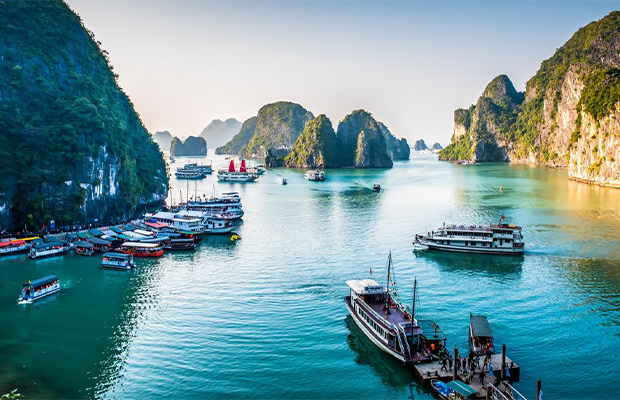
 Halong Bay is famous for calm water and dramatic limestone islands
 5 Day Ho Chi Minh City & Mekong Delta
Explore Ho Chi Minh City for two days, including a half-day Vietnam Cu Chi tunnels tour. Spend two days on a Mekong Delta tour to see floating markets and riverside villages. Return to the city for departure.
 The Cu Chi Tunnels give you a close look at wartime history near Ho Chi Minh City.
5Day Da Nang & Hoi An
Arrive in Da Nang and spend one day at the beach. Transfer to Hoi An for three days of ancient town exploration, cooking classes, and tailor visits—many travelers prefer joining relaxed Hoi An tours to keep these days easy and well-paced. Return to Da Nang for your flight.
 Hoi An feels calm and charming, especially when the lanterns light up at night.
7-10 Days in Vietnam: One-Week & 10-Day Routes
A Vietnam Itinerary 7 days or a Vietnam Itinerary 10 days offers balanced coverage. This duration remains the standard choice for visitors because the route flows well. You can follow a short north–south connection or keep your plan focused on two major regions.
If you choose 10 days, you can follow the classic route described earlier. This includes Hanoi, Halong Bay, Hoi An, and Ho Chi Minh City. If you choose 7 days, you focus on two or three cities and keep travel time low.
A Vietnam trip itinerary with 10 days meets the needs of travelers who want variety without complexity. You cover multiple regions but still enjoy free hours, which helps you explore each city with calm energy.
 With 7–10 days, you can keep travel days light and still see major highlights.
14 Days in Vietnam: In-Depth Itinerary Options
Two weeks open up several route combinations. You can see all three regions and add special interest destinations.
Option 1: Complete North-South
Follow the Vietnam itinerary 14 days from Section 4.3, hitting all major destinations at a relaxed pace.
Option 2: North Deep Dive
Spend your entire two weeks in northern Vietnam. Visit Hanoi, Halong Bay, Sapa, Ha Giang, and Ninh Binh. This option suits travelers who love mountains, trekking, and ethnic minority culture.
Option 3: Central & South Focus
Fly to Da Nang, then explore central Vietnam (Hoi An, Hue, Phong Nha caves) for one week. Spend the second week in the South, visiting Ho Chi Minh City, the Mekong Delta, and Phu Quoc Island.
Option 4: Beach & Culture Mix
Combine one week of cultural sightseeing (Hanoi, Hue, Hoi An) with one week of beach relaxation in Nha Trang, Mui Ne, or Phu Quoc. These Vietnam Itinerary 2 Weeks options cater to different interests and travel styles.
 With 14 days, you can add mountain areas and enjoy Vietnam at a slower pace.
21 Days in Vietnam: Slow Travel & Extended Routes
Three weeks allow for genuine immersion in Vietnamese culture. You can travel overland, take scenic detours, and spend extra time in places you love.
A Vietnam itinerary 3 weeks might include: Hanoi (3 days), Ha Giang Loop (4 days), Halong Bay (2 days), Ninh Binh (2 days), Hue (2 days), Hoi An (4 days), Nha Trang (3 days), Ho Chi Minh City (2 days), Mekong Delta (2 days), and Phu Quoc (4 days).
With a longer trip, you get room to slow down and experience more than the usual highlights. You can take Vietnam overnight trains instead of flying, join cooking classes, explore small towns on a motorbike, or plan a multi-day trek. Some travelers even time their stay with local festivals or join short language or volunteer programs along the way.
 A longer trip gives you time to try night trains and travel at a calmer rhythm.
Vietnam Itineraries by Region: North, Central & South
Each region in Vietnam has its own character, which helps shape a clear travel itinerary. In this section, we break down Vietnam by region to help you plan your itinerary.
North Vietnam Itineraries (Culture & Nature)
North Vietnam works well for travelers who want culture linked with natural scenery. Hanoi sits at the heart of the region, offering old streets, lakes, and craft villages. Ninh Binh adds river landscapes with limestone peaks, while Halong Bay brings overnight cruises through calm waters.
For mountain experiences, Sapa tour offers terraced fields and cool air, and Ha Giang provides high passes and winding roads. A northern Vietnam itinerary suits both short and long trips, with travel times remaining manageable.
A Vietnam Itinerary 5 days works well here without flights, while a 7-day Itinerary lets you cover Hanoi, Ninh Binh, and Halong Bay. A 10-day Itinerary allows adding Sapa or Ha Giang for a deeper exploration of northern landscapes.
 North Vietnam mixes city culture with quiet nature and limestone scenery.
Central Vietnam Itineraries (Beaches & Culture)
Central Vietnam blends rich heritage with coastal beauty. Hue offers imperial sites and calm river views, while Da Nang provides beaches and open roads. Hoi An charms visitors with preserved streets, lanterns, and tailor shops.
A Vietnam Itinerary 10 Days often includes Hoi An, thanks to frequent flights to Da Nang. You can spend a few days wandering the ancient town, sampling local cuisine, and exploring nearby beaches. Day trips to the Marble Mountains or My Son temples are also easy to fit in without rushing your schedule.
Longer trips, like a 14-day itinerary, can add Hue tours and the scenic coastal drive over Hai Van Pass. Beach-focused travelers might spend extra time in Da Nang or continue toward Quy Nhon for quieter shores.
 Central Vietnam is great for heritage sites, beaches, and a slower travel pace.
South Vietnam Itineraries (City Walks, Floating Markets & Islands)
The South offers warm weather, busy streets, and broad river systems. Ho Chi Minh City tour anchors the region with museums, markets, and vibrant food districts. The Mekong Delta adds scenic waterways, fruit orchards, and famous floating markets.
Islands such as Phu Quoc bring warm beaches, soft waves, and long coastlines. A Vietnam Itinerary 10 Days often concludes in the South, letting travelers experience the highlights of Ho Chi Minh City and the Mekong Delta.
Longer trips, like a 2-week or 3-week itinerary, allow more time in the delta or include island stays. Southern routes also suit travelers seeking easier weather patterns, as the South stays warm throughout most of the year.
 South Vietnam feels lively, warm, and full of local food and markets.


Vietnam Itineraries by Travel Theme: Beaches, Culture, Adventure & Nature
Many travelers build their Vietnam itinerary around a theme instead of a map. A Vietnam travel itinerary shaped by interests helps you see more of what you enjoy. This section shows how to match your preferences with the right route. It can also help you plan Vietnam tours with fewer rushed transfers and more time for the experiences you care about.
Beach & Island Itineraries in Vietnam
Best areas: Da Nang, Nha Trang, Phu Quoc, Con Dao
Vietnam offers long stretches of coastline perfect for beach-focused travelers with lots of perfect beaches. Da Nang features wide beaches and convenient hotels, while Nha Trang provides a lively coastal strip with boat trips. Phu Quoc has warm waters and long sandy shores, and Con Dao offers quieter islands with clear seas.
A 10-day Vietnam itinerary suits beach routes when you pair Da Nang or Nha Trang with a few inland stops. With 14 days, you can add Phu Quoc for more downtime. Longer trips allow a mix of beaches and cultural areas, ideal for travelers who prefer a relaxed pace and steady weather.
 Vietnam has beautiful beach areas for a relaxed island-style itinerary.
Culture & History Itineraries in Vietnam
Best areas: Hanoi, Hue, Hoi An, Ho Chi Minh City
Vietnam’s history spans many regions, with cultural routes centered on key cities and heritage sites. Hanoi offers old streets and temples, Hue highlights imperial landmarks, Hoi An preserves historic trading lanes, and Ho Chi Minh City adds modern-era history.
Culture-focused itineraries work for any trip length. Seven days fit one region, ten days cover the main heritage towns, and two weeks allow deeper time in museums, markets, and guided walks for travelers seeking stronger cultural context.
 Culture routes in Vietnam focus on heritage cities, old streets, and historic landmarks.
Adventure & Trekking Itineraries in Vietnam
Best areas: Sapa, Ha Giang, Phong Nha
Adventure travelers choose routes with mountains, steep roads, and large cave systems. Sapa offers terraced fields and villages with cool air. Ha Giang gives mountain loops with striking views—many travelers choose dedicated Ha Giang loop tours for safer routes and smoother logistics.
Phong Nha introduces cave networks and river routes. A 14-day Vietnam itinerary suits adventure travel, while three weeks allow deeper trekking in remote areas. This style fits travelers who enjoy physical activity and wild landscapes. If you want a ready-made comfort-and-adventure mix, our Vietnam adventure tours and Vietnam trekking tours can be a good reference for route ideas. Careful weather planning matters, since mountain conditions can change fast.
 Ha Giang is famous for dramatic mountain roads and wide valley views.
Nature & Scenic Landscape Itineraries in Vietnam
Best areas: Ninh Binh, Halong Bay, Ha Giang, Mekong Delta
Nature-focused travelers favor routes with wide landscapes and calm settings. Ninh Binh features rice fields and boat routes, Halong Bay offers quiet island views, Ha Giang brings mountain roads, and the Mekong Delta shows slow river life.
A 10-day itinerary fits Ninh Binh, Halong Bay, and one more region. Fourteen days allow adding Ha Giang or the delta, while three weeks cover all major landscapes. These routes suit travelers who prefer fresh air, a slower pace, and flexible connections.
 Nature itineraries in Vietnam combine calm rivers, limestone scenery, and open landscapes.

Vietnam Itineraries by Season: Spring, Summer, Autumn & Winter
Season affects how you plan a Vietnam itinerary, as each region has different weather cycles. In this section, we have explained how spring, summer, autumn, and winter shape your trip so you can pick the best route and avoid bad weather.
Spring in Vietnam (March–May): Best Weather Itineraries
Spring brings ideal conditions across most of Vietnam. The north warms up after winter, central beaches see less rain, and the south remains hot but manageable. This season is perfect for exploring multiple regions without weather disruptions.
The recommended route for spring includes a full north-to-south trip, a northern loop covering Hanoi, Halong Bay, and Sapa, or a relaxing beach vacation along the central coast.
Keep in mind that April can get busy with domestic tourists during Vietnamese holidays. Booking accommodations early in popular destinations is advised to secure your preferred spots.
 Spring is a comfortable season for a multi-region Vietnam itinerary.
Summer in Vietnam (June–August): Beach Ideas & What to Avoid
Summer brings the monsoon to different parts of Vietnam. The north becomes hot and humid, central Vietnam experiences the wettest weather, and southern beaches stay relatively dry. Despite rainfall in some areas, mornings can still be pleasant for sightseeing.
The recommended route for summer focuses on Phu Quoc and other southern beaches, northern mountains like Sapa and Ha Giang for cooler temperatures, and city explorations in Hanoi.
Avoid the central coast from Hue to Nha Trang during these months, as heavy rain and rough seas can disrupt travel plans.
 In summer, southern beaches can be a more comfortable choice in Vietnam.
Autumn in Vietnam (September–November): Balanced-Weather Trips
Autumn rivals spring as one of the best times to visit Vietnam. September may still bring occasional rain, but October and November provide clear skies and comfortable temperatures. The weather is ideal for both cultural experiences and outdoor activities.
The recommended route for autumn allows a full-country itinerary, rice terrace tours in Sapa during harvest season, and beach trips in central and southern Vietnam.
Tourist numbers rise during this season, so booking popular experiences like Halong Bay cruises several weeks in advance is wise to secure your spot.
 Autumn is a great season for clear skies and outdoor scenery in Vietnam.
Winter in Vietnam (December–February): Warm-Weather Ideas & Tet Planning
Winter brings cooler weather to the north, with Hanoi seeing temperatures drop to 10–15°C and mountain areas like Sapa occasionally experiencing frost. Central and southern Vietnam remain warm, offering a comfortable climate for beach visits and city exploration. If you are planning a winter route, this guide to Vietnam winter makes the regional differences much easier to understand.
The recommended route for winter emphasizes southern destinations and coastal areas where temperatures stay pleasant.
Late January and early February mark Tet, the Vietnamese New Year, when businesses close and domestic tourists flood popular destinations. Prices for hotels and services can rise sharply, so plan your itinerary around Tet or embrace the festive atmosphere and crowds.
 In winter, southern Vietnam stays warm while the north can feel cool and dry.
Vietnam Itineraries by Travel Style: Family, Couples & Solo
Travel style shapes the pace and structure of your Vietnam itinerary. This section helps you match your needs with a route that fits your travel identity.
Vietnam Itineraries for Families
Families prefer schedules with clear downtime, short transfers, and steady access to food options. A Vietnam Itinerary 10 days suits most families because it offers enough room for rest days between major stops. Hanoi, Ninh Binh, Halong Bay, and Hoi An work well because each place offers calm spaces and simple activities. If you want a route designed for parents and kids, a Vietnam family tour is often the easiest way to keep pacing comfortable.
A Vietnam Itinerary 14 days adds more stability. You can include Hue or the Mekong Delta without rushing. Family-friendly hotels and cruise operators provide reliable service with predictable routines. The north offers cultural exposure in a slow manner, central Vietnam adds beaches and quiet lanes, and the south gives warm weather and short day trips.
 Family itineraries work best with short transfers and easy downtime.
Vietnam Itineraries for Couples & Honeymoons
Couple trips emphasize scenery, comfort, and intimate experiences. Hoi An's lantern-lit streets create magical evenings for hand-in-hand strolls, while Halong Bay's sunset cruises provide private moments surrounded by limestone karsts. For a more romantic route with upgraded hotels and private experiences, Vietnam honeymoon tours are a good match for couples who want less planning stress.
Take cooking classes together, book couples' spa treatments, and arrange private photo sessions. A sample honeymoon itinerary for 14 days includes Hanoi for 2 days, Halong Bay for 2 days, Hoi An for 4 days, Nha Trang for 3 days, and Phu Quoc for 3 days.
 Vietnam is perfect for couples who want calm scenery and romantic evenings.
Vietnam Itineraries for Solo Travelers
Solo travelers choose routes based on comfort, connection opportunities, and safe movement. Vietnam suits solo travel because cities stay active, public transport works well, and locals show helpful attitudes toward visitors. If you prefer a route with easy logistics and built-in support, Vietnam solo tours can help you travel smoothly without feeling rushed.
A Vietnam Itinerary 7 days suits new solo travelers who want a compact route. A Vietnam Itinerary 10 days gives more room for city walks and light day trips. A Vietnam Itinerary 3 weeks fits experienced solo travelers because it supports deeper exploration in mountain regions or rural areas.
 Solo travel in Vietnam can feel easy with a compact and well-planned route.


Multi-Country Vietnam Itineraries with Cambodia, Laos, and Thailand
Some travelers combine Vietnam with neighboring countries. This section shows how to link Vietnam with Cambodia, Laos, and Thailand.
Vietnam and Cambodia Itineraries
Vietnam and Cambodia pair naturally for two-week trips. The countries share a border with easy crossings and frequent flights between major cities. Most travelers combine Vietnam's beaches and cities with Cambodia's Angkor Wat temples. For a ready-made route that connects the two countries smoothly, Vietnam and Cambodia tours are a practical choice.
A typical 14-day route covers Hanoi for 2 days, Halong Bay for 2 days, Hoi An for 3 days, and Ho Chi Minh City for 2 days. Then fly to Siem Reap for 3 days exploring Angkor temples, and end with 2 days in Phnom Penh. You can also travel overland from Ho Chi Minh City to Phnom Penh by bus in 6 hours.
 Angkor Wat is the top highlight for most Cambodia add-on trips.
Vietnam and Laos Itineraries
Vietnam and Laos are connected through multiple border crossings. Hanoi sits about 20 hours by bus from Luang Prabang. Laos offers a slower pace compared to Vietnam's busy cities. If you prefer a calmer rhythm after Vietnam, Vietnam Lao tours can help balance the route and travel time.
A 14-day Vietnam travel itinerary might include Hanoi, Halong Bay, Luang Prabang, Vang Vieng, Vientiane, and then back to Hoi An. Alternatively, start in southern Vietnam, fly to Laos, and work north. Mountainous border crossings take time but reward you with stunning landscapes.
 Laos feels slower and calmer, which many travelers enjoy after Vietnam.
Vietnam, Cambodia, and Thailand Itineraries
Three countries in one trip requires at least three weeks. This Vietnam Itinerary 3 weeks works well for first-time Southeast Asia visitors wanting variety. Book flights between countries in advance for better prices. If you want a single connected plan, Vietnam Cambodia Thailand tours are built for this kind of multi-stop journey.
A sample 21-day route covers Northern Vietnam (Hanoi and Halong Bay), Central Vietnam (Hoi An), Southern Vietnam (Ho Chi Minh City), Cambodia (Siem Reap and Phnom Penh), and Thailand (Bangkok and nearby beaches or islands).
 Bangkok is a popular final stop because flights and connections are easy.
Practical Planning Guide for Your Vietnam Itinerary
Planning affects the quality of your trip. A Vietnam itinerary becomes easier when you know what to book early, how to select hotels, and how to manage daily costs. This section explains the main points that guide your Vietnam travel itinerary.
Typical Daily Budget by Travel Style
Daily costs vary across regions and depend on comfort. Budget travelers spend less on local meals and simple transport. Mid-range travelers spend more for central hotels and guided tours. Higher-end travelers choose premium hotels and private drivers.
A Vietnam Itinerary 10 Days keeps costs steady. A Vietnam Itinerary 2 Weeks or a Vietnam Itinerary 3 Weeks increases the share of domestic flights and long-distance transfers. Food prices stay reasonable across most cities. Hotels vary based on location and season. For a clearer cost baseline, this guide on how to travel Vietnam on a budget can help you plan daily spending with fewer surprises.
 Vietnam can be very affordable when you keep daily costs simple and consistent.
How to Choose Hotels and Transport
Hotel choice depends on route flow. Pick central locations in Hanoi and Ho Chi Minh City to reduce commute time. Select beachfront zones in Da Nang or Phu Quoc.
These choices support a smooth Vietnam trip itinerary because you spend less time in transit. If you are aiming for more comfort, checking different styles of Vietnam resorts is also useful before you decide where to slow down.
Transport depends on distance. Short routes work well with cars or buses. Longer routes require internal flights. Train routes between Hanoi and Hue are possible for those who want steady movement. A Vietnam travel itinerary gains strength when you place transport during early hours, so you keep your afternoons free.
 A well-located hotel saves time and makes your day feel easier.
What to Book in Advance vs Decide Later
Book flights, Halong Bay cruises, and long-distance transfers early. These elements fill fast during peak months. Hotels in popular areas also need advance planning.
Day trips inside cities can be arranged later because providers operate daily schedules. Food plans and street walks need no advance booking. A Vietnam itinerary stays flexible when you secure the major pieces early and leave minor items open.
Visa, SIM Cards & Getting Around Vietnam
Before finalizing your Vietnam itinerary, handle three basics early: entry rules, connectivity, and transport bookings. Most travelers need a visa, which can be arranged online through Vietnam’s official e-visa system. The process is simple, usually takes a few working days, and works for most nationalities staying up to 30 days. Many problems come from small details, so it helps to avoid common mistakes about Vietnam visa early.
Staying connected is easy. Buy a local SIM or eSIM on arrival at major airports or city shops. Data plans are affordable and reliable in cities and tourist areas, making maps, ride apps, and bookings simple throughout your trip.
Common Mistakes to Avoid When Planning a Vietnam Itinerary
Many travelers try to cover too many regions in short days. This leads to fatigue and rushed experiences. A Vietnam itinerary 7 days or a Vietnam itinerary 10 days should keep the regions limited.
Some travelers neglect weather planning. This affects mountain routes and beach days, so checking seasonal patterns matters. Others schedule long road hours without breaks. This reduces comfort and weakens the flow. A Vietnam travel itinerary should protect your energy.
Get a Tailor-Made Vietnam Itinerary from a Local Travel Expert
Local agencies provide insider knowledge that can turn good trips into exceptional ones! They know which routes avoid crowds, which drivers offer fair prices, and which restaurants serve authentic food away from tourist traps. Their connections get you better hotel rates and priority bookings during busy periods, and these practical Vietnam travel tips can also help you spot the small details that make a big difference.
Besides, a Vietnam travel agency handles logistics for you, which can consume hours of research time. And if your flight gets delayed or weather closes an attraction, they adjust your Vietnam trip itinerary immediately. This support proves invaluable when problems arise far from home.
 A local expert can help you plan faster and travel with more peace of mind.
What You Get with a Tailor-Made Vietnam Itinerary
Custom itineraries start with understanding your interests, budget, and travel style. Agencies design routes around what you want to experience rather than forcing you into group tours. They suggest alternatives to crowded attractions and include hidden gems most visitors miss.
Your personalized Vietnam itinerary includes detailed day-by-day plans, pre-booked accommodations and transportation, English-speaking guides where needed, and restaurant recommendations. Many agencies also provide 24/7 phone support and arrival assistance at airports.
So, ready to plan your perfect Vietnam itinerary? Contact our local travel experts for a free custom itinerary consultation. Share your travel dates, interests, and budget. We'll design a personalized route that matches your style and maximizes your time in Vietnam!
FAQs About Planning a Vietnam Itinerary
How early should I book trains and domestic flights in Vietnam?
Book trains and domestic flights at least a few weeks ahead. Peak seasons fill quickly, especially during holidays. Early booking protects your Vietnam travel itinerary from delays. If you are still deciding your entry city, it helps to check where to fly into Vietnam before you lock your first hotel and transport plan.
Is 7 days enough for a Vietnam itinerary?
Yes, seven days are enough for first-time travelers who want a compact route. A Vietnam Itinerary 7 Days works well for "one region". You see key highlights at a steady pace without long transfers.
What is the best month to visit Vietnam for good weather?
Spring and autumn offer the most balanced conditions. A Vietnam Itinerary 10 Days or longer works well in these periods because the weather stays mild across many regions.
Is Vietnam safe for solo female travelers?
Yes, Vietnam is safe for solo female travelers. Most solo female travelers report safe experiences. Streets stay active. Tourist zones remain monitored. A Vietnam trip itinerary stays manageable with normal precautions.
Do I need travel insurance for Vietnam?
Travel insurance helps protect your trip. It covers health needs and unexpected delays. A Vietnam itinerary with multiple destinations benefits from this support.
Can I drink tap water in Vietnam?
Tap water is not recommended. Bottled water stays widely available. Most hotels offer filters or sealed bottles as part of their service.


Conclusion: Your Next Steps to Plan a Vietnam Trip
Planning your Vietnam tour itinerary comes down to a few key decisions. Decide your trip length based on how much time you have and choose a route that suits your style—whether it's the classic north-to-south journey or a focus on one region. Keep seasonal weather in mind to get the most out of each destination, from the northern mountains to the southern beaches.
Book 2–3 months ahead to get the best availability and prices. Reserve Halong Bay cruises, overnight trains, and peak-season hotels early, while leaving room for spontaneous stops and local experiences. Vietnam rewards both careful planning and the freedom to explore at your own pace.
At Indochinatour, we create custom itineraries that handle logistics, highlight must-see attractions, and include hidden gems. With our local expertise, you can enjoy your adventure without worrying about the details. Drop us a message to start planning your perfect Vietnam journey!
Srey Pov
Cambodia is my home, not simply another stop on an itinerary.
I was born in Phnom Penh, studied Hotel and Tourism Management, and have worked in tourism for 15 years. I’ve also traveled extensively through Vietnam, Laos, Thailand, and Myanmar.
My work has included private journeys as well as a multi-country trip for a group of more than 50 travelers, which received a five-star review.
When I write about Cambodia and the wider region, I bring the view of someone who lives here and has spent years planning trips on the ground—not just repeating what appears in standard destination guides.
Email me about your travel idea