
Best Time to Visit Siem Reap: Ultimate Guide on Siem Reap Weather and Months to Avoid

Srey Pov
Cambodia is my home, not simply another stop on an itinerary.
I was born in Phnom Penh, studied Hotel and Tourism Management, and have worked in tourism for 15 years. I’ve also traveled extensively through Vietnam, Laos, Thailand, and Myanmar.
My work has included private journeys as well as a multi-country trip for a group of more than 50 travelers, which received a five-star review.
When I write about Cambodia and the wider region, I bring the view of someone who lives here and has spent years planning trips on the ground—not just repeating what appears in standard destination guides.

 Email me about your travel idea
Usually, November to February is the best time to visit Siem Reap. The mornings feel cooler, the air is less sticky, and rain is not a big issue. The only thing is, this is peak season in Siem Reap. Hotels book out faster, prices go up, and the main temples get busy. If you want the Angkor Wat sunrise, leave early—spots by the reflection pool fill up quickly.
If you come in March or April, be ready for real heat. It gets strong soon after breakfast. My simple advice is: do temples at first light, take a long break around midday, then go back out late afternoon when the sun is lower.
If you are choosing Siem Reap travel time by travel style, here is how we usually guide guests. For first-timers, families with small kids, and senior travelers, November to February is the safest pick because the walking feels much easier.
If you love photos, September and October can be very nice—after the rains, the air looks cleaner and the temple stone colors stand out more. If you want better deals, June to August is often cheaper, but expect humid days and short heavy showers. And if you want local festival energy, mid-April is Khmer New Year—fun, loud, and very hot.
Siem Reap Travel Time in One Minute
|
Siem Reap Travel Time |
Months |
Weather & Comfort |
Trade-Offs / Tips |
|
Best Months to Visit Siem Reap |
November – February |
Cooler mornings, lower humidity, long comfortable temple walking windows |
Early booking recommended; sunrise spots fill fast |
|
Hardest Months to Visit Siem Reap |
March – April |
Extreme heat shortens comfortable exploration to early mornings |
Midday temple walks are punishing; schedule early morning visits |
|
Best Value Time to Visit Siem Reap |
May & September |
Hot but manageable; morning temple visits productive; occasional showers |
Flexible afternoons needed; pace visits around heat |
|
Cheapest Season to Visit Siem Reap |
June – August |
High heat and humidity; frequent afternoon showers; mornings workable |
Afternoon plans may be disrupted; hydration and pacing essential |
 Siem Reap Weather: Seasons, Humidity, and What It Feels Like on Temple Days
Best Time Overall: November to February for the Easiest Angkor Experience
Crowds and Prices by Season: Peak vs Shoulder vs Low (and How to Avoid the Worst)
Best Value Months: May and September for Great Trips Without Peak Prices
Siem Reap Cheapest Travel Season: June to August for Green Scenery
April and Khmer New Year: Best Festival Energy but Toughest Heat Reality
Siem Reap Weather by Month: A Consistent, Easy-to-Compare Monthly Guide
Angkor Wat Timing Tips by Season: Sunrise Crowds, Best Light, and Energy-Saving Routes
FAQs about the Best Time to Visit Siem Reap
Conclusion: Choose Your Best Time Based on Comfort, Budget, Festivals, or Photos
Siem Reap Weather: Seasons, Humidity, and What It Feels Like on Temple Days
Siem Reap has two main seasons: the dry season from November through April, and the rainy season from May through October. But the hottest stretch from March through May matters more than whether rain falls. Extreme heat limits your temple hours more severely than afternoon showers do. This same season logic also lines up closely with the national best time to visit Cambodia planning window.
Rain in Siem Reap typically arrives as short, heavy downpours rather than all-day drizzle. Most showers hit in the afternoon or evening, leaving mornings clear for temple visits. Occasional multi-hour rain events do happen, particularly in September and October, but they're not the daily norm even during the wettest months. On days with showers, basic logistics for visiting Angkor Wat stay workable as long as mornings remain the priority.
 After rain, stone paths can get slippery, so steady shoes and slower steps help.
Humidity creates the real challenge. The weather in Siem Reap often shows a temperature of 32°C, but the "feels like" temperature might hit 38°C or higher once you factor in moisture in the air. It affects how fast you tire when walking stone paths under the sun. Your body works harder to cool itself. Sweat doesn't evaporate efficiently. Stamina drops faster than the thermometer alone would suggest.
After rain hits, stone surfaces at Angkor temples become genuinely slippery. Moss-covered steps turn treacherous. Shade availability varies dramatically between temples—some courtyards offer no relief at all during midday hours.
Steps at temples like Bayon or Ta Prohm require extra care. Tiredness usually hits hardest from 11 AM to 3 PM. That’s when the sun is highest, it feels hottest, and there is very little shade. In the rainy season, cloudy skies can actually be good for photos. The clouds soften the light, so it looks less harsh and the shadows are not so strong.
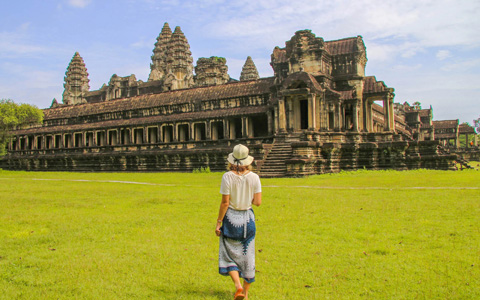
 Cooler dry-season mornings make temple walking feel much easier.
Best Time Overall: November to February for the Easiest Angkor Experience
The best time of year to visit Siem Reap runs from November through February. These months offer lower humidity levels that let you breathe easily, minimal rain risk that rarely disrupts temple plans, and cooler morning temperatures that extend your comfortable exploration window by several hours compared to hot season.
Sunrise at Angkor Wat becomes genuinely pleasant rather than sweaty and uncomfortable. You can complete longer temple circuits without retreating in exhaustion by 10 AM. Cycling between temple sites feels enjoyable instead of brutal. Evening walks through Siem Reap's night markets and Pub Street area don't leave you drenched in sweat.
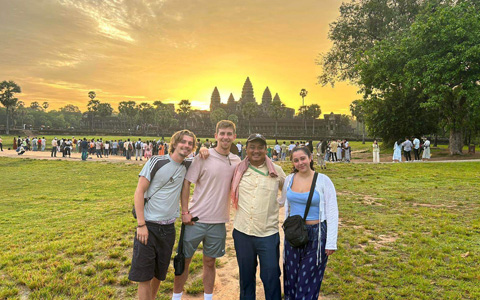
 Cool-season sunrise feels comfortable and sets up a longer temple morning.
This season also comes with the biggest crowds and the highest prices in Siem Reap. The busiest time is the weeks around Christmas and New Year, when visitor numbers peak. Angkor Wat sunrise viewing spots fill up very fast. The best hotels and the most experienced guides are often the first to sell out, and for holiday weeks this can happen months in advance. Private cars and tuk-tuks for temple touring also get booked early. That is why many travelers confirm plans early when booking an Angkor Wat tour—it keeps the key parts of the day smooth and predictable.
During these months, a simple temple routine works well. Leave your hotel around 4:45–5:15 AM for sunrise. Visit temples until about 10:30–11:00 AM. Then take lunch and rest during the hottest hours, usually 11:00 AM–3:00 or 3:30 PM. After that, go back out in the late afternoon when the air feels cooler and the light looks better, staying out until sunset around 5:30 PM. This late-afternoon timing often fits neatly into Angkor Wat sunset tours, without forcing you to walk more during midday heat.
For many people, this is the best time to visit Siem Reap for temple touring. First-time visitors find the pace easier and less tiring. Families with children avoid the stress that comes with strong heat. Seniors usually feel more comfortable because temperatures are moderate. And if you have limited vacation days, you can spend more time exploring temples instead of losing half the day to heat recovery.

Crowds and Prices by Season: Peak vs Shoulder vs Low (and How to Avoid the Worst)
When you plan Siem Reap, crowds matter just as much as the weather. They decide how easy it is to catch sunrise, how fast you can move through temples, when you need transport, and whether good guides are still available. Prices also rise mainly because of demand, so they usually follow crowd pressure, not weather alone.
Peak season in Siem Reap usually runs from November to February. This is also the best time to visit Siem Reap, Cambodia for comfort because the air is cooler and less humid. But that comfort brings the biggest crowds. Angkor Wat sunrise areas get busy very early.
Bayon and Ta Prohm often start to clog up by mid-morning, especially in narrow walkways. Prices tend to climb in a familiar order: hotels go up first, then guides and transport, and then private drivers. A simple way to stay comfortable is to rest at midday and go back out late afternoon. That timing also fits naturally into Angkor Wat sunset tours, without forcing extra walking in the hottest hours.
The shoulder travel season often falls around March and October. These months feel different from each other. March is hotter, but rain is still low. October is usually more comfortable because rainfall starts to ease. In both months, crowds are lighter than peak season, and prices often drop a little (though not dramatically). These months work well if you want a balance—still decent comfort, with more space at the temples.
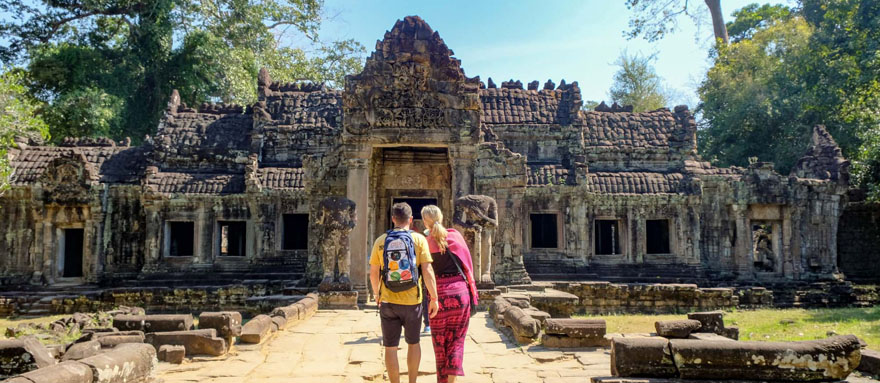
 In peak season, early starts help you avoid the worst bottlenecks.
Low season in Siem Reap usually runs from May to September. These are the wettest and most humid months. The upside is that this period also has the fewest visitors. Even famous temples can feel calm. Hotels often discount more to win bookings, and guides and drivers are usually more flexible with timing and routes.
No matter the season, crowds still gather in the same “hot spots.” Angkor Wat sunrise is the biggest one every day. At Bayon, the busiest window is usually 9:00–11:00 AM, when many groups arrive at the same time. Ta Prohm often gets crowded in mid-morning when tour buses roll in. The busiest times are usually easier to avoid with an earlier start, a reverse route, or a late-afternoon visit when the temples feel quieter.
Booking needs also change by season. In peak months, good hotels and licensed guides often need to be booked weeks ahead, and sunrise transport is usually the first thing to sell out. In low season, booking just a few days ahead (or even the same week) is often still possible, so you can stay more flexible.
Holiday weeks are the big exception. Christmas and New Year create a sudden jump in demand—prices rise fast and availability drops quickly. Regional school holidays can also increase crowd levels. If you can plan around these weeks, the trip usually feels much more comfortable. And if you are combining Siem Reap with other places, building a wider Cambodia route can make it easier to avoid the worst holiday pressure.
Best Value Months: May and September for Great Trips Without Peak Prices
Value does not mean the lowest price alone. The best time of year to visit Siem Reap for value combines manageable weather, lighter crowds, and reasonable costs. May and September fit this balance better than most months.
May sits at the start of the rainy season. Temperatures remain high. Humidity rises. Rain usually arrives later in the day. Morning temple visits still work well. Crowds drop sharply after April. Hotels lower rates to attract travelers. Guides have more availability. In these months, trip length and pacing matter more, which is why how many days for an Angkor Wat tour often changes the whole experience.
September sits near the end of the rainy season. Rainfall peaks earlier in the month and then begins to ease. Crowds remain very low. Prices stay soft. Cloud cover helps reduce heat stress during walking hours. Green scenery reaches its peak.
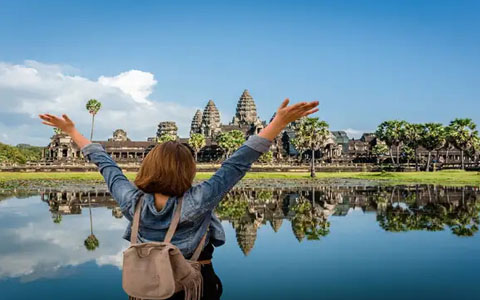
 Green season brings lush scenery and softer light, even on warm days.
These “value months” can be a smart time to visit, but the planning style is a little different from peak season. The key is flexibility. Early mornings are still the easiest time for temples, because the air feels cooler around sunrise. Afternoons are less predictable, since short rain showers can happen and change the pace.
A simple Siem Reap itinerary works better when it has breathing room. Extra time between stops helps you stay relaxed, even if the weather slows things down. It also helps to expect stronger midday heat than you would feel in November or December.
These months are not ideal for travelers who are very sensitive to heat, especially when temperatures go above 30°C. Families with very young children may also find the heat plus humidity harder to manage.
If your schedule is extremely tight and every hour is fixed, September can be the toughest month because weather delays are more likely. Seniors with limited stamina often feel more comfortable visiting in peak season, when the weather is easier for walking. Clear route planning also helps a lot in any season, especially when you group nearby temples and follow a simple Angkor map flow for the main clusters.
Siem Reap Cheapest Travel Season: June to August for Green Scenery
The cheapest time to visit Siem Reap is usually June to August. This is the quietest tourism season, so hotels cut prices to fill rooms. A mid-range hotel that costs $80–$100 per night in December may drop to $40–$60. Budget guesthouses can be even cheaper. Private guides and drivers often lower their daily rates by about 20–30%. Temple pass prices stay the same, but many other costs go down.
The downside is the weather. Heat rises fast after sunrise. Humidity makes the air feel heavy. Afternoon showers also happen more often than in the dry season. These things really affect how long you can comfortably explore temples. For many travelers, the “easy walking” window is only about five hours in the early morning.
A simple temple routine for this season is easy to follow. Many travelers wake around 4:30 AM, leave by 5:00 AM for sunrise, and explore until 10:00–10:30 AM at the latest. After that, they return to the hotel for a proper break—shower, cool down, and rest—then go out again around 3:30–4:00 PM if they still have energy. In the hottest months, a slower pace often matches an Angkor Wat private tour better than a tight group schedule.
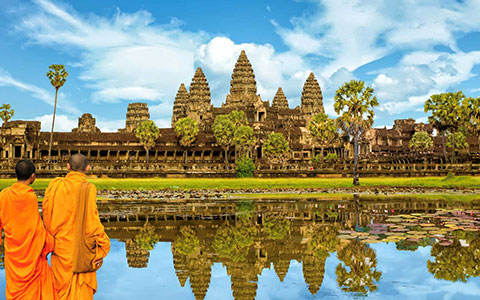
Trying to push through midday heat during these months rarely works out well. The green scenery during these months presents Angkor's temples in a completely different visual context. Vegetation grows thick and lush. Moats and ponds fill with water and reflect temple structures beautifully.
 Indoor experiences keep the day enjoyable when afternoon showers roll in.
The countryside between temples looks vibrant rather than dusty and dry. Photographers who don't mind working around weather conditions can capture dramatic storm clouds and post-rain light that never appears during dry season.
The table below compares typical daily travel costs during peak season against the lowest-priced months from June to August. Prices reflect common mid-range accommodation, private transport, and guide rates rather than luxury properties.
|
Cost for Siem Reap Tours |
Peak Season Price |
Cheapest Season Price |
Savings |
|
Mid-Range Hotels |
$80–$100 per night |
$40–$60 per night |
40–50% lower |
|
Budget Guesthouses |
$25–$35 per night |
$15–$25 per night |
30–40% lower |
|
Private Tour Guide |
$35–$50 |
$25–$35 |
20–30% lower |
|
Private Car with Driver |
$40–$60 |
$30–$45 |
25–30% lower |
|
Tuk-Tuk (full day) |
$20–$25 |
$15–$20 |
20–25% lower |
During the cheapest season in Siem Reap, comfort and safety matter more because the days feel hotter and wetter. Drinking enough water is key. Many travelers feel better when they sip regularly, instead of waiting until they feel thirsty. Sunscreen also matters, even on cloudy days. UV still comes through, so a high-SPF sunscreen and regular reapplying helps.
Rain is another thing to expect. A small rain jacket or compact umbrella is easy to carry and often useful. After a shower, temple stones can get slippery, so shoes with good grip make walking safer. If you sweat a lot, oral rehydration salts can help you recover faster.
Light, respectful clothing is still the best choice all year. It also helps with smooth temple entry, because the Angkor Wat dress code is checked even when the weather is hot.
April and Khmer New Year: Best Festival Energy but Toughest Heat Reality
April deserves special attention. It brings the hottest Siem Reap weather of the year. It also hosts Khmer New Year, one of Cambodia’s most important festivals. The energy during this period feels intense and joyful, especially in the evenings.
Khmer New Year typically falls around April 13 to 16, though the exact dates shift slightly based on the traditional lunar calendar. For 2026, confirm the specific dates closer to your travel time since they can vary by a day or two from year to year.
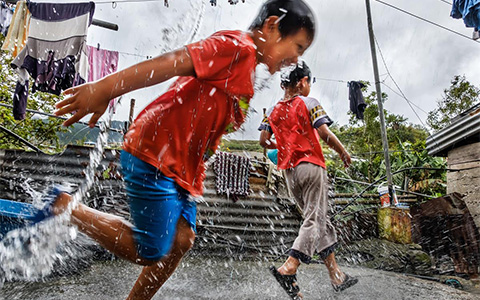
During this festival period, Siem Reap transforms into a hub of celebration. Locals return to their hometowns. Temples see increased visits from Cambodian families making merit. Evening activities along the river and throughout the city center buzz with energy, music, and street food vendors.
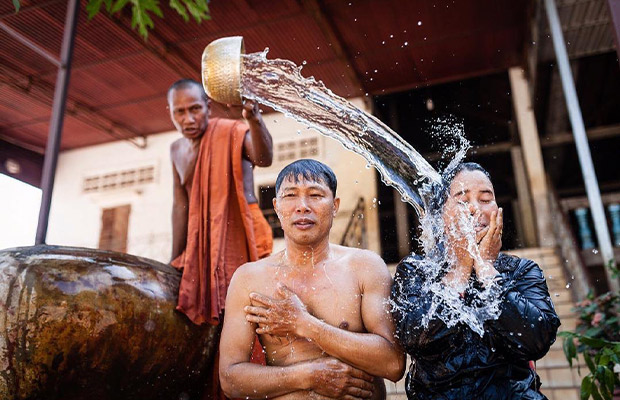
 Khmer New Year evenings feel lively, even when temple mornings need to stay short.
April heat in Siem Reap is no joke, so the plan needs to be realistic. In this month, temple time works best at dawn. After that, the sun gets strong very quickly. By around 10:00 AM, long walks on open stone paths can push people toward heat exhaustion, especially if they keep going without a real break.
The main issue is simple. When the air is very hot and the humidity is high, the body cools down more slowly. Sweat does not dry as easily, so tiredness comes faster. Many visitors also get dehydrated sooner than they expect.
A festival-friendly April rhythm often looks like this. Temples start around 5:00 AM, and finish by 9:30 AM at the latest. Then most travelers head back to the hotel for a long midday rest until 3:00–4:00 PM. The hot afternoon is better for a pool break or indoor time. Later, when the sun drops and the air feels easier, it becomes a nicer time for dinner and festival stops—this is also the same kind of pacing we often suggest when helping guests plan a Cambodia trip from Siem Reap and beyond.
If you visit during Khmer New Year week, booking needs more lead time. Hotels fill with both international visitors and local families traveling for the holiday. Prices can jump to a level similar to Christmas week. Private guides and drivers also get fully booked. For this specific week, it is safest to reserve hotels and transport 2–3 months in advance.
Siem Reap Weather by Month: A Consistent, Easy-to-Compare Monthly Guide
Siem Reap follows a simple yearly pattern. November to February is the most comfortable stretch, with drier air and cooler mornings, but it is also the busiest and most expensive time.
May to September is the wet and humid season, with the lowest crowds and best hotel deals, but temple time feels best in the early morning because rain and heat build later in the day.
January: Peak Comfort for Long Temple Days
|
January in Siem Reap |
|||||
|
Weather |
Crowds |
Prices |
Best For |
Watch-Outs |
|
|
Mild and dry |
High |
High |
Long temple days |
Early booking needed |
|
January offers some of the best weather in Siem Reap for temple exploration. Average high temperatures reach around 31°C with nighttime lows dropping to a comfortable 21°C. Rain falls rarely, maybe one or two brief showers for the entire month. Humidity sits at its annual low point, making the air feel fresh and breathable.
Crowds peak during the first two weeks as New Year holiday travelers extend their trips. Hotels charge full peak season rates. Popular properties book solid. After mid-January, visitor numbers ease slightly while weather conditions remain excellent. This creates a brief sweet spot before February's weekend surges begin.
January suits travelers who want predictability and comfort. Advance booking helps avoid limited choices.
February: Comfortable Balance with Slight Warming
|
February in Siem Reap |
|||||
|
Weather |
Crowds |
Prices |
Best For |
Watch-Outs |
|
|
Dry and warm |
High |
High |
Balanced travel |
Weekend pressure |
|
February maintains very pleasant conditions in Siem Reap. Temperatures climb slightly compared to January, with highs reaching 33°C and lows around 22°C. Rain remains minimal. Humidity stays low enough that the heat feels manageable rather than oppressive. The dry season continues in full effect with dusty roads and brown countryside vegetation.
Crowds follow a weekend pattern during February. Asian market holidays and long weekends push visitor numbers up during specific weeks. European and North American travelers continue arriving steadily. Overall density stays below January's peak but well above shoulder season levels. Prices remain at peak season rates for most hotels and tour services.
February works beautifully for travelers wanting the comfort of cool season without the most extreme crowds of December and January. Check the calendar for Chinese, Japanese, and Korean holidays that might affect crowd levels.
March: Warming Temperatures with Strong Value
|
March in Siem Reap |
|||||
|
Weather |
Crowds |
Prices |
Best For |
Watch-Outs |
|
|
Hot and dry |
Medium |
Medium |
Value seekers |
Midday fatigue |
|
March marks the transition toward the hot season in Siem Reap. Temperatures push higher with average highs around 35°C and lows still comfortable at 23°C. Rain stays minimal—March remains part of the dry season. Humidity begins its gradual climb upward. The heat starts limiting comfortable temple hours to early morning and late afternoon.
Crowds thin noticeably as peak season ends. Hotels begin lowering rates by 20 to 30 percent compared to January and February. Guide and transport availability opens up substantially. Booking lead times shorten to four to six weeks for most properties. March represents the early edge of shoulder season with better value emerging.
March works well for experienced travelers and budget-aware visitors. It challenges those sensitive to heat.
April: Extreme Heat Meets Festival Peak
|
April in Siem Reap |
|||||
|
Weather |
Crowds |
Prices |
Best For |
Watch-Outs |
|
|
Extreme heat |
Very High |
High |
Festivals |
Heat stress |
|
April brings the hottest weather of the year to Siem Reap. Average high temperatures soar to 36°C or higher with feels-like temperatures exceeding 40°C regularly. Nighttime lows around 25°C offer little relief. Rain remains rare. Humidity climbs higher. The combination creates genuinely challenging conditions for outdoor activity.
Crowds spike specifically during Khmer New Year week in mid-April, then drop sharply before and after the festival period. Prices increase for the festival week, approaching or matching peak season rates. Outside that specific week, April sees relatively few international visitors who avoid the extreme heat. Booking becomes critical only for the festival period itself.
April suits travelers focused on cultural events and evening activity. It does not suit travelers seeking relaxed sightseeing.
May: Hot Season Meets Early Rains with Value Potential
|
May in Siem Reap |
|||||
|
Weather |
Crowds |
Prices |
Best For |
Watch-Outs |
|
|
Hot with rain |
Low |
Medium-Low |
Best value |
Sudden showers |
|
May signals the start of rainy season in Siem Reap while maintaining the heat from April. Average high temperatures stay around 34°C with lows around 25°C. Rain patterns shift from occasional sprinkles to more regular afternoon showers, though the wettest months still lie ahead. Humidity climbs higher as moisture increases in the air. The combination of heat and humidity creates that heavy, thick feeling.
Crowds drop substantially after Khmer New Year passes. International tourism slows as peak season ends definitively. Hotels lower rates significantly, dropping 30 to 40 percent below peak season pricing. Tour guides and transport services become much more available. Booking lead times shrink to just a few weeks for most properties.
May suits travelers who want lower costs and quieter temples without committing to full wet-season conditions. The watch-outs include sudden heavy showers that can arrive earlier than expected, higher humidity that drains energy faster, and the need for flexible afternoon scheduling.
June: Budget Season Begins with Humid Mornings
|
June in Siem Reap |
|||||
|
Weather |
Crowds |
Prices |
Best For |
Watch-Outs |
|
|
Humid and wet |
Low |
Low |
Budget travel |
Slippery paths |
|
June settles into wet season patterns in Siem Reap. Temperatures moderate slightly with highs around 33°C and lows near 25°C. Rain frequency increases with showers hitting most afternoons and some mornings. Humidity reaches high levels that make even moderate temperatures feel oppressive. Cloud cover becomes more common, diffusing sunlight and creating softer light conditions.
This month marks the beginning of true low season. Visitor numbers drop to annual lows. Hotels offer their best deals of the year with rates falling 40 to 50 percent below peak season. Tour operators discount services. Transport costs drop. Nearly everything tourism-related becomes cheaper.
June suits budget travelers and repeat visitors. It challenges travelers with limited time.
July: Wet Season Peak with Dramatic Skies
|
July in Siem Reap |
|||||
|
Weather |
Crowds |
Prices |
Best For |
Watch-Outs |
|
|
Wet and humid |
Low |
Low |
Budget and quiet travel |
Afternoon showers |
|
July continues the wet season pattern with similar temperatures to June. Highs reach around 32°C while lows stay near 25°C. Rain falls more frequently with showers possible at any time of day, though afternoon and evening remain most common. Humidity stays very high. The countryside turns lush and green. Temple moats fill with water creating beautiful reflections.
Crowds remain at low season levels. Prices stay at their cheapest point. Hotels maintain promotional rates. The tourism infrastructure operates at reduced capacity with some smaller operators taking breaks. Availability stays high for booking accommodation and tours on short notice.
July suits budget travelers, repeat visitors, or anyone willing to adapt their day rhythm to weather conditions. It challenges travelers who have only a short window for sightseeing.
August: Continued Wetness with Quiet Temples
|
August in Siem Reap |
|||||
|
Weather |
Crowds |
Prices |
Best For |
Watch-Outs |
|
|
Humid with frequent rain |
Very Low |
Very Low |
Photography and nature |
Flexible afternoon plans |
|
August maintains July's weather patterns with minimal change. Temperatures hover around 32°C for highs and 25°C for lows. Rain frequency remains high with showers throughout the day and night. Humidity stays elevated. Vegetation reaches peak lushness. Water levels in temple moats and surrounding areas reach their highest points of the year.
Tourism stays quiet during August. School holidays in some Western markets bring a slight uptick compared to June and July, but overall numbers remain low. Prices hold at low season rates. Booking stays easy with short lead times. The tourism infrastructure continues operating at reduced capacity.
August suits travelers seeking green landscapes and quiet temples. Those focused on comfort or predictable scheduling may find the weather limiting.
September: Often Wettest Month with Lowest Crowds
|
September in Siem Reap |
|||||
|
Weather |
Crowds |
Prices |
Best For |
Watch-Outs |
|
|
Humid with heavy rain |
Very Low |
Low |
Value travel |
Short-loop planning |
|
September typically sees the highest rainfall totals for the year in Siem Reap. Average temperatures stay around 31°C for highs and 24°C for lows. Rain showers hit frequently throughout the day. Some years bring multi-hour rain events rather than just brief afternoon showers. Humidity reaches its peak. Cloud cover dominates most days. The landscape looks incredibly green and lush.
September offers the ultimate in empty temple experiences at low prices. Angkor Wat can feel almost deserted during certain hours. The wet season scenery presents temples surrounded by vibrant green vegetation and full water features.
Hotel rates remain low. Guide and transport availability are excellent. This makes September ideal for photographers and value-focused travelers who can handle heat and rain trade-offs.
October: Weather Improving with Value Window Opening
|
October in Siem Reap |
|||||
|
Weather |
Crowds |
Prices |
Best For |
Watch-Outs |
|
|
Moderate heat and rain |
Medium |
Medium |
Comfort and value |
Rising demand |
|
October marks the beginning time from wet to dry season in Siem Reap. Temperatures stay moderate with highs around 31°C and lows near 24°C. Rain frequency begins declining compared to September, though showers still happen regularly. Humidity starts its gradual descent toward comfortable levels. Skies begin clearing more often. The post-rain air can feel remarkably fresh and clear.
Crowds start returning gradually as peak season approaches. Early October still sees relatively few visitors. Late October brings increasing numbers as travelers seek to catch the early edge of good weather. Hotels begin raising rates from low season bottoms, though prices still sit well below peak season levels. October represents a genuine value window.
October suits travelers seeking a balance between fewer crowds, lower prices, and improving weather conditions. It also works well for photographers looking for early wet-season drama fading into clear skies.
November: Comfort Returns Strongly with Peak Season Beginning
|
November in Siem Reap |
|||||
|
Weather |
Crowds |
Prices |
Best For |
Watch-Outs |
|
|
Low-medium heat, dry |
High |
High |
Comfortable sightseeing |
Early booking advised |
|
November brings the return of truly comfortable weather to Siem Reap. Average high temperatures drop to around 31°C with nighttime lows falling to a pleasant 22°C. Rain becomes rare with maybe one or two brief showers for the entire month. Humidity declines sharply compared to October. The air feels fresh and breathable again. Clear blue skies dominate most days.
Crowds build steadily throughout November as peak season officially begins. Early November still sees moderate visitor numbers. Thanksgiving week and late November bring significant increases as travelers arrive for the start of the best weather window. Booking lead times extend to two months or more for preferred hotels and experienced guides.
Temple days work best with early starts, midday breaks, and late afternoon returns. First-time visitors benefit most from this rhythm. Evening walks in town become comfortable as temperatures drop.
December: Very Comfortable but Busiest Month
|
December in Siem Reap |
|||||
|
Weather |
Crowds |
Prices |
Best For |
Watch-Outs |
|
|
Low heat, dry |
Very High |
Very High |
Extended sightseeing |
Sunrise crowd management |
|
December delivers peak comfort and peak crowds simultaneously. Temperatures stay moderate with highs around 30°C and lows near 21°C. Rain falls extremely rarely. Humidity sits at annual lows. The weather conditions are nearly ideal for outdoor temple exploration. Clear skies and comfortable temperatures make every aspect of visiting Angkor more pleasant.
Crowds reach their yearly maximum during December, particularly around Christmas week and New Year. Angkor Wat sunrise becomes genuinely crowded with hundreds of visitors jockeying for reflection pond positions. Popular temples see heavy traffic throughout the morning. Hotels book solid months ahead. Prices peak at their highest levels. Tour guides and private transport get reserved early.
December suits travelers who prioritize maximum comfort and don't mind sharing the experience with many others. The weather makes temple visits easy and enjoyable.
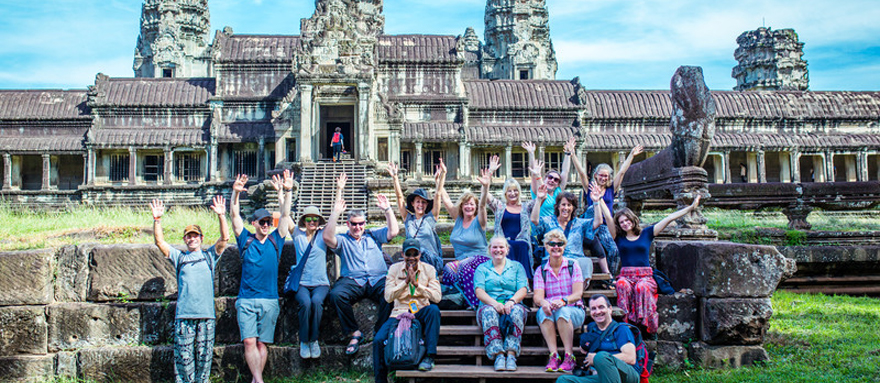
 Knowing the layout helps you plan temples by time and energy.
Angkor Wat Timing Tips by Season: Sunrise Crowds, Best Light, and Energy-Saving Routes
Temple timing in Siem Reap follows one simple rule in every season: early morning and late afternoon feel best. Midday is the hard part. The sun is strongest, the heat rises fast, and photos often look too bright and flat. This is true in both the dry season and the rainy season. The only difference is how long the comfortable window lasts.
Angkor Wat sunrise is the busiest moment of the day, especially in peak season from November to February. During these months, many guests leave the hotel by 4:45 AM. The main reflection pond fills quickly, and the best spots are often taken by 5:15 AM. The entrance area and the long walkway to the temple also get crowded. Sunrise itself usually falls around 6:00–6:30 AM, depending on the time of year.
There are a few easy ways to make sunrise feel less stressful. Some visitors choose the north or south reflection pond instead of the main western pond. The view is still beautiful, but the crowd is usually lighter. Others skip the pond and watch from inside Angkor Wat, using a higher spot for a cleaner view.
Another common local-style plan is to watch sunrise at a smaller temple like Srah Srang or Pre Rup, then go to Angkor Wat around 7:30–8:00 AM. By that time, the main sunrise crowd has started to move on, and the walkways feel much easier.
 Sunrise at smaller temples can feel calmer, then Angkor Wat is easier after the main crowds disperse.
Dry season from November through April brings clear skies and sharp light. This creates strong contrast and vivid colors but can produce harsh shadows during midday. Early morning light from 6:00 to 8:00 AM and late afternoon light from 3:30 to 5:30 PM offer the warmest tones. Photographers often prefer these edge hours. Cloud cover rarely disrupts plans during dry season.
An energy-saving route strategy puts the iconic temples first when you have the most stamina. Start with Angkor Wat or Bayon right after sunrise. Move to Ta Prohm or Preah Khan mid-morning.
Save smaller, less physically demanding temples like Banteay Kdei for later when energy drops. Build in a proper shade break every 90 minutes to two hours. Return to your vehicle for water and cooling down rather than pushing through until exhaustion hits.
Photography by season creates different opportunities. November through February delivers the clearest skies and most reliable light but brings the most crowded photo spots. March and April offer empty temples but harsh midday light and heat haze.
May through August provides dramatic storm clouds and lush greenery but less predictable conditions. September and October can deliver spectacular post-rain clarity with fewer crowds than peak season. The same timing logic also works well inside longer Southeast Asia tours, where early starts keep multi-stop days comfortable.
 A slightly different spot can feel calmer while still offering great views.
FAQs about the Best Time to Visit Siem Reap
What is the best month for comfortable Angkor walking?
December and January offer the most comfortable conditions for walking at Angkor Wat with cool mornings, low humidity, and minimal rain. You can explore temples for five to six hours before needing a break.
What is the worst time to visit Siem Reap?
April presents the toughest conditions for most travelers due to extreme heat that limits comfortable temple exploration to just early morning hours before 9:30 AM.
When is the best time for Angkor Wat sunrise and photos?
November through February provides the most reliable clear skies for sunrise photography, though you'll share the experience with large crowds. For fewer people, try October when weather improves but peak crowds haven't arrived yet.
What should I expect during the cheapest month?
June through August deliver the lowest prices but bring high humidity, frequent afternoon showers, and heat that shortens comfortable temple walking windows to early morning hours only.
Is rainy season worth it with limited time?
If you have only three or four days, rainy season from June through September becomes risky because consecutive rain days could significantly limit temple exploration. Stick to November through March for short trips.
How many days do I need in different seasons?
Peak season comfort allows accomplishing more per day, so three days covers major temples adequately. During hot or wet seasons, plan four days to allow for shortened daily windows and potential weather delays.
What should I pack by season?
Dry season requires high SPF sunscreen, a hat, and light breathable layers. Wet season needs all of that plus a rain jacket, quick-dry clothing, and shoes with good grip for slippery temple stones.
How far ahead should I book for peak weeks?
Christmas and New Year weeks require booking three to four months ahead. Hotels and experienced guides sell out first. Regular peak season dates need two to three months advance booking.

Conclusion: Choose Your Best Time Based on Comfort, Budget, Festivals, or Photos
The best time to visit Siem Reap depends on the balance of comfort, budget, cultural experience, and photography goals. November through February delivers the easiest conditions. May and September balance value with comfort. June through August rewards flexible travelers with quiet temples and lower costs.
Smart timing matters as much as the calendar. Early starts, midday breaks, and route planning often matter more than the month itself.
To plan Angkor Wat temple days that reflect actual conditions, Indochinatour.com helps align travel timing with transport logistics and weather-aware routing. We can help you match your travel dates with the right routes, schedules, and comfort level on the ground.
If you have any questions related to our services, drop us a message. We focus on clear planning, realistic schedules, and comfort on the ground. This approach helps keep temple days enjoyable from start to finish.
Srey Pov
Cambodia is my home, not simply another stop on an itinerary.
I was born in Phnom Penh, studied Hotel and Tourism Management, and have worked in tourism for 15 years. I’ve also traveled extensively through Vietnam, Laos, Thailand, and Myanmar.
My work has included private journeys as well as a multi-country trip for a group of more than 50 travelers, which received a five-star review.
When I write about Cambodia and the wider region, I bring the view of someone who lives here and has spent years planning trips on the ground—not just repeating what appears in standard destination guides.
Email me about your travel idea