
Best 8 Cambodian Desserts: Explore the Flavor of Khmer Kingdom

Srey Pov
Cambodia is my home, not simply another stop on an itinerary.
I was born in Phnom Penh, studied Hotel and Tourism Management, and have worked in tourism for 15 years. I’ve also traveled extensively through Vietnam, Laos, Thailand, and Myanmar.
My work has included private journeys as well as a multi-country trip for a group of more than 50 travelers, which received a five-star review.
When I write about Cambodia and the wider region, I bring the view of someone who lives here and has spent years planning trips on the ground—not just repeating what appears in standard destination guides.

 Email me about your travel idea
One of the most surprising things to discover about Cambodian food is the wide range of fun and delicious desserts. Made with fresh local ingredients in unique combinations, the best Cambodian desserts reveal a fun side of local culture. Here are some ideas for the best desserts you can try while exploring the Khmer Kingdom.
 Cha Houy Teuk: Cambodian Jelly Flavored with Sago, Mung Bean & Coconut Cream
Fruit with Salt and Pepper: Odd Pairing but A Novel Flavor
Num Ansom Chek: Rolled Banana Cake Wrapped in Banana Leaves
Num Chak Kachan: Colorful Khmer Layer Cake with Coconut Cream
Num Plae Ai: Sticky Rice Sweet Balls, also Called 'kill husband cake'
Mango and Sticky Rice: One of the Most Beloved Cambodian Desserts
Sankhya Lapov: Pumpkin Custard for Special Events and Celebrations
Mung Bean Pudding: Creamy and Has a Gelatinous Texture
Cha Houy Teuk: Cambodian Jelly Flavored with Sago, Mung Bean & Coconut Cream
Cha Houy Teuk is a popular Cambodian dessert that can be found on almost every street in Siem Reap and Phnom Penh. It's a colorful jelly dessert, served chilled and topped with coconut cream and a light drizzle of palm sugar syrup.
The main ingredient is agar agar, a jelly-like substance made from seaweed. It can be combined with various ingredients like sago and mung bean and is sometimes infused with pandan or jasmine. The result is a light snack that is not overly sweet and is a refreshing break from the tropical heat.
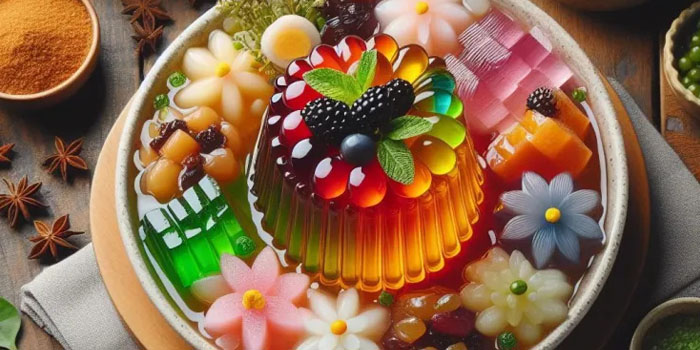 Cha Houy teuk
Fruit with Salt and Pepper: Odd Pairing but A Novel Flavor
Everyone is skeptical about fruit served with salt and pepper the first time they see it, but you'll be convinced after trying the novel flavor. Fresh fruit is abundant in Cambodia. Mango, banana, papaya, dragon fruit, and longan are just a few of the types of fruit you'll see sold everywhere. Markets and street stalls sell pre-cut fruit and will often give you a small bag of seasoning for it. You're meant to eat them together.
Called ambel bok, the seasoning is made of salt, chili pepper, and sometimes other ingredients like dry shrimp. Sprinkle it over your fruit or use it for dipping, and you'll immediately see why the combination is so popular in Cambodian cuisine. The contrast of the seasoning with the sweetness of the fruit shows off the balancing of complex flavors that are prized in Cambodian cuisine.
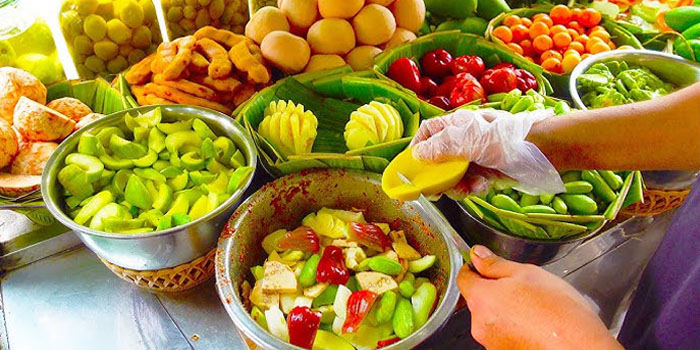 Fruit with Salt and Pepper
Num Ansom Chek: Rolled Banana Cake Wrapped in Banana Leaves
Rolled banana cake is an ancient, traditional Cambodian dessert. It is a signature food during festivals like Khmer New Year and special occasions like weddings, but it can be enjoyed at any time. Num Ansom Chek is not only delicious but also holds important cultural significance in Cambodian traditions.
It has a few key ingredients: sticky rice, ripe bananas, coconut milk, and banana leaves. First, the sticky rice is mixed with coconut milk. The bananas, sticky rice, and often grated coconut are rolled together and then wrapped in the banana leaf. The cake is then steamed until the rice is cooked, blending all the flavors together. Other versions are made with taro filling or mung bean and pork. The result is a lightly sweet cake in the shape of a cylinder.
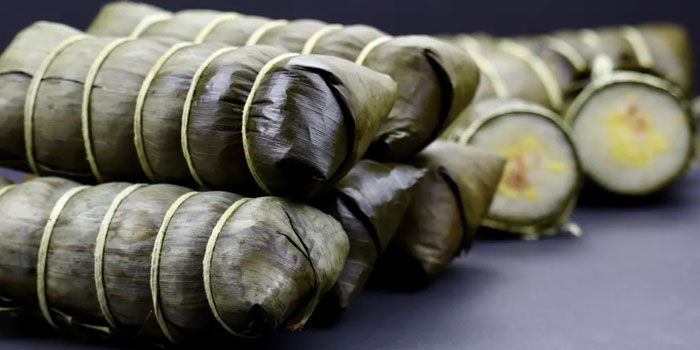 Num Ansom Chek
Num Chak Kachan: Colorful Khmer Layer Cake with Coconut Cream
Khmer layer cake, Num Chak Kachan, is a colorful dessert traditionally served on Buddhist holidays. It is made by mixing rice flour, coconut cream, and palm sugar to make a batter. The batter is then divided and colored with natural ingredients like pandan, beetroot, or turmeric. It is steamed in layers with alternating colors and stacked to form a cake. It is often served with more coconut cream on top.
Its colorful appearance makes it a popular dessert at festivals. Cooks enjoy experimenting with different colors and designs to achieve the most beautiful appearance. It's a soft, smooth dessert with subtle coconut flavoring.
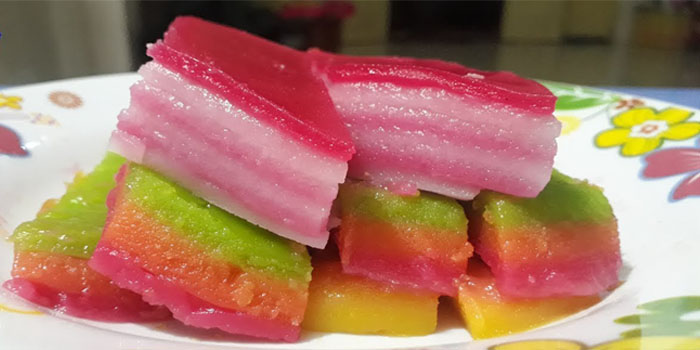 Num Chak Kachan
Num Plae Ai: Sticky Rice Sweet Balls, also Called 'kill husband cake'
Num Plae Ai is a traditional Cambodian dessert from Khmer legend. According to the old story, a newlywed bride prepared sticky, sweet rice balls to surprise her husband when he got home from work. He was excited to see the dessert, grabbed the rice balls, and swallowed everything. The hot, sticky rice balls got stuck in his throat, and he passed away. Num Plae Ai continues to be known as 'kill husband cake' today.
Don't worry though, the dessert is safe to eat. It is a sweet treat made from sticky rice with a palm sugar filling in the center. They are rolled into balls, steamed, and then coated with freshly grated coconut. It has all the classic tropical ingredients for a delicious snack.
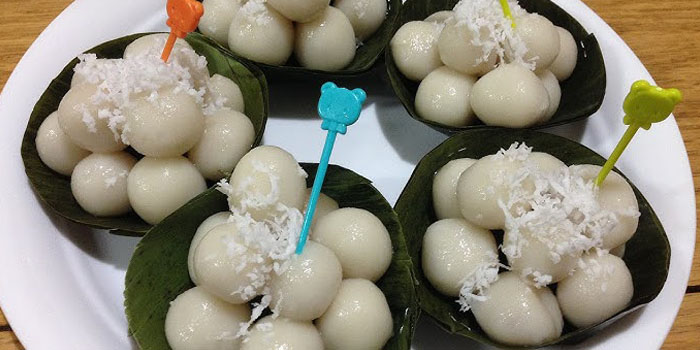 Num Plae Ai
Mango and Sticky Rice: One of the Most Beloved Cambodian Desserts
Every region in Southeast Asia has its version of the beloved mango and sticky rice. In Cambodia, they start with fresh, ripe mangoes on top of sticky rice made with coconut milk and lightly sweetened. A coconut sauce, made from coconut milk, palm sugar, and a bit of salt, is poured on top. The dessert is then garnished with toasted sesame seeds or mung beans.
It is a favorite dessert across the country for its combination of sweet and creamy flavors. Mango and sticky rice is served at room temperature and can be found everywhere in Cambodia.
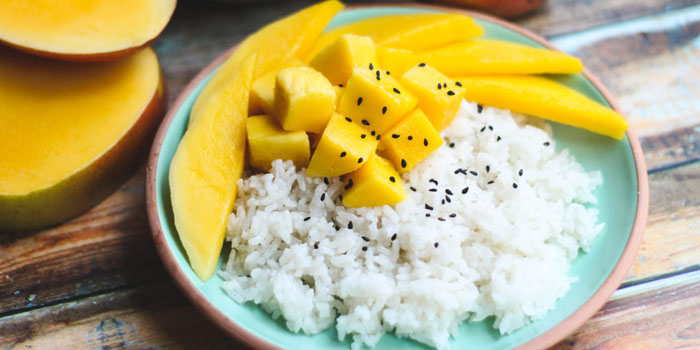 Mango and Sticky Rice
Sankhya Lapov: Pumpkin Custard for Special Events and Celebrations
Sankhya Lapov is a dessert that is the centerpiece of Cambodian New Year tables. It can be enjoyed all year round, sold by the slice in markets, or as a common dessert in restaurants.
The name translates to pumpkin custard, a perfect description of the dessert. It is a small pumpkin filled with a creamy custard made from coconut milk, palm sugar, eggs, and salt. The pumpkin is first cut open, and the seeds are taken out. Then, it is filled with the custard and steamed until thoroughly cooked. It can be served warm or chilled and is a comforting dessert during festive occasions.
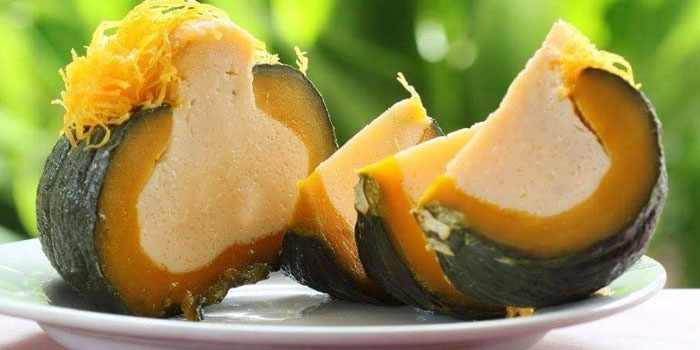 Sankhya Lapov
Mung Bean Pudding: Creamy and Has a Gelatinous Texture
Mung bean pudding is a sweet and creamy pudding primarily made from mung beans, coconut milk, and sugar. Mung beans have a mildly sweet taste and soft texture. To make the pudding, the mung beans are thoroughly cooked until soft and then mashed into a paste. Then, they are combined with a mixture of coconut milk and sugar that has been gently heated and sweetened to taste.
It can be eaten warm or chilled, garnished with different ingredients like grated coconut or sesame seeds. Mung beans are a very healthy food, and the subtle sweetness of the pudding makes it a refreshing dessert.
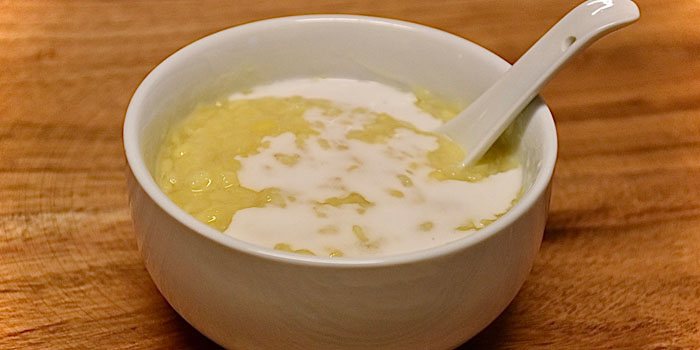 Mung Bean Pudding
Most Recommended Cambodia Food Tour
The best Cambodian food tour includes everything from street food to more upscale dining and gives you a chance to try dishes all over the country. Our 10-day Panoramic Cambodia Tour will take you to the best destinations in Cambodia with time to explore local food culture.
It starts in Siem Reap, where you'll discover traditional markets, visit floating villages, and explore Angkor Wat over three days. Then, you’ll spend three days in Sihanoukville, with a cruise to Koh Rong Samloem Island and time to relax on the beach. The last stop is Phnom Penh, where you'll see cultural sites like the Royal Palace, Silver Pagoda, and National Museum.
At each stop along the way, you'll have a different food experience. You can try the snacks and desserts at local markets, find formal dining experiences in Siem Reap and Phnom Penh, and experience the traditional foods of the coastal region and floating villages. It's easy to work up an appetite when out exploring, and traditional Cambodian desserts can be a refreshing break that helps you recharge.



Conclusion
Cambodian desserts are rich in culture and history and are a great treat during your tour. With their fresh and healthy ingredients, you can try all of the desserts without feeling guilty and see for yourself why local people love their native cuisine. Contact us and let us know what you want, and we'll put together a personalized tour.
Srey Pov
Cambodia is my home, not simply another stop on an itinerary.
I was born in Phnom Penh, studied Hotel and Tourism Management, and have worked in tourism for 15 years. I’ve also traveled extensively through Vietnam, Laos, Thailand, and Myanmar.
My work has included private journeys as well as a multi-country trip for a group of more than 50 travelers, which received a five-star review.
When I write about Cambodia and the wider region, I bring the view of someone who lives here and has spent years planning trips on the ground—not just repeating what appears in standard destination guides.
Email me about your travel idea