
12 Things Not to Do in Cambodia: Navigate Cultural Sensitivities

Srey Pov
Cambodia is my home, not simply another stop on an itinerary.
I was born in Phnom Penh, studied Hotel and Tourism Management, and have worked in tourism for 15 years. I’ve also traveled extensively through Vietnam, Laos, Thailand, and Myanmar.
My work has included private journeys as well as a multi-country trip for a group of more than 50 travelers, which received a five-star review.
When I write about Cambodia and the wider region, I bring the view of someone who lives here and has spent years planning trips on the ground—not just repeating what appears in standard destination guides.

 Email me about your travel idea
Cambodia, a country with a long history and unique culture, is attracting more and more foreign tourists.
However, in our exploration of this country, we must be aware of the existence of cultural differences and learn how to base ourselves on respect and understanding.
In order to help future or planned tourists to Cambodia better adapt to local culture, this travel log will focus on 12 embarrassing behaviors that are best avoided and provide corresponding suggestions.
 No.1 You Can Not Wear Shoes in Some Parts of the Temple
No.2 Never Wearing Short Skirts or Pants When Visiting the Temples
No.3 Do Not Be Too Cold When Meeting a Cambodian Local
No.4 Do Not Point Your Fingers at Each Other
No.5 Do Not Eat with Your Left Hands
No.6 Avoid Food Loss and Waste
No.7 Avoid Arguments During the Khmer New Year
No.8 Receive Gifts with Both Hands
No.9 Do Not Arbitrarily Destroy Cultural Relics
No.10 Avoid Buying Items Made from Endangered Species in Cambodia
No.11 Do Not Laugh at Khmer Language When Visiting Camboida
No.12 Avoid Using Difficult to Understand English Especially in Rural Areas
No.1 You Can Not Wear Shoes in Some Parts of the Temple
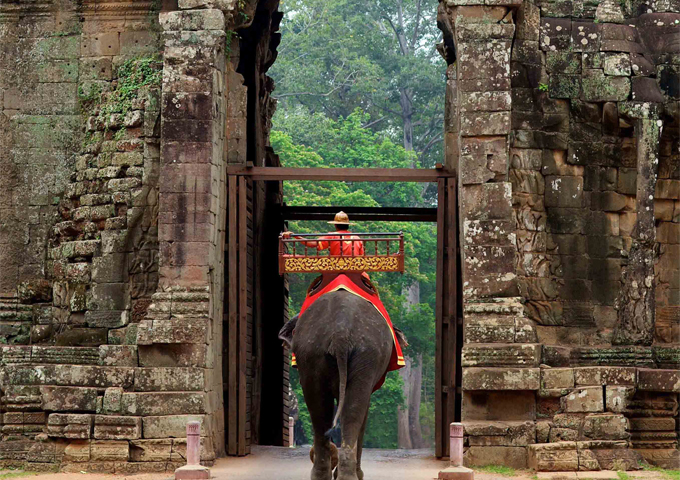 A Cambodian staff member passes through the Angkor gate with an elephant
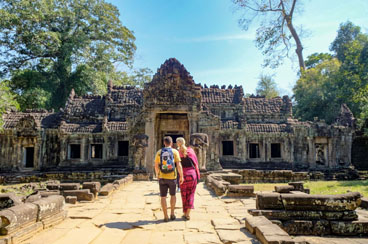
This is one of the very first things not to do in Cambodia when you plan to pay a visit to Angkor ancient temples!
Cambodia is a country with a strong religious color, with numerous magnificent temples and temples. However, when visiting these ancestral temples, we need to pay special attention to our behavior and behavior to avoid embarrassment and offending the locals.
Tourists can wear shoes to enter the main buildings and surrounding areas of the temple. However, in certain specific areas, such as the inner hall or special altars, it may be necessary to take off shoes or put on socks.
No.2 Never Wearing Short Skirts or Pants When Visiting the Temples
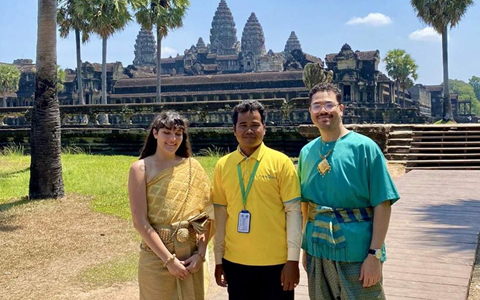
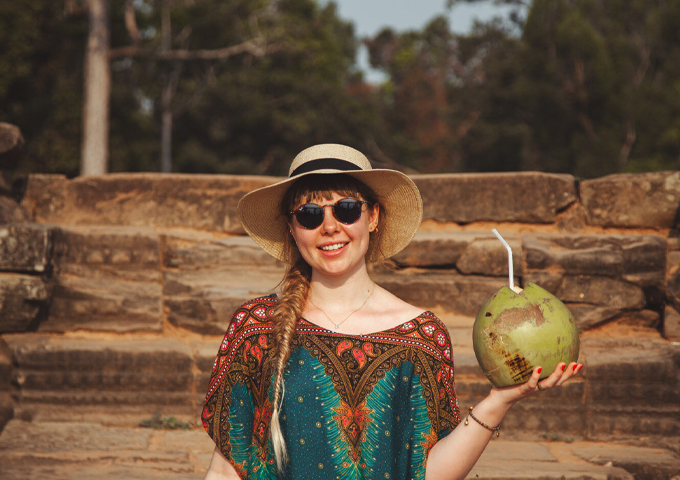 An elegant foreign lady took a picture in Angkor Wat with a coconut
It is very important to dress appropriately when visiting the ancestral temple. Cambodia is a conservative country with relatively strict dress codes for temple visitors.
Female tourists should wear dresses or pants and avoid exposing too much skin to integrate into the culture of Cambodia. Covering the shoulders and knees is the most basic requirement to show respect for the ancestral temple. Male tourists should also avoid wearing shorts and sleeveless shirts and choose suitable clothing.
No.3 Do Not Be Too Cold When Meeting a Cambodian Local
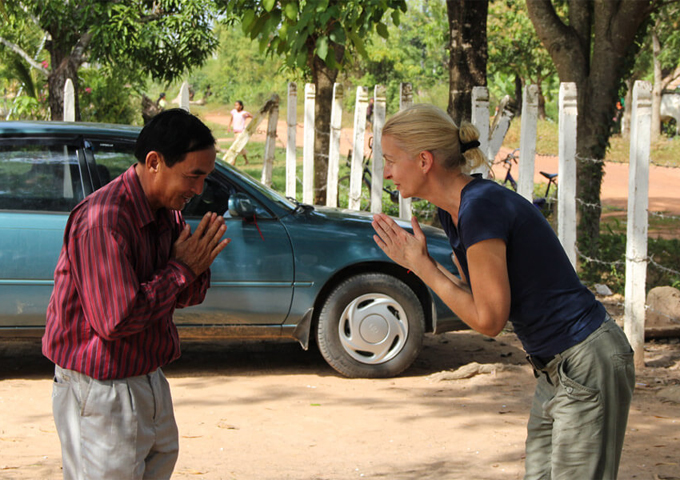 Khmer traditional: Sampeah
Cambodians have unique ways of greeting, and we should respect and adapt to these traditions.
When meeting Cambodians, a common way to greet them is to clasp your hands and smile while bowing. When addressing Cambodians, they can use 'Mr.' or 'Ms./Miss' followed by their surname to show respect.
In addition, when invited into a Cambodian home, remember to take off your shoes and enter the house, which is a traditional etiquette habit.
No.4 Do Not Point Your Fingers at Each Other
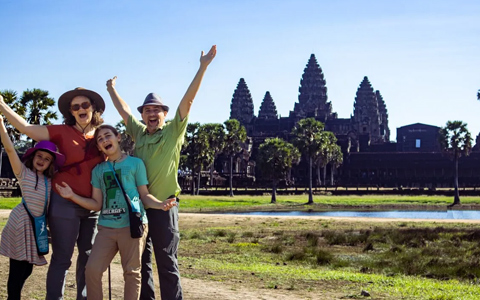
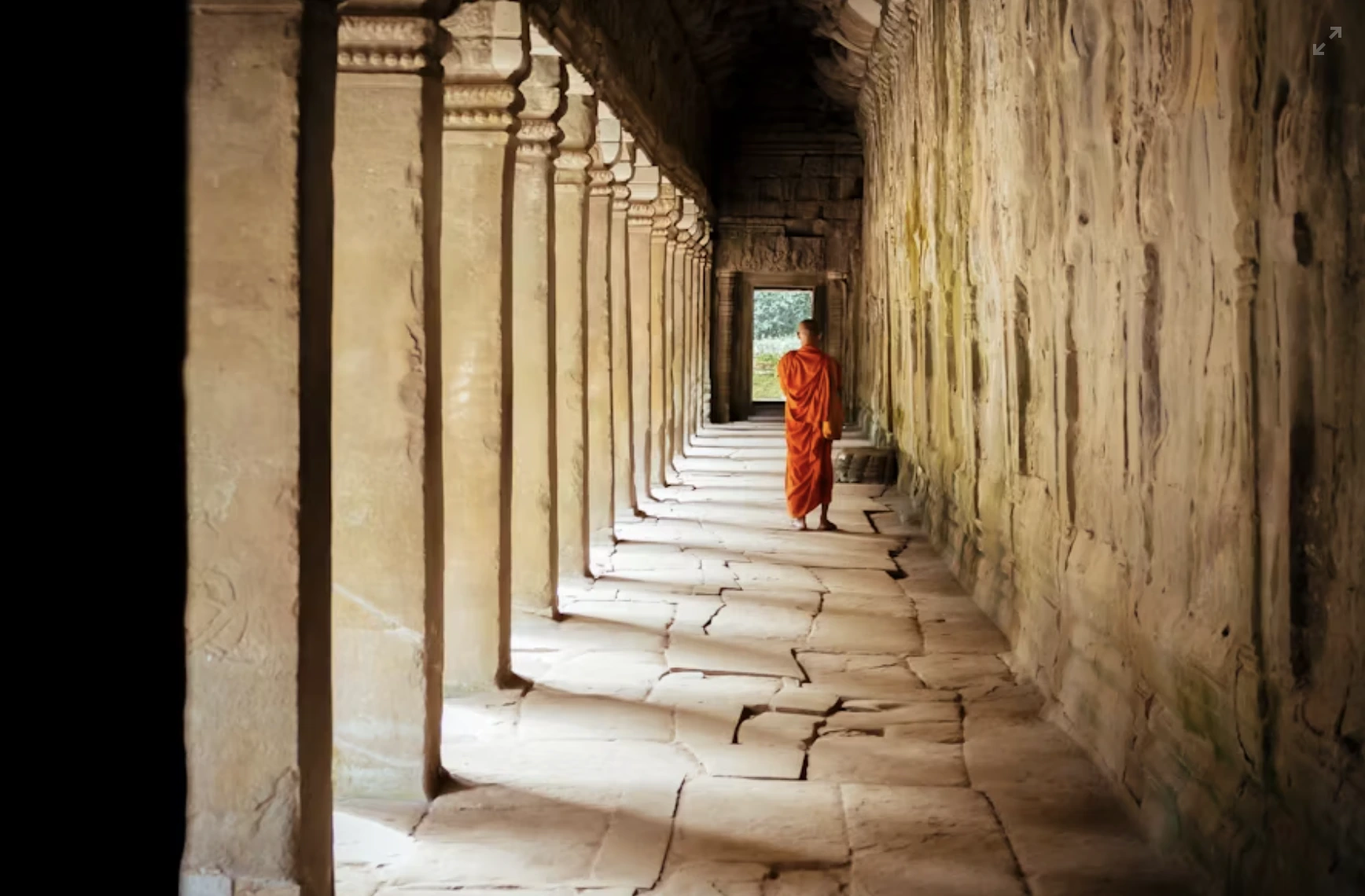
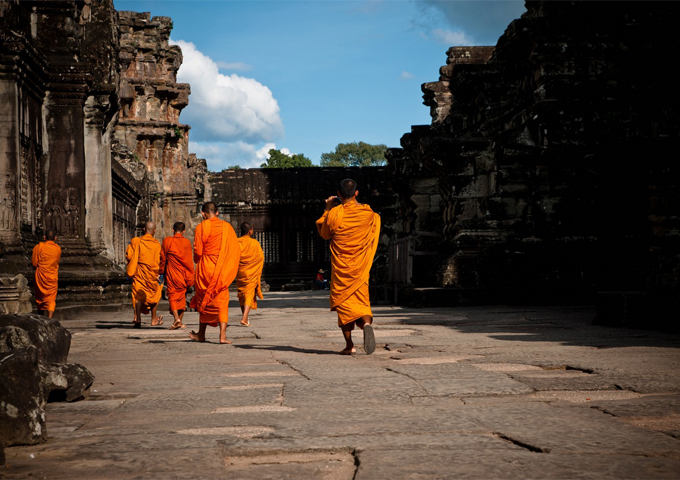 Tranquil and sacred in Angkor Wat
In Cambodia, some interpretations of gestures and physical contact may differ from our cultural background. Therefore, avoid using gestures such as pointing, tapping or hugging with your fingers, which may be considered impolite or offensive to others.
In addition, avoid excessive physical contact, such as tapping others' shoulders or touching strangers' heads, also considered as one of the serious things not to do in Cambodia. Because the head is considered the most sacred part, and touching someone else's head is considered a very disrespectful behavior.
No.5 Do Not Eat with Your Left Hands
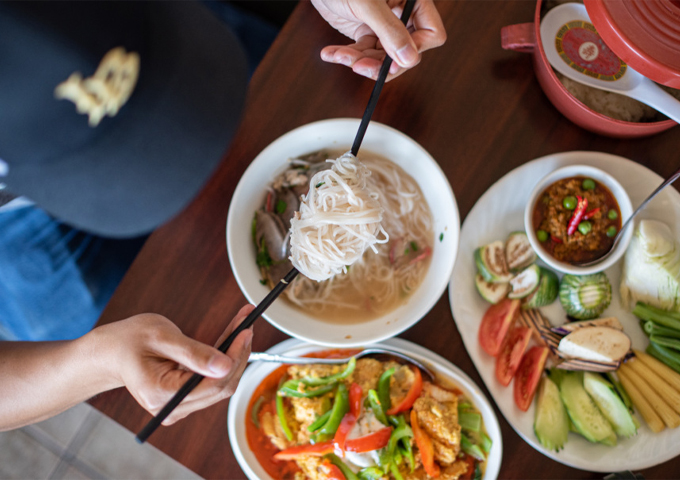 Meals in Cambodia
Cambodia has a rich and diverse culinary culture, and tasting local cuisine is a major highlight of travel. However, when enjoying delicious food, we need to respect local dietary habits and table manners as part of the culture in Cambodia.
Cambodian people usually eat with their right hand, and their left hand is considered unclean. (Cambodians believe that by keeping their right hand clean, especially during meals, they can avoid the spread of bacteria and unclean substances.)
In addition, Cambodians often share a dish, where everyone uses spoons or hands to tear the food, rather than everyone using their own tableware. So, please respect the local shared food culture and not overly emphasize personal tableware hygiene.
No.6 Avoid Food Loss and Waste
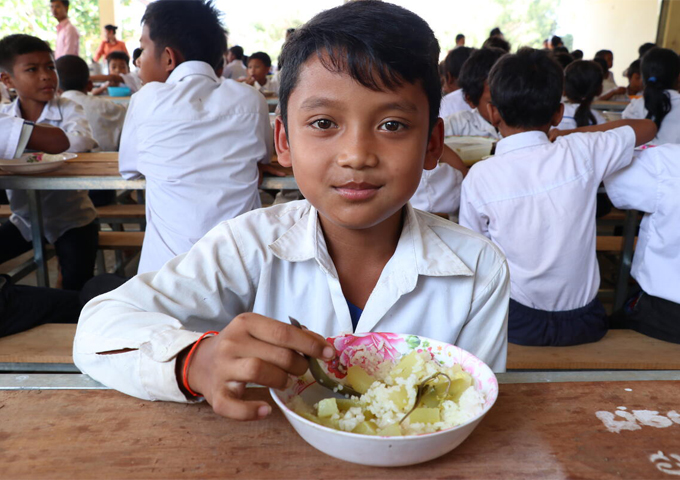 The boy is enjoying his lunch
Wasting food is considered as one of the unethical things not to do in Cambodia. Try to order as much as needed and pack the remaining food away, which is a way of respecting food and the environment.
In addition, in Cambodia, people rarely use chopsticks. They usually use spoons or hands to eat. Therefore, when dining at a local restaurant, you can put down your chopsticks and try using a spoon or hand, which is more in line with local dietary habits.
No.7 Avoid Arguments During the Khmer New Year
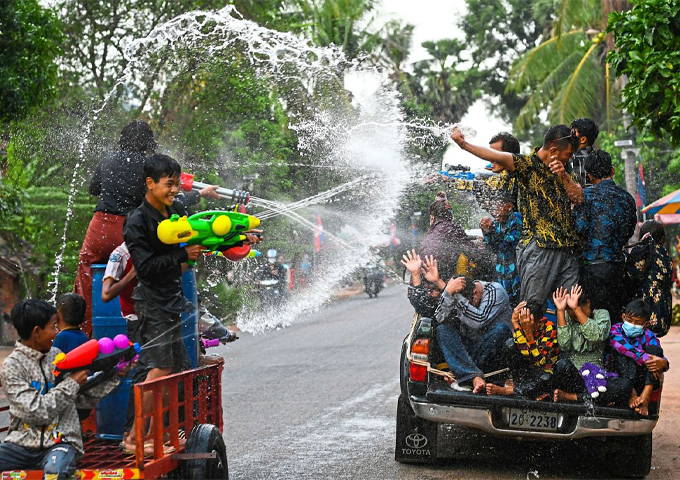 A splashing fun time in Khmer New Year
Cambodia has many important festivals and celebrations, and understanding and respecting these customs is a good way to communicate with local people and integrate into local culture.
For example, Cambodian New Year (Chaul Chnam Thmey) is an important festival filled with joy and traditional rituals. During this festival, people will bless each other and hold parades and water fights.
As a tourist, you can try to participate and feel the warmth and festive atmosphere of the local people. Besides, the New Year is a time of harmony and unity, so it is important to avoid arguments or noisy behavior.
No.8 Receive Gifts with Both Hands
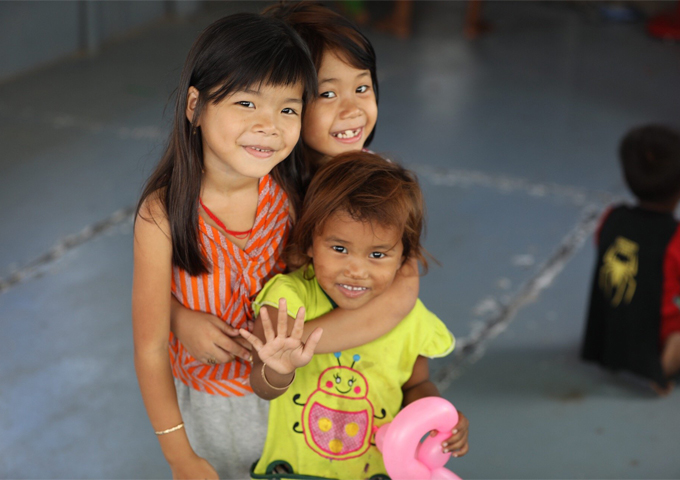 Kind kids in Cambodia
In Cambodia, there are some traditions and customs that we need to respect and abide by to avoid unintentionally offending the locals.
For exanple, traditionally using both hands to receive gifts is considered a sign of respect. This shows the importance and gratitude you place on the gift.
In Cambodian culture, it is not common to overemphasize the value of gifts. What matters is the intention and care of the gift, not the value of the gift itself.
No.9 Do Not Arbitrarily Destroy Cultural Relics
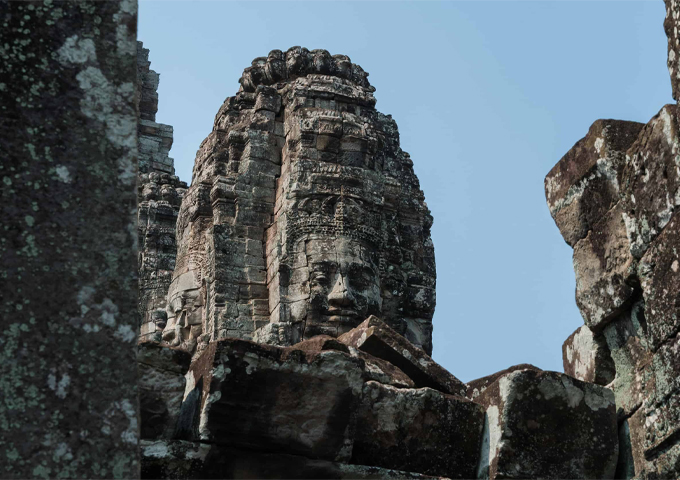 The face of Bayon
As travelers, we have to pay attention to this one of the basic taboos in Cambodia.
We have a responsibility to protect Cambodia's natural and cultural heritage. Try to comply with local environmental protection regulations and do not arbitrarily damage or take away natural resources or cultural relics.
When visiting natural scenic spots, follow the designated sightseeing path and do not trample on vegetation or damage animal habitats at will.
No.10 Avoid Buying Items Made from Endangered Species in Cambodia
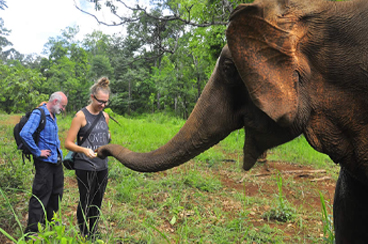
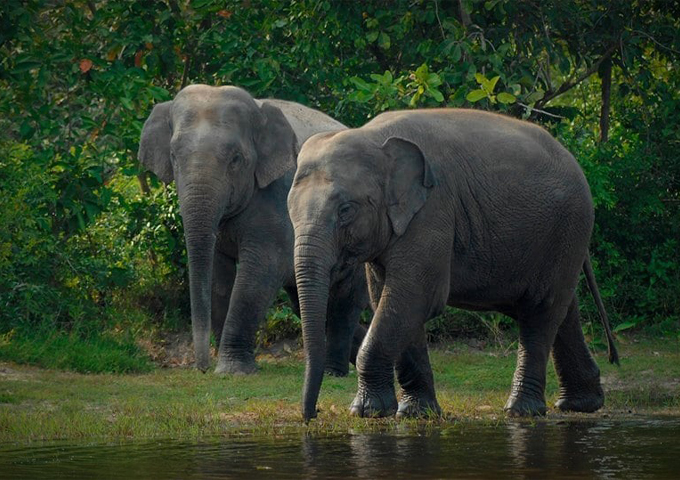 Asian elephant Cambodia
Cambodia is facing illegal animal trade and human rights issues.
As tourists, we should know this as one of the serious taboos in Cambodia and avoid purchasing, using, or supporting illegal animal products such as ivory, rhinoceros horns, crocodile skins, etc. Purchasing these products will only exacerbate the suffering of animals.
In addition, it is necessary to pay attention to and respect the human rights of local people, and not participate in or support any form of human rights violations. Respect local culture and social values, and communicate and interact with local people in a peaceful and understandable manner.
No.11 Do Not Laugh at Khmer Language When Visiting Camboida
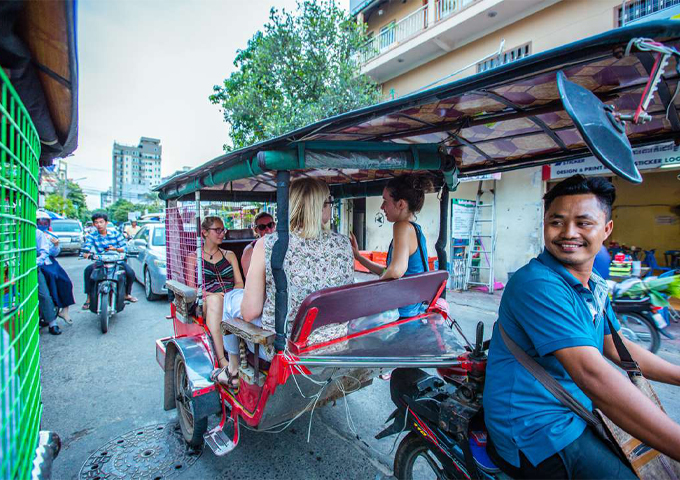 Local tuk-tuk driver with travellers
Even if your Khmer language language is not fluent enough, don't laugh or mock the local people's language. People usually appreciate the efforts of foreign tourists to communicate in the local language.
Learning some basic Cambodian phrases and polite language can help you better communicate with local people and demonstrate your respect and concern for Cambodian culture.
Here are some commonly used Cambodian phrases:
Hello: Sous key
Thank you: Or kun
Sorry: Som toh
Please: Som
Yes: Chaa
No: Ot chaa
I understand: Khnyom jak janh
I don't understand: Khnyom ot jak janh
Tasty: Ch'ngain
Fun: P'lay
Goodbye: Lea heuy
No.12 Avoid Using Difficult to Understand English Especially in Rural Areas
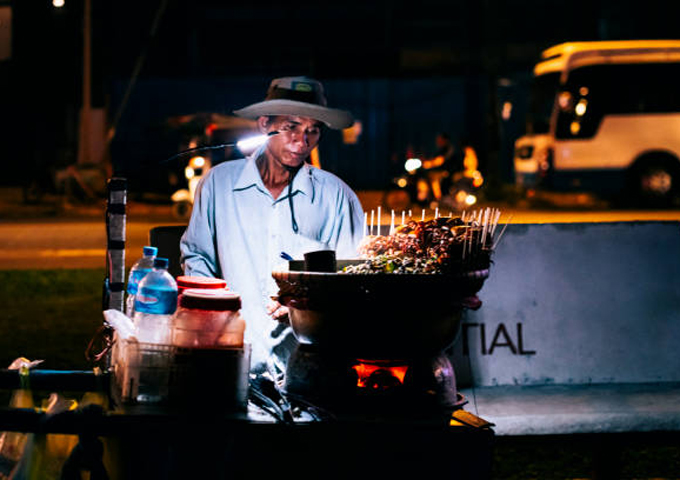 Cambodian local trader
Although the English proficiency of Cambodians varies, most people in the region know some basic English. When communicating with Cambodian people, using simple English vocabulary and expressions can better promote communication.
Avoid using complex sentences and professional terminology, and try to express your meaning in simple and direct language.
At the same time, it is important to have patience and understanding. If Cambodian people do not understand English well or have difficulty expressing themselves, they can use simple gestures and body language to help communicate.
Summary
Cambodia is a travel destination full of charm and unique culture.
Adhering to local customs and etiquette, respecting religious and cultural heritage, protecting the environment and human rights, and communicating with locals in a respectful and understanding manner will make your trip more enjoyable and unforgettable.
Please feel free to get in touch with us, if you would like to tailor your Cambodian tour!
Srey Pov
Cambodia is my home, not simply another stop on an itinerary.
I was born in Phnom Penh, studied Hotel and Tourism Management, and have worked in tourism for 15 years. I’ve also traveled extensively through Vietnam, Laos, Thailand, and Myanmar.
My work has included private journeys as well as a multi-country trip for a group of more than 50 travelers, which received a five-star review.
When I write about Cambodia and the wider region, I bring the view of someone who lives here and has spent years planning trips on the ground—not just repeating what appears in standard destination guides.
Email me about your travel idea
.jpg "Life on the Water: 5 Facts about the Floating Villages in Cambodia")
.jpg "How to Get around Phnom Penh: A Guide to Transportation and Travel Routes")